Introduction
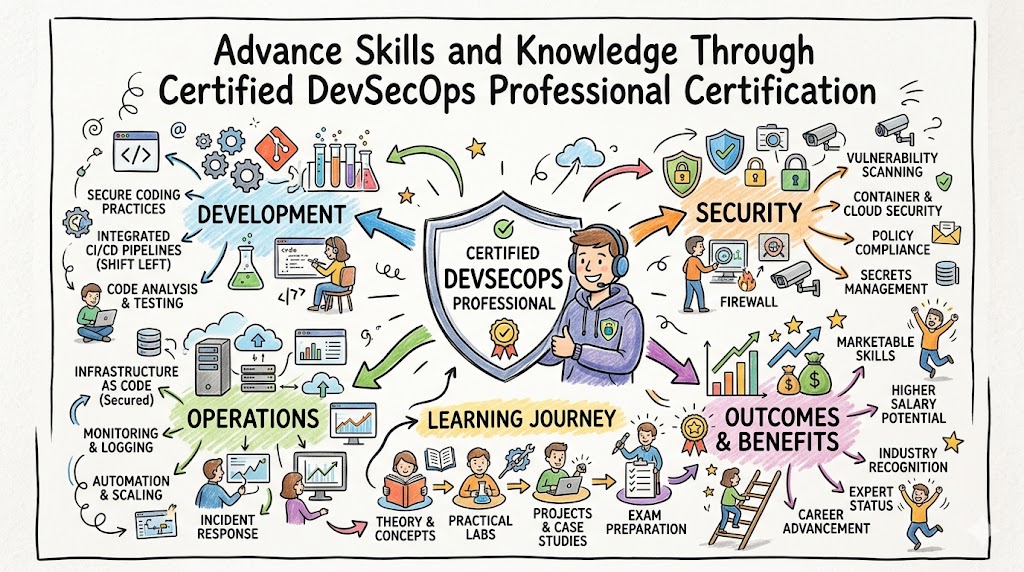
The Certified DevSecOps Professional is a rigorous validation of an engineer’s ability to integrate security into every stage of the software development lifecycle. This guide is designed for professionals who recognize that security is no longer a separate department but a shared responsibility within the engineering team. In today’s landscape of rapid deployments and cloud-native architectures, understanding how to automate security without slowing down the pipeline is a critical career differentiator. As industries shift toward platform engineering and automated governance, this certification provides the roadmap needed to bridge the gap between traditional security and modern DevOps. By following this guide, engineers and managers can gain a clear understanding of the skill sets required to excel in high-stakes production environments. Devsecopsschool provides the framework and resources necessary to navigate this transition effectively.
What is the Certified DevSecOps Professional?
The Certified DevSecOps Professional represents a commitment to high-standard software delivery where security is treated as code. It exists to move beyond theoretical knowledge and focus on the practical implementation of security tools and practices within a CI/CD pipeline. The certification is designed to validate that a professional can handle real-world scenarios, such as mitigating vulnerabilities in real-time and ensuring compliance in automated environments.
Modern engineering workflows demand that security checks are not manual bottlenecks but integrated, automated gates. This program aligns with enterprise practices where reliability and security are two sides of the same coin. By focusing on production-grade security, the certification ensures that graduates can contribute immediately to complex, distributed systems without requiring extensive on-the-job training.
Who Should Pursue Certified DevSecOps Professional?
This certification is highly beneficial for DevOps engineers, Site Reliability Engineers (SREs), and cloud architects who want to deepen their security expertise. It is also an ideal path for security professionals who are looking to transition into more automated, code-driven roles. Engineering managers and technical leaders will find value here as it provides the language and frameworks needed to build secure engineering cultures.
In the context of the global market and the rapidly growing tech sector in India, this certification carries significant weight. Beginners with a strong foundation in Linux and networking can use it to break into high-paying roles, while experienced engineers can use it to pivot into specialized security engineering positions. The focus is on cross-functional skills that are universally applicable across different industries and tech stacks.
Why Certified DevSecOps Professional is Valuable in Beyond
The demand for security-integrated engineering is at an all-time high as enterprises face increasingly sophisticated threats and stricter regulatory requirements. This certification ensures longevity in a career because it teaches principles of security and automation that transcend specific tools. Even as the industry moves toward new technologies, the core ability to secure a supply chain remains a permanent requirement.
Investing time in this certification provides a high return on career investment by making a professional indispensable to their organization. Companies are actively looking for talent that can reduce risk without sacrificing speed, and this certification serves as a verified signal of that capability. It positions an individual as a forward-thinking engineer who understands the business impact of secure delivery.
Certified DevSecOps Professional Certification Overview
The program is delivered via and is hosted on devsecopsschool. It is structured to provide a hands-on learning experience that includes labs, real-world case studies, and a final assessment that tests practical application rather than just memory. The certification ownership resides with an organization that is deeply embedded in the DevOps community, ensuring the curriculum remains updated with current industry trends.
The assessment approach is rigorous, often requiring candidates to demonstrate their ability to fix security flaws in a simulated environment. This practical focus ensures that the certification holds its value in the eyes of hiring managers. The structure is broken down into modular units, allowing professionals to learn at their own pace while building toward a comprehensive understanding of the DevSecOps ecosystem.
Certified DevSecOps Professional Certification Tracks & Levels
The certification path is divided into foundation, professional, and advanced levels to cater to different stages of a professional’s career. The foundation level focuses on the “why” and basic tools, making it accessible for those new to the field. The professional level, which is the core of this program, dives deep into integration, automation, and advanced scanning techniques.
Specialization tracks are also available, allowing engineers to focus on specific areas such as SRE-focused security, FinOps-integrated security, or MLOps security. This alignment with career progression ensures that an individual can continue to grow within the ecosystem. Each level builds upon the previous one, creating a structured path from a generalist engineer to a specialized security architect.
Complete Certified DevSecOps Professional Certification Table
| Track | Level | Who it’s for | Prerequisites | Skills Covered | Recommended Order |
| Core Security | Foundation | Beginners, Junior Devs | Basic Linux, Git | DevSecOps Culture, SCA | 1 |
| Core Security | Professional | DevOps/SRE Engineers | 2+ years Experience | SAST, DAST, Container Sec | 2 |
| Advanced Security | Expert | Security Leads, Architects | Professional Cert | Compliance as Code, IaC Sec | 3 |
| Ops Alignment | SRE Track | SREs, Platform Engineers | DevOps Knowledge | Chaos Engineering, Monitoring | 4 |
| Business Alignment | FinOps Track | Managers, Cloud Leads | Cloud Fundamentals | Cloud Governance, Cost Sec | 5 |
Detailed Guide for Each Certified DevSecOps Professional Certification
Certified DevSecOps Professional – Foundation
What it is
This certification validates a candidate’s understanding of the fundamental principles of DevSecOps and the shift-left philosophy. It serves as an entry point for those looking to understand how security fits into the modern development cycle.
Who should take it
It is suitable for junior developers, system administrators, and recent graduates who want to build a career in cloud-native engineering. No deep prior security experience is required.
Skills you’ll gain
- Understanding the DevSecOps Manifesto and core principles.
- Basic knowledge of Software Composition Analysis (SCA).
- Familiarity with Git hooks for security.
- Overview of common security vulnerabilities (OWASP Top 10).
Real-world projects you should be able to do
- Setting up a basic Jenkins pipeline with a dependency check.
- Identifying outdated and vulnerable libraries in a simple Node.js application.
Preparation plan
- 7-14 Days: Familiarize yourself with the DevSecOps glossary and culture.
- 30 Days: Complete introductory labs on basic tool integration.
- 60 Days: Review all modules and take a practice foundation quiz.
Common mistakes
- Focusing too much on tool names instead of the underlying security principles.
- Neglecting the importance of cultural change in DevSecOps.
Best next certification after this
- Same-track option: Certified DevSecOps Professional (Standard).
- Cross-track option: SRE Foundation.
- Leadership option: DevOps Leader certification.
Certified DevSecOps Professional – Professional Level
What it is
This is the flagship certification that validates the ability to build and maintain secure CI/CD pipelines in production environments. It confirms that the professional can automate complex security workflows.
Who should take it
Experienced DevOps engineers, SREs, and security analysts who have a working knowledge of automation and cloud platforms. It is designed for those currently working in the field.
Skills you’ll gain
- Implementing Static Application Security Testing (SAST).
- Configuring Dynamic Application Security Testing (DAST) in pipelines.
- Container security and image scanning techniques.
- Automating Secret Management using tools like HashiCorp Vault.
Real-world projects you should be able to do
- Building a full-stack security pipeline for a microservices application.
- Securing a Kubernetes cluster using Admission Controllers and OPA.
Preparation plan
- 7-14 Days: Deep dive into SAST and DAST tool configurations.
- 30 Days: Hands-on labs focusing on Docker and Kubernetes security.
- 60 Days: Simulation of a full pipeline security audit and remediation.
Common mistakes
- Over-automating security gates to the point where they block all development progress.
- Not understanding how to interpret scan results, leading to false positives.
Best next certification after this
- Same-track option: Certified DevSecOps Expert.
- Cross-track option: Certified MLOps Professional.
- Leadership option: Technical Program Manager for Security.
Choose Your Learning Path
DevOps Path
The DevOps path focuses on the seamless integration of development and operations with a heavy emphasis on speed and quality. Engineers on this path will learn how to build robust CI/CD pipelines that handle code from commit to production. This path is ideal for those who want to master automation, configuration management, and infrastructure as code. The goal is to create a frictionless environment where software can be released reliably at any time.
DevSecOps Path
This path is for those who want to make security a primary focus within the DevOps lifecycle. It involves learning how to “shift-left” by introducing security testing at the earliest stages of development. Professionals will master tools for code analysis, vulnerability scanning, and compliance automation. This path ensures that security is an enabler of speed rather than a hurdle, protecting the organization while maintaining high deployment frequencies.
SRE Path
The Site Reliability Engineering (SRE) path focuses on the availability, latency, performance, and capacity of distributed systems. Engineers will learn how to use software engineering practices to solve operational problems. Key focus areas include error budgets, service level objectives (SLOs), and incident response. This path is perfect for those who enjoy making systems more resilient and predictable under heavy load.
AIOps Path
The AIOps path is designed for engineers who want to apply artificial intelligence to IT operations. This involves using big data and machine learning to automate process fulfillment, monitoring, and incident management. By learning to analyze vast amounts of log and performance data, professionals can predict and prevent outages before they happen. It is a forward-looking path for those interested in the future of autonomous operations.
MLOps Path
The MLOps path focuses on the lifecycle of machine learning models, from development to deployment and monitoring. It bridges the gap between data science and operations, ensuring that models are scalable, reproducible, and secure. Professionals will learn how to manage model versioning, data pipelines, and automated retraining. This is a critical role for any organization looking to move machine learning projects from a lab environment into real-world production.
DataOps Path
DataOps is a collaborative data management practice focused on improving the communication and integration of data flows. This path is for those who want to ensure that data is high-quality, accessible, and secure for analytics and business intelligence. Engineers will focus on automating data pipelines and implementing data governance. It is essential for organizations that rely on data-driven decision-making and need to manage large, complex data environments.
FinOps Path
The FinOps path combines finance, business, and engineering to manage the costs of cloud computing. This path focuses on cloud financial management through collaboration and transparency. Professionals will learn how to optimize cloud spend, allocate costs accurately, and make informed decisions about infrastructure investments. As cloud budgets grow, this path is becoming vital for ensuring that cloud usage remains cost-effective and aligned with business goals.
Role → Recommended Certified DevSecOps Professional Certifications
| Role | Recommended Certifications |
| DevOps Engineer | Certified DevSecOps Professional, SRE Foundation |
| SRE | Certified DevSecOps Expert, Reliability Lead |
| Platform Engineer | Certified DevSecOps Professional, Infrastructure Security |
| Cloud Engineer | Cloud Security Specialist, Certified DevSecOps Professional |
| Security Engineer | Advanced Penetration Testing, Certified DevSecOps Professional |
| Data Engineer | DataOps Security, Certified DevSecOps Professional |
| FinOps Practitioner | Cloud Cost Management, Certified DevSecOps Professional |
| Engineering Manager | DevOps Leader, DevSecOps Strategy |
Next Certifications to Take After Certified DevSecOps Professional
Same Track Progression
Once the professional level is mastered, moving toward an expert-level certification is the logical next step. This involves mastering advanced topics like Compliance as Code and automated auditing for highly regulated industries like finance and healthcare. Deep specialization allows an engineer to become a subject matter expert within the security domain. This path is for those who want to stay close to the technical architecture and lead security transformations.
Cross-Track Expansion
Broadening your skills into related areas like SRE or MLOps can make you a more versatile professional. Understanding how security impacts model deployment or system reliability allows you to contribute to a wider range of projects. Cross-training is particularly valuable in smaller organizations or specialized teams where one individual may need to wear multiple hats. It ensures you have a holistic view of the entire engineering ecosystem.
Leadership & Management Track
For those looking to move into management, certifications in DevOps leadership or technical program management are recommended. These roles focus on the people and process aspects of DevSecOps, such as building cross-functional teams and managing organizational change. Transitioning to leadership requires a shift from doing the work to enabling others to do it effectively. This track is ideal for experienced engineers who want to influence strategy and culture.
Training & Certification Support Providers for Certified DevSecOps Professional
DevOpsSchool
DevOpsSchool is a leading platform that offers extensive training programs focused on the entire DevOps ecosystem. They provide a mix of live instructor-led sessions and self-paced learning, making it accessible for busy professionals. Their curriculum is known for being deeply technical and updated frequently to reflect the latest tools used in the industry. Students benefit from a vast library of recorded sessions and a community of experts who provide ongoing support. Their focus is on bridging the skill gap for engineers who want to master complex automation and security workflows across various cloud platforms.
Cotocus
Cotocus stands out by offering consulting-led training that bridges the gap between theoretical knowledge and corporate implementation. They focus on delivering customized training solutions that help teams adopt DevSecOps practices within their specific organizational contexts. Their instructors are often active practitioners who bring real-world problems and solutions into the classroom. Cotocus is particularly strong in helping large enterprises transform their legacy workflows into modern, secure delivery pipelines. By focusing on both the cultural and technical aspects of engineering, they ensure that the training leads to long-term measurable improvements in software delivery performance and security.
Scmgalaxy
Scmgalaxy is a prominent community-driven platform that provides a wealth of resources for Software Configuration Management and DevOps professionals. They offer specialized tutorials, blogs, and forums where engineers can solve technical hurdles collectively. Their training programs are practical and often focus on the niche aspects of build and release engineering that are often overlooked. Scmgalaxy has a long history of supporting the tech community in India and globally, providing a platform for knowledge sharing and career growth. Their resources are particularly useful for those looking to master the intricacies of version control, CI/CD, and automated deployment strategies.
BestDevOps
BestDevOps focuses on providing clear, concise, and highly effective training for professionals looking to transition into high-demand engineering roles. Their courses are structured to be job-oriented, ensuring that students gain the specific skills that recruiters are looking for. They offer mentorship and career guidance alongside technical training, making it a popular choice for those pivoting from other tech fields. BestDevOps emphasizes hands-on labs and project-based learning to ensure that candidates can demonstrate their value to potential employers immediately. Their simplified approach to complex topics makes learning accessible to a wider audience of aspiring DevOps and security professionals.
devsecopsschool.com
This platform is the primary home for the Certified DevSecOps Professional program and offers a security-first approach to engineering. It provides a specialized environment where security is the core focus of every lesson, ensuring that students develop a defensive mindset. The platform features advanced labs that simulate real-world attacks and defense scenarios, allowing learners to practice in a safe environment. By focusing exclusively on the intersection of security and operations, devsecopsschool.com ensures that its graduates are among the most specialized in the market. It is an essential resource for anyone looking to build a career as a dedicated security engineer or DevSecOps lead.
sreschool.com
Sreschool.com is dedicated to the principles of Site Reliability Engineering, focusing on the stability and scalability of modern applications. Their training covers essential SRE topics such as monitoring, observability, incident management, and post-mortem analysis. They emphasize the use of automation to eliminate toil and improve system reliability. For professionals looking to understand how security integrates with reliability, sreschool.com provides the necessary context and technical depth. Their curriculum is designed to help engineers move from reactive troubleshooting to proactive system improvement, which is a key requirement for high-performing engineering teams in the current digital landscape.
aiopsschool.com
Aiopsschool.com addresses the growing intersection of artificial intelligence and operations, providing training on how to manage AI-driven systems. They focus on using data science techniques to improve IT operations, such as predictive analytics for outage prevention and automated anomaly detection. As systems become more complex, the skills taught here are becoming indispensable for managing large-scale infrastructure. The school provides a roadmap for engineers to transition from traditional monitoring to intelligent, data-driven observability. Students learn how to implement and manage the tools that will define the future of autonomous IT management and proactive security monitoring.
dataopsschool.com
Dataopsschool.com focuses on the specialized field of data operations, ensuring that data pipelines are as reliable and secure as software pipelines. They teach the principles of automating data delivery and improving data quality across the organization. Their training is vital for data engineers and architects who need to manage the flow of information in a secure and compliant manner. By applying DevOps principles to data management, dataopsschool.com helps organizations unlock the full value of their data assets. The curriculum covers topics such as data versioning, automated testing for data pipelines, and implementing security controls within complex data environments.
finopsschool.com
Finopsschool.com provides the training necessary to manage the financial aspects of cloud computing through the FinOps framework. They focus on the collaboration between finance, engineering, and business teams to drive cloud value. Students learn how to track cloud spending, identify waste, and optimize costs without compromising performance or security. As cloud costs become a major line item for most businesses, the skills learned at finopsschool.com are in extremely high demand. The platform provides practical strategies for implementing cost governance and ensuring that cloud investments are aligned with the overall business objectives of the organization.
Frequently Asked Questions (General)
1. How difficult is the Certified DevSecOps Professional exam?
The exam is moderately difficult and focuses heavily on practical application. It requires a good understanding of both DevOps tools and security concepts.
2. What is the typical time required to prepare for this certification?
Most professionals with some background in DevOps find that 30 to 60 days of consistent study and lab work is sufficient for the professional level.
3. Are there any specific prerequisites for the professional level?
While not mandatory, having at least two years of experience in an operations or development role is highly recommended to grasp the practical nuances.
4. What is the return on investment for this certification?
Professionals often see a significant increase in salary and job opportunities, as DevSecOps is currently one of the highest-paying specializations in tech.
5. Is the certification recognized globally?
Yes, the certification is recognized by major tech hubs and enterprises worldwide, including India, the US, and Europe.
6. Can I take the exam online?
Yes, the exam is typically delivered through a secure online platform, allowing candidates to take it from anywhere in the world.
7. How long is the certification valid?
The certification is usually valid for two to three years, after which recertification or moving to a higher level is encouraged to keep skills current.
8. Does the program cover specific cloud providers like AWS or Azure?
The program focuses on cloud-agnostic principles and tools that can be applied across all major cloud providers and on-premise environments.
9. What kind of tools are covered in the curriculum?
Expect to work with tools like Jenkins, GitLab CI, SonarQube, Snyk, Aqua Security, Vault, and various Kubernetes security plugins.
10. Is there a community or forum for students?
Yes, students have access to dedicated forums and community groups where they can ask questions and share knowledge with peers and instructors.
11. Do I need to be a developer to pass this certification?
You don’t need to be a senior developer, but you should be comfortable reading code and working with basic scripts and configuration files.
12. Are the labs included in the course fee?
Generally, the course includes access to a lab environment where you can practice the security integrations discussed in the modules.
FAQs on Certified DevSecOps Professional
1. What makes Certified DevSecOps Professional different from other security certifications?
It is specifically designed for the DevOps lifecycle. Unlike traditional security certifications that focus on networking or compliance alone, this is built for automated, code-driven environments.
2. Does this certification help with career growth in India?
India is seeing a massive shift toward cloud-native engineering. Companies are prioritizing security, making this certification a top asset for engineers in major tech hubs.
3. How does this program handle container and Kubernetes security?
A significant portion of the professional level is dedicated to securing containers, scanning images, and implementing runtime security policies in Kubernetes environments.
4. Will I learn about Compliance as Code?
Yes, the program introduces the concept of automating compliance checks so that your infrastructure always meets regulatory standards without manual audits.
5. Can this certification help me move into an SRE role?
Absolutely. SREs are increasingly responsible for system security. This certification provides the automation skills necessary for a modern SRE career path.
6. What role does Jenkins or GitLab play in the certification?
These tools are used as the primary engines for the CI/CD pipelines where you will integrate the security tools and automated gates.
7. Is secret management part of the training?
Yes, you will learn how to move away from hardcoded credentials and use enterprise-grade secret management solutions like HashiCorp Vault.
8. Are real-world attack scenarios covered?
The course often includes scenarios that simulate common attacks, teaching you how to build defenses that are resilient against actual production threats.
Conclusion
From a mentor’s perspective, the answer is a clear yes. The tech industry is moving away from silos, and the bridge between security and operations is where the most valuable work is happening. Obtaining the Certified DevSecOps Professional is not just about adding a badge to your profile; it is about changing how you think about software delivery. It forces you to look at a pipeline not just as a way to move code, but as a way to verify and protect the business’s integrity. If you are looking for a path that offers job security, high pay, and the chance to work on the most critical parts of an organization’s infrastructure, this is it. The investment in learning these skills now will pay off for years to come as the industry continues to prioritize secure, reliable, and fast deployments. It is a practical, honest way to level up your career without falling for the hype of fleeting trends.
Very practical insights. The explanation of securing CI/CD pipelines and managing vulnerabilities proactively is highly relevant for today’s cloud environments.
Strong guide on Certified DevSecOps Professional—clearly explains how security, development, and operations come together in modern DevOps practices.