Introduction
Modern healthcare consumers increasingly refuse to accept a binary choice between financial stability and physical well-being. Facing rising out-of-pocket expenses, high insurance deductibles, and frustrating wait lists at home, proactive individuals are looking globally for timely, high-quality medical treatments. India has established itself as a cornerstone of this movement, shifting from a regional provider to a global hub for complex surgeries, advanced diagnostics, and specialized therapies. Traveling abroad for serious medical treatment involves more than just booking a flight; it requires evaluating institutional safety, verifying surgeon credentials, and understanding financial packages. For example, consider an international patient requiring an intricate joint or cardiac intervention. They must carefully assess how a hospital across the world handles infection rates, implant quality, and post-operative mobility, while balancing traveling expenses against local care alternatives. To streamline this complex research process and find verified, clear information on international medical institutions, patients can utilize MyMedicPlus. This dedicated digital directory offers clear breakdowns of hospital infrastructure, pricing patterns, and treatment paths, helping families plan their journeys with confidence.
What Is Medical Tourism in India?
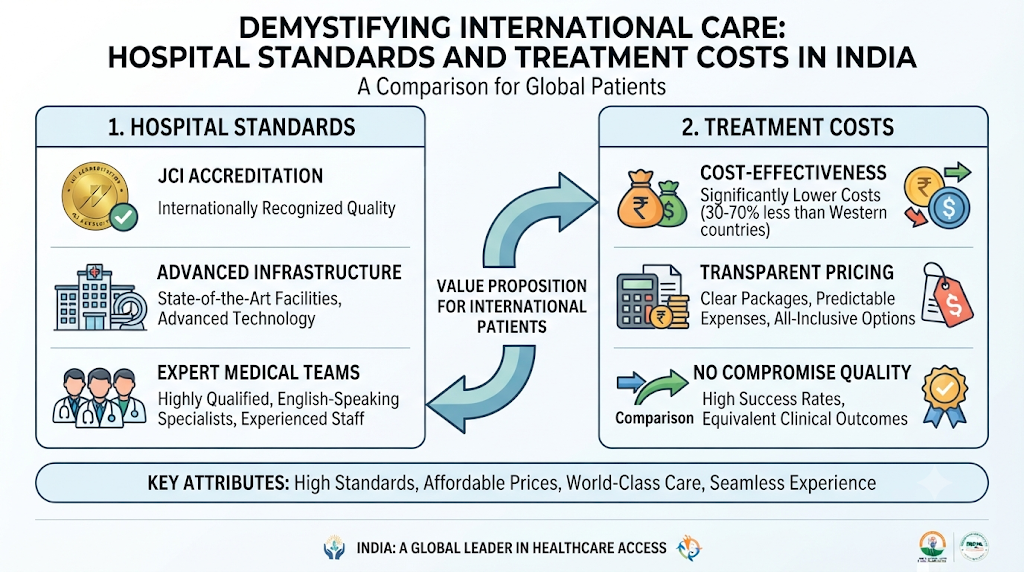
Medical tourism in India refers to international travel for specialized healthcare, such as major cardiac, orthopedic, or oncological procedures. The country’s appeal rests on its network of internationally accredited medical institutions, English-speaking clinical teams, and advanced surgical tech, delivering outcomes on par with Western facilities at a 60% to 85% budget reduction.
Understanding Medical Tourism in India
What Is Medical Tourism?
Medical tourism is the deliberate travel to another country to access clinical, surgical, or dental care. Modern medical travel is defined by patients from highly developed nations seeking specialized, timely care in international hubs that offer comparable clinical quality alongside favorable economic conditions.
Why India Has Become a Leading Medical Tourism Destination
India’s prominence in the global healthcare space is built on a highly developed corporate medical sector. The country hosts numerous facilities validated by global bodies like the Joint Commission International (JCI) and India’s National Accreditation Board for Hospitals & Healthcare Providers (NABH). These settings utilize modern clinical tools, such as robotic-assisted surgical platforms and highly precise diagnostic imaging systems.
Growth of International Patient Care
The infrastructure supporting international arrivals has evolved into a highly integrated specialty service. Leading healthcare groups establish comprehensive International Patient divisions that act as personal navigators, handling medical visa processing, airport transitions, language translation services, and specialized dietary planning.
Key Advantages of Seeking Treatment in India
| Healthcare Matrix | India | High-Cost Western Destinations |
| Financial Efficiency | 60% to 85% reduction in overall expenses | Premium baseline costs and high out-of-pocket minimums |
| Access Timelines | Direct admission for major procedures | Multi-month delays via public health frameworks |
| Surgical Volume | High per-specialist case exposure | Lower average lifetime caseloads due to systemic structures |
| Communication Flow | Core operational language is English | Variable, frequently requiring structural translators |
Special Patient Education Framework
In Simple Terms
Medical tourism in India means traveling to access top-tier clinical care without the extreme costs or long delays common in many Western countries.
Real-World Example
David, an independent contractor from the UK, faced a nine-month wait for spinal surgery while experiencing chronic pain. By working with an accredited provider in Mumbai, he completed his initial diagnostic scans, underwent surgery, and began physical rehab within a week of arrival.
Why It Matters
Recognizing these global care opportunities helps families find excellent alternative options when local systems are too expensive or slow.
Key Takeaways
- Indian medical networks provide Western-standard clinical care at a fraction of the cost.
- Highly structured international divisions help eliminate travel logistics and language barriers.
- Rapid clinical intake prevents conditions from worsening during long waiting periods.
- Strict global accreditations protect patient safety through standardized care protocols.
Why International Patients Choose India
Cost Advantages
The financial efficiency found in India is driven by structural economics rather than a compromise in clinical care. Favorable currency exchange rates, lower real estate and operational expenses, and efficient corporate administrative practices allow top hospitals to offer excellent care at a lower price point.
Highly Qualified Specialists
Indian medical specialists frequently hold post-graduate credentials or fellowship training from elite institutions in North America and Europe. Because of the region’s high population density, these physicians manage high daily case volumes, providing them with extensive practical experience in rare and complex medical conditions.
Advanced Medical Technology
Top-tier Indian hospitals invest heavily in next-generation medical systems. Patients have access to advanced tools like CyberKnife radiosurgery, Da Vinci robotic platforms, 3 Tesla MRI scanners, and modern hybrid catheterization labs, matching the technology found in major global medical centers.
English-Speaking Healthcare Environment
Clear communication is essential for patient comfort and safety. In India, English serves as the standard language for medical instruction, clinical charting, and administrative operations, allowing international patients to speak directly with their care teams without misunderstanding.
Wide Range of Treatment Options
India’s medical ecosystem accommodates a broad range of clinical needs. Patients can find advanced oncology protocols, complex multi-organ transplants, bariatric programs, complete dental reconstructions, and traditional wellness care like Ayurveda for post-operative recovery.
Best Hospitals in India for International Patients
What Makes a Hospital Suitable for International Patients?
Managing long-distance medical travel requires more than a standard clinical setup. The best hospitals feature dedicated systems designed specifically to support and guide international patients through their care journey.
Accreditation Standards
Independent accreditations provide an objective measure of institutional safety and clinical consistency.
- JCI (Joint Commission International): The premium global framework validating patient safety, surgical protocols, medication administration, and hygiene.
- NABH (National Accreditation Board for Hospitals): The benchmark national standard that mirrors global healthcare quality metrics.
International Patient Departments
Top hospitals utilize centralized International Patient lounges where assigned case coordinators manage the patient’s entire experience, handling medical visa invitations, airport arrivals, local lodging for family members, and billing clarity.
Specialist Availability and Infrastructure
Leading medical groups provide easy access to senior specialists for pre-travel digital evaluations. Their facilities feature high-tech diagnostic suites, infection-controlled operating environments, and premium private rooms tailored for international travelers.
Evaluation Checklist for Top Hospitals
- [ ] Does the institution hold current JCI or NABH accreditations?
- [ ] Is there an active, standalone International Patient service team?
- [ ] Can you schedule video consultations with the lead surgeon before traveling?
- [ ] Does the hospital provide clear, written pricing packages?
- [ ] Are native-language translation services available for non-English speakers?
- [ ] Are there close partnerships with nearby step-down recovery hotels?
Treatment Cost in India Explained
Why Treatment Costs Vary
Final medical billing is inherently individual and depends on several personal health factors. A base package estimate provides a clear starting point that can change depending on individual medical needs and choices.
Factors Affecting Medical Expenses
- Geographic Hub: Tier-1 cities like Mumbai, Delhi, and Bangalore have higher administrative and living expenses than Tier-2 cities like Chennai or Kochi.
- Institutional Tier: Large, multi-specialty corporate networks carry a different cost structure than regional private clinics.
- Room Selection: Daily rates vary based on choice, from twin-sharing spaces to private single rooms or executive suites.
- Surgical Implants: Choosing imported, premium, FDA-approved implants (such as cardiac stents or joint prosthetics) increases total material costs.
Understanding Cost Transparency
To support international families, leading Indian facilities favor transparent, fixed-price surgical packages. These bundles typically include pre-operative lab work, standard surgeon fees, operating room use, nursing care, routine medications, and a set number of recovery days in the hospital.
Planning Healthcare Budgets
| Budget Component | Cost Influence | Practical Planning Insight |
| Room Class | Variable (Low to High) | Upgrading room tiers increases both accommodation fees and related nursing charges. |
| Co-existing Conditions | Moderate to High | Managing secondary issues like diabetes requires additional monitoring and specialist input. |
| Post-Discharge Care | Variable (Low) | Outpatient physical therapy and extended hotel stays should be factored into travel budgets. |
| Unplanned Needs | Unpredictable (High) | Maintaining a liquid financial safety buffer of 15-20% helps cover unexpected recovery needs. |
Special Patient Education Framework
In Simple Terms
Medical care in India is highly cost-effective, but your final bill will depend on the city you choose, your room tier, and your general health profile.
Real-World Example
Linda received a base surgical quote of $4,500. Because she chose an executive private suite and required two additional days of monitoring for a minor heart murmur, her final bill came to $5,400.
Why It Matters
Understanding the variables in medical billing prevents unexpected costs, allowing families to build realistic budgets that cover both hospital fees and local travel expenses.
Key Takeaways
- Secure an itemized, written package estimate before scheduling your trip.
- Factor in local living expenses, hotel accommodations, and post-discharge medications.
- Remember that underlying health issues can alter your recovery timeline and final billing.
- Use trusted comparison tools like MyMedicPlus to review and cross-check pricing details.
Knee Replacement Surgery Cost in India
Understanding Knee Replacement Procedures
Knee replacement surgery, or knee arthroplasty, involves removing damaged bone and cartilage from an arthritic joint and replacing it with durable metal and polyethylene implants. This procedure helps relieve chronic pain and restore mobility for individuals with severe joint wear.
Cost Factors
The cost for knee replacement surgery in India generally ranges from $3,500 to $7,000 per joint. In contrast, the same procedure in Western countries often costs between $30,000 and $50,000. Key pricing factors include whether the patient chooses a single or double (bilateral) replacement, the specific brand of implant used, and the choice between conventional manual surgery or advanced robotic-assisted systems.
[Manual Arthroplasty: $3,500 - $5,500] ──> Standard Recovery Track
[Robotic-Assisted: $5,500 - $7,000]    ──> High Precision / Faster Early Mobility
Hospital Selection Considerations
When planning orthopedic care, focus on institutions with dedicated joint replacement wings, ultra-clean operating environments to minimize infection risks, and experienced physical therapy teams.
Recovery and Rehabilitation Planning
A typical hospital stay lasts 3 to 5 days, but international patients should plan to remain nearby for another 10 to 14 days. This time allows for regular physical therapy sessions to ensure safe mobility before checking in for a long-distance return flight.
Heart Bypass Surgery Cost in India
Understanding Cardiac Surgery
Heart Bypass Surgery, or Coronary Artery Bypass Grafting (CABG), creates new pathways around blocked heart arteries using a healthy blood vessel taken from another part of the body. This critical procedure improves blood flow to the heart muscle and helps reduce cardiac risks.
Cost Components
In India, the cost for heart bypass surgery typically ranges from $5,000 to $9,000, offering substantial savings compared to Western options, where costs can exceed $100,000.
Primary cost components include:
- Pre-surgical imaging, blood work, and coronary angiography.
- The surgical approach used: traditional on-pump surgery vs. off-pump (beating-heart) procedures.
- The use of minimally invasive keyhole methods, which require specialized surgical tools.
- Intensive care monitoring (ICU) led by specialized cardiac teams.
Choosing Cardiac Specialists
Look for cardiothoracic surgeons with recognized international fellowships and a strong track record in multi-vessel bypass procedures to ensure a safe, high-quality outcome.
Recovery and Follow-Up Care
CABG requires a hospital stay of 7 to 10 days, including initial observation in the cardiac ICU. Patients should plan to stay at a local hotel for an additional 2 to 3 weeks for wound checks, progress monitoring, and supervised cardiac rehabilitation before traveling home.
Comparing India with Other Medical Tourism Destinations
While countries like Thailand, Turkey, Singapore, and the UAE are active in medical tourism, India stands out by offering a unique combination of affordability and high-level clinical care.
| Destination | Pricing Position | Clinical Specialization | Support Infrastructure |
| India | Exceptional (60-85% savings) | High-complexity care (Transplants, advanced cardiac, oncology) | Dedicated international divisions; fluent English across all care levels |
| Thailand | Moderate (40-60% savings) | Strong focus on wellness, aesthetics, and routine orthopedics | Excellent hospitality focus; language support teams often needed |
| Turkey | Moderate (40-50% savings) | Focus on aesthetics, hair restorations, and bariatric care | Convenient for European travel; variable English fluency |
| Singapore | Low (10-20% savings) | Premium specialized care (Neurology, oncology) | Excellent modern systems but high operational costs |
| UAE | Low (Minimal savings) | Focus on luxury wellness and executive health services | Ultra-premium hospitality; pricing similar to Western hubs |
How to Choose the Right Hospital
Evaluate Accreditation
Institutional quality is foundational to patient safety. Always verify a hospital’s active JCI or NABH accreditation status directly through their official online registries.
Review Specialist Experience
Look for hospitals with dedicated centers of excellence for your specific condition. Research their annual case volumes, published clinical success rates, and safety benchmarks.
Compare Treatment Costs
Obtain itemized quotes from multiple facilities. Check what is excluded from the base package—such as post-discharge medications, extended ICU stays, or specialized diagnostic imaging—to avoid unexpected bills.
Hospital Selection Framework
[Quality Assessment] ──> Check Active JCI / NABH Accreditations
[Clinical Focus]     ──> Analyze Volume & Track Record for Your Procedure
[Financial Review]   ──> Examine Package Exclusions & Extra Fees
[Travel Logistics]   ──> Assess Airport Connections & Partner Lodging Options
How to Choose the Right Doctor
Qualifications and Credentials
Research your specialist’s academic and professional background. Look for advanced board certifications, postgraduate medical degrees, and international clinical fellowships at recognized institutions.
Experience in Specific Procedures
Ask clear, direct questions about the doctor’s experience with your particular surgery:
- How many surgeries of this exact type do you perform each year?
- What are your typical clinical success rates and long-term complication outcomes?
Communication Skills and Treatment Philosophy
Schedule an introductory video call to assess the specialist’s communication style. A good surgeon should explain medical procedures in clear language, listen to your concerns, and outline a realistic, structured recovery plan.
Doctor Evaluation Checklist
- [ ] Holds verified board certifications and recognized international fellowships.
- [ ] Has extensive surgical experience within their specific medical specialty.
- [ ] Provides clear, transparent explanations of potential procedural risks.
- [ ] Communicates clearly and directly in fluent English.
- [ ] Backed by positive, independently verified international patient reviews.
Planning Your Medical Journey
Phase 1: Initial Research & Digital Consultation
Compile your recent medical history, imaging records (such as MRIs or CT scans), and lab reports. Share these documents through a secure health platform to set up video consultations with your chosen specialists in India.
Phase 2: Cost Estimation & Financial Planning
Review your written package estimates. Once you choose a facility, request an official Medical Visa Invitation Letter from the hospital’s international desk to start your visa application.
Phase 3: Travel Preparation & Arrival
Apply for a dedicated Medical Visa through the official government portal. Book flexible return flights, arrange local hotel stays for your recovery phase, and coordinate your arrival details with the hospital’s airport transport team.
Patient Journey Roadmap
- Document Share: Upload your medical records for a remote expert evaluation.
- Video Consultation: Discuss your personalized treatment path directly with your chosen specialist.
- Visa & Flights: Obtain an official Medical Visa and book flexible airline tickets.
- Clinical Intake: Complete your final pre-operative health assessments on-site.
- Procedure & Recovery: Undergo treatment and recover in the hospital’s specialized inpatient care unit.
- Step-Down Stay: Move to a partner hotel for local follow-up checks and physical therapy.
- Travel Clearance: Receive your official fit-to-fly certificate and return home for local follow-up care.
How MyMedicPlus Helps Patients
Navigating medical care across international borders requires access to reliable, clear information. The MyMedicPlus platform serves as an educational research resource designed to help families plan their medical travel with confidence.
- Hospital Discovery: The directory lets users filter and browse top Indian medical centers based on locations, clinical specialties, and international quality accreditations.
- Treatment Research: Patients can access simple guides that break down complex procedures, explaining what to expect before, during, and after surgery.
- Cost Awareness: MyMedicPlus highlights standard pricing ranges for major surgeries, helping families plan realistic budgets without hidden surprises.
- Empowered Choice: By organizing hospital features and doctor backgrounds in one accessible place, the platform helps patients make informed, confident choices for their health.
Real-World Patient Scenarios
Scenario 1: International Patient Seeking Knee Replacement
- Challenge: George, a 64-year-old retired transit worker from New Zealand, struggled with severe knee osteoarthritis. He faced an eighteen-month wait list in the public system, and private local care was quoted at an unaffordable $24,000.
- Research Process: George used online research resources to look into accredited orthopedic centers in Chennai and Mumbai, focusing on facilities specializing in robotic-assisted joint replacements.
- Decision Factors: He chose a JCI-accredited facility that provided an all-inclusive package of $5,200, which included a premium implant and daily on-site physical therapy.
- Outcome: The surgery went smoothly. George returned home within three weeks, walking comfortably with a cane, and regained independent mobility within three months.
Scenario 2: Cardiac Surgery Patient
- Challenge: Amanda, a 52-year-old small business owner from East Africa, was diagnosed with severe triple-vessel coronary artery disease. Her local clinics lacked the specialized infrastructure required for complex open-heart procedures.
- Research Process: Her family researched experienced cardiothoracic surgeons in India’s major cities, comparing annual procedural volumes and long-term recovery outcomes for beating-heart surgeries.
- Decision Factors: They selected a dedicated cardiac center in Delhi led by a surgeon with extensive clinical experience, opting for a comprehensive package priced at $7,500.
- Outcome: Amanda underwent a successful off-pump bypass surgery. After five days in the hospital and two weeks of recovery at a partner hotel, she received a clean bill of health and returned home safely.
Common Mistakes Patients Make
Choosing Based Only on Price
Selecting a hospital solely because it offers the lowest price can lead to under-equipped clinics, less experienced doctors, or hidden fees. Always prioritize quality accreditations and surgeon experience over low costs.
Ignoring Institutional Accreditations
Failing to verify active JCI or NABH certifications increases the risk of receiving care in a facility with inconsistent safety protocols, outdated technology, or lower infection controls.
Miscalculating the Full Travel Budget
Many patients plan only for the core hospital package, forgetting to account for international flights, medical visa fees, extended hotel stays, daily meals, local transport, and post-discharge medications.
Avoidance Checklist
- Do not sacrifice JCI or NABH quality credentials for a lower price.
- Verify exactly what is excluded from your hospital package estimate before traveling.
- Confirm your operating surgeon’s specific credentials and case experience beforehand.
- Arrange post-operative follow-up care with a trusted doctor in your home country.
- Keep a financial emergency reserve to cover any changes in your recovery timeline.
Medical Tourism Planning Checklist
Before Choosing a Hospital
- Verify active JCI or NABH quality credentials on their official registries.
- Confirm the hospital has a dedicated, 24/7 International Patient Service team.
- Check the distance between the hospital, the nearest international airport, and partner lodging.
Before Choosing a Doctor
- Confirm the specialist has extensive experience performing your specific surgery.
- Schedule a detailed pre-travel video consultation to discuss your treatment path.
- Ask for clear details regarding their personal surgical success and recovery outcomes.
Before Traveling
- Ensure your passport is valid for at least six months beyond your planned return date.
- Obtain a verified Indian Medical Visa (MED Visa) for yourself and any traveling companions.
- Pack organized, printed copies of your medical records, imaging films, and current prescriptions.
During Treatment & Recovery
- Maintain regular contact with your international case manager regarding your daily needs.
- Strictly follow your post-operative physical therapy and medication schedules.
- Secure full copies of your discharge summary, surgical notes, and travel clearances before leaving.
Future of Medical Tourism in India
The medical tourism field in India continues to evolve, supported by modern digital health platforms that simplify international care management. These tools make it straightforward for global travelers to research hospitals, evaluate medical backgrounds, and compare treatment costs transparently from home.
As digital tools advance, AI-driven platforms help patients map out customized care paths, connect with matching specialists, and view clear pricing structures. Coupled with expanding international lounges, telemedicine for pre- and post-operative checks, and dedicated recovery spaces, India is strengthening its role as an accessible, trusted hub for world-class, affordable healthcare.
FAQ Section
What is medical tourism in India?
Medical tourism in India is the practice where international patients travel to Indian medical centers to receive high-quality surgical, clinical, or preventative care. This sector is built on a network of internationally accredited corporate hospitals, Western-trained specialists, advanced technology, and competitive pricing.
Why do international patients choose India?
International patients choose India because it provides significant cost savings (typically 60% to 85% lower than Western countries) alongside excellent clinical standards. Key benefits include minimal waiting periods for major surgeries, fluent English communication among medical teams, and dedicated international patient departments.
How much does treatment cost in India?
Treatment costs depend on the specific procedure, hospital tier, and room selection. However, standard major surgeries generally cost a fraction of what they do in Western countries, allowing international families to save tens of thousands of dollars while receiving high-quality clinical care.
What is the knee replacement surgery cost in India?
The cost of a total knee replacement surgery in India typically ranges between $3,500 and $7,000 per joint. The final bill varies depending on whether you choose conventional manual surgery or advanced robotic-assisted procedures, alongside the specific type and brand of medical implant used.
What is the heart bypass surgery cost in India?
A heart bypass surgery (CABG) in India generally ranges from $5,000 to $9,000. Final costs depend on the complexity of the blockages, the number of grafts required, the choice between an on-pump or beating-heart surgical approach, and the total time needed for recovery in the cardiac ICU.
How do I choose the best hospital in India?
Focus on institutions that hold active international quality credentials like JCI or NABH. Additionally, look for facilities with dedicated centers of excellence for your specific condition, high annual procedure volumes, and clear, written pricing packages.
How can I compare treatment costs?
You can compare costs by requesting detailed package quotes from multiple accredited hospitals. Carefully check the exclusions list to see if pre-operative tests, post-discharge medications, and extra recovery days are covered, or use trusted research directories to review standard pricing ranges.
Is India safe for medical tourism?
Yes, India is a safe and well-established destination for medical travel, provided patients choose reputable, JCI- or NABH-accredited hospitals. These facilities follow strict global safety protocols, maintain high infection control standards, and provide dedicated transport and logistics support for international visitors.
How does MyMedicPlus help patients?
MyMedicPlus serves as an educational research resource and directory for global healthcare. It offers centralized access to verified data on top hospitals, detailed treatment guides, and standard pricing insights, helping patients plan their medical journeys with clarity and confidence.
What should I consider before traveling for treatment?
Before traveling, ensure you obtain an official Indian Medical Visa, secure a written package quote from your chosen hospital, and arrange for follow-up care with a doctor in your home country. You should also budget for local hotel stays and physical rehabilitation during your recovery phase.
Final Summary
Medical tourism in India provides a reliable path for global patients seeking high-quality healthcare without long delays or prohibitive costs. By combining advanced medical technology and highly trained specialists with efficient pricing models, India remains a premier hub for complex cardiac, orthopedic, and specialized care. A safe, successful medical journey requires careful research and organization. Patients should always focus on verifying hospital accreditations, reviewing surgeon backgrounds, and understanding exactly what their treatment packages include to ensure a smooth, transparent experience.