Introduction
AI Incident Triage & Summarization platforms use artificial intelligence to help security teams analyze incoming incidents, prioritize alerts, identify relevant evidence, and create concise incident summaries. Instead of requiring analysts to manually review every alert and correlate information across multiple security systems, these platforms can organize incident context and highlight the information most relevant to investigation and response.This category is particularly valuable for Security Operations Centers handling high alert volumes, distributed telemetry, complex incidents, and limited analyst resources. Common use cases include alert prioritization, incident summarization, duplicate detection, threat-context enrichment, investigation assistance, case documentation, escalation, and response preparation.Modern AI capabilities also introduce agentic workflows, natural-language investigation, automated evidence correlation, multimodal analysis, and AI-assisted decision support. However, organizations must balance automation with accuracy, privacy, security, human oversight, and governance.
What’s Changed in AI Incident Triage & Summarization
- Natural-language interfaces allow analysts to investigate incidents without manually constructing every query.
- AI can summarize large incident timelines into concise analyst-readable narratives.
- Incident triage is increasingly incorporating context from endpoint, identity, network, cloud, vulnerability, and threat-intelligence systems.
- AI-assisted deduplication can help reduce repetitive alerts and related cases.
- Agentic workflows can perform multiple investigation steps before presenting findings to an analyst.
- Human approval is increasingly important for high-impact response actions.
- AI systems are being evaluated against organization-specific security scenarios rather than generic benchmarks alone.
- Prompt-injection protection matters when AI analyzes attacker-controlled emails, files, web content, logs, or other untrusted data.
- Security teams increasingly require evidence-backed AI explanations rather than unsupported conclusions.
- Cost and latency have become important considerations as organizations process large numbers of incidents.
- Data retention and privacy controls are becoming more important because incident records can contain sensitive information.
- Security teams increasingly expect auditability for AI-generated recommendations and automated actions.
- AI can assist with incident documentation, reducing the time analysts spend writing case summaries.
- Multimodal capabilities can expand analysis to screenshots, documents, email content, and other security artifacts where supported.
- Model flexibility and vendor-neutral architectures can reduce dependence on a single AI provider.
Quick Buyer Checklist
- SIEM integration.
- XDR integration.
- EDR integration.
- SOAR integration.
- Incident-management integration.
- Threat-intelligence integration.
- Identity-security integration.
- Cloud-security integration.
- Automated alert prioritization.
- Incident summarization.
- Timeline generation.
- Duplicate-alert detection.
- Evidence correlation.
- Natural-language investigation.
- Human approval workflows.
- AI evaluation capabilities.
- Prompt-injection defenses.
- Data privacy controls.
- Data retention controls.
- Data residency options.
- Encryption.
- SSO and RBAC.
- Audit logs.
- Model flexibility.
- BYO-model capability where required.
- API and SDK support.
- Cost controls.
- Latency monitoring.
- AI usage monitoring.
- Vendor lock-in considerations.
Top 10 AI Incident Triage & Summarization Tools
1. Microsoft Security Copilot
One-line verdict: Best for Microsoft-centric SOCs needing AI-assisted incident investigation, prioritization, and security summarization.
Short description
Microsoft Security Copilot provides AI assistance for security professionals working across investigation, threat analysis, incident response, and security operations. Its strongest value comes from connecting AI assistance with Microsoft’s broader security ecosystem.
Standout Capabilities
- AI-assisted incident investigation.
- Incident summarization.
- Natural-language security queries.
- Threat analysis.
- Security-context enrichment.
- Investigation assistance.
- Analyst productivity workflows.
- Integration with Microsoft security products.
AI-Specific Depth
- Model support: Vendor-managed AI capabilities with model architecture varying by service.
- RAG / knowledge integration: Can use connected Microsoft security context and supported enterprise data.
- Evaluation: Customer-specific testing is recommended for security-critical workflows.
- Guardrails: Enterprise identity, permissions, and security controls govern access and actions.
- Observability: Security investigation and administrative capabilities provide operational visibility; exact AI telemetry varies by configuration.
Pros
- Strong integration with Microsoft’s security ecosystem.
- Useful for reducing repetitive analyst work.
- Natural-language investigation capabilities.
Cons
- Best value generally comes from Microsoft-centric environments.
- AI recommendations require analyst validation.
- Capabilities and licensing vary by configuration.
Security & Compliance
Enterprise identity and security controls are available through the Microsoft ecosystem. Specific certifications and data-handling requirements should be verified for the applicable service and deployment.
Deployment & Platforms
- Cloud.
- Web-based security workflows.
- Enterprise security environments.
Integrations & Ecosystem
Microsoft Security Copilot is designed to work with Microsoft’s security products and supported integrations.
- Microsoft Sentinel.
- Microsoft Defender.
- Microsoft Entra.
- Security telemetry.
- Threat intelligence.
- APIs.
Pricing Model
Subscription and usage-related pricing varies by service and consumption.
Best-Fit Scenarios
- Microsoft-focused SOCs.
- Enterprise incident triage.
- AI-assisted incident reporting.
2. Google Security Operations with Gemini
One-line verdict: Best for security teams seeking AI-assisted triage across large-scale security analytics and threat-intelligence workflows.
Short description
Google Security Operations combines security analytics with AI capabilities designed to help analysts investigate events, search security data, understand threats, and accelerate incident response.
Standout Capabilities
- AI-assisted investigations.
- Natural-language security queries.
- Incident analysis.
- Security-event interpretation.
- Threat-intelligence enrichment.
- Security analytics.
- Incident summarization.
- Investigation assistance.
AI-Specific Depth
- Model support: Gemini-based capabilities managed by Google.
- RAG / knowledge integration: Security telemetry and threat-intelligence context can support investigations.
- Evaluation: Organizations should validate AI output using representative internal incidents.
- Guardrails: Platform permissions and security controls govern data and workflow access.
- Observability: Security operations capabilities provide visibility into investigations and events.
Pros
- Strong security analytics capabilities.
- Broad threat-intelligence context.
- Natural-language investigation can simplify analyst workflows.
Cons
- Advanced deployments can require specialist knowledge.
- Platform integration may require planning.
- Exact AI functionality varies by service configuration.
Security & Compliance
Enterprise security controls are available. Specific certifications, retention capabilities, and regional handling should be verified for the selected configuration.
Deployment & Platforms
- Cloud.
- Web-based.
- Enterprise security operations.
Integrations & Ecosystem
The platform connects AI assistance with security operations and security-data workflows.
- SIEM.
- SOAR.
- Threat intelligence.
- Cloud security.
- Security telemetry.
- APIs.
Pricing Model
Service and usage-based pricing varies.
Best-Fit Scenarios
- Large SOCs.
- Security analytics teams.
- Threat investigation.
3. CrowdStrike Charlotte AI
One-line verdict: Best for CrowdStrike customers wanting AI-assisted incident analysis and rapid endpoint-focused investigation.
Short description
Charlotte AI provides AI assistance within the CrowdStrike security ecosystem. It can help analysts interpret security information, investigate incidents, understand threats, and accelerate security operations.
Standout Capabilities
- Incident investigation.
- Natural-language security analysis.
- Endpoint-focused context.
- Threat analysis.
- Security-event interpretation.
- Threat hunting assistance.
- Incident summarization.
- Analyst productivity.
AI-Specific Depth
- Model support: CrowdStrike-managed AI capabilities.
- RAG / knowledge integration: CrowdStrike security data and threat context support investigation workflows.
- Evaluation: Detailed customer-specific evaluation should be performed against representative incidents.
- Guardrails: Security permissions and platform controls govern access and actions.
- Observability: Security investigation workflows provide visibility into relevant activity.
Pros
- Strong endpoint context.
- Integrated threat intelligence.
- Useful for CrowdStrike-centric SOC operations.
Cons
- Strongest value comes from CrowdStrike deployments.
- AI output requires human verification.
- Feature availability varies by product configuration.
Security & Compliance
Enterprise security controls are available. Applicable certifications should be confirmed for the specific service and deployment.
Deployment & Platforms
- Cloud.
- Web-based.
- CrowdStrike ecosystem.
Integrations & Ecosystem
Charlotte AI works within CrowdStrike’s broader security platform.
- Endpoint security.
- XDR.
- Threat intelligence.
- Identity security.
- Cloud security.
- APIs.
Pricing Model
Enterprise and subscription-based pricing varies.
Best-Fit Scenarios
- CrowdStrike-based SOCs.
- Endpoint incident triage.
- Security investigations.
4. SentinelOne Purple AI
One-line verdict: Best for SentinelOne users seeking natural-language incident investigation and AI-assisted security analysis.
Short description
Purple AI provides AI-assisted investigation and threat-hunting capabilities within SentinelOne’s security ecosystem. It can help analysts understand alerts, investigate suspicious activity, and accelerate security workflows.
Standout Capabilities
- Natural-language investigation.
- Threat hunting.
- Incident analysis.
- Security-event summarization.
- Query assistance.
- Threat context.
- Investigation acceleration.
- Endpoint security integration.
AI-Specific Depth
- Model support: Vendor-managed AI capabilities.
- RAG / knowledge integration: Security telemetry and threat context support investigations.
- Evaluation: Detailed methodology is not publicly stated.
- Guardrails: Platform permissions and security controls govern access.
- Observability: Security workflows provide operational visibility.
Pros
- Natural-language threat hunting.
- Strong endpoint context.
- Helps simplify investigations.
Cons
- Most useful within SentinelOne environments.
- AI-generated conclusions need validation.
- Advanced investigations still require experienced analysts.
Security & Compliance
Enterprise security controls are available. Specific certifications should be verified for the applicable service.
Deployment & Platforms
- Cloud.
- Web.
- SentinelOne platform.
Integrations & Ecosystem
Purple AI operates within SentinelOne’s security ecosystem.
- Endpoint security.
- XDR.
- Threat intelligence.
- Cloud security.
- Security telemetry.
- APIs.
Pricing Model
Subscription and enterprise pricing varies.
Best-Fit Scenarios
- SentinelOne customers.
- Endpoint incident triage.
- Threat hunting.
5. Palo Alto Networks Cortex XSIAM
One-line verdict: Best for large SOCs needing automated incident correlation, prioritization, and broad security telemetry analysis.
Short description
Cortex XSIAM is designed to consolidate and correlate security telemetry across multiple sources to improve detection, investigation, and response. Its automation and analytics capabilities can help reduce manual triage workload.
Standout Capabilities
- Automated incident correlation.
- Security analytics.
- Incident prioritization.
- Detection and response.
- Endpoint telemetry.
- Network telemetry.
- Cloud security context.
- Security operations automation.
AI-Specific Depth
- Model support: Vendor-managed AI capabilities vary by feature.
- RAG / knowledge integration: Security telemetry and threat intelligence provide investigation context.
- Evaluation: Specific AI evaluation methodology is not publicly stated.
- Guardrails: Enterprise permissions and security controls govern workflows.
- Observability: Security dashboards and investigation workflows provide operational visibility.
Pros
- Broad security telemetry.
- Strong incident correlation.
- Extensive SOC automation capabilities.
Cons
- Can be complex to implement.
- Enterprise-focused architecture.
- Requires integration and operational planning.
Security & Compliance
Enterprise security controls are available. Applicable certifications should be verified for the selected offering.
Deployment & Platforms
- Cloud.
- Enterprise environments.
- Hybrid security architectures.
Integrations & Ecosystem
Cortex XSIAM brings together security information from multiple security domains.
- Endpoint.
- Network.
- Cloud.
- Identity.
- SIEM.
- Threat intelligence.
- APIs.
Pricing Model
Enterprise and custom subscription pricing varies.
Best-Fit Scenarios
- Large SOCs.
- High-volume incident environments.
- XDR deployments.
6. Splunk AI Assistant
One-line verdict: Best for Splunk environments where analysts need AI-assisted investigation, search, and incident analysis.
Short description
Splunk provides AI-assisted capabilities across security and operational workflows. Its security ecosystem can help analysts investigate incidents, analyze events, search security information, and improve incident documentation.
Standout Capabilities
- Incident investigation.
- Natural-language assistance.
- Security analytics.
- Search assistance.
- Security-event analysis.
- Detection workflows.
- Incident summarization.
- Enterprise security operations.
AI-Specific Depth
- Model support: Vendor-managed AI capabilities vary by feature.
- RAG / knowledge integration: Splunk data and security context support investigation.
- Evaluation: Customer-specific testing is recommended.
- Guardrails: Access controls govern security-data access.
- Observability: Splunk provides extensive security and operational visibility.
Pros
- Strong security-data capabilities.
- Mature analytics ecosystem.
- Useful for established Splunk teams.
Cons
- Can require Splunk expertise.
- Complex deployments require careful configuration.
- Data volume can influence total costs.
Security & Compliance
Enterprise security and administrative controls are available. Specific certifications should be verified for the applicable service.
Deployment & Platforms
- Cloud.
- Hybrid.
- Enterprise environments.
Integrations & Ecosystem
Splunk connects security analytics with multiple enterprise security systems.
- SIEM.
- SOAR.
- Endpoint security.
- Threat intelligence.
- Cloud services.
- APIs.
Pricing Model
Subscription and usage-based pricing varies.
Best-Fit Scenarios
- Splunk SOCs.
- Large incident environments.
- Security analytics teams.
7. Elastic AI Assistant for Security
One-line verdict: Best for Elastic Security users wanting flexible AI-assisted incident investigation and security-data analysis.
Short description
Elastic AI Assistant for Security is designed to assist security teams with alert investigation, threat hunting, security analysis, and incident response. Its integration with Elastic security data can provide useful context during triage.
Standout Capabilities
- Alert investigation.
- Threat hunting.
- Incident analysis.
- Security explanations.
- Investigation assistance.
- Response guidance.
- Security-data analysis.
- Elastic integration.
AI-Specific Depth
- Model support: Supports configured AI providers depending on deployment and product capabilities.
- RAG / knowledge integration: Elastic security data can provide contextual information for AI-assisted analysis.
- Evaluation: Organizations should test outputs against representative incidents.
- Guardrails: Security permissions and configuration controls govern access.
- Observability: Elastic provides extensive security and telemetry visibility.
Pros
- Flexible security-data platform.
- Strong Elastic integration.
- Useful for investigation workflows.
Cons
- Requires Elastic expertise.
- AI functionality varies by configuration.
- External model costs may apply depending on architecture.
Security & Compliance
Enterprise security capabilities are available. Specific certifications should be verified for the selected deployment.
Deployment & Platforms
- Cloud.
- Self-managed.
- Hybrid.
Integrations & Ecosystem
Elastic AI Assistant works within the Elastic security ecosystem.
- Elastic Security.
- SIEM.
- Endpoint.
- Threat intelligence.
- APIs.
- Supported AI providers.
Pricing Model
Subscription and deployment-dependent pricing varies.
Best-Fit Scenarios
- Elastic Security environments.
- Incident investigations.
- Threat hunting.
8. IBM watsonx
One-line verdict: Best for enterprises requiring customizable AI workflows, governance, and integration with broader security operations.
Short description
IBM’s watsonx ecosystem provides AI capabilities that can support enterprise security workflows, knowledge retrieval, investigation assistance, and AI governance. It can be incorporated into customized security architectures.
Standout Capabilities
- Enterprise AI assistance.
- Knowledge retrieval.
- AI governance.
- Security workflow integration.
- Natural-language interaction.
- Customization.
- Enterprise data integration.
- Model flexibility.
AI-Specific Depth
- Model support: Supports multiple model options depending on service and configuration.
- RAG / knowledge integration: Enterprise knowledge integration is supported through applicable watsonx capabilities.
- Evaluation: AI governance and evaluation capabilities are available across relevant IBM AI offerings.
- Guardrails: Governance and security controls can be applied depending on implementation.
- Observability: AI management and monitoring capabilities vary by configuration.
Pros
- Strong enterprise AI architecture.
- Flexible model ecosystem.
- Governance-oriented approach.
Cons
- Can require significant implementation expertise.
- Not a simple dedicated SOC assistant.
- Customization can increase operational complexity.
Security & Compliance
IBM provides enterprise security and governance capabilities. Specific certifications should be verified for the applicable service.
Deployment & Platforms
- Cloud.
- Hybrid.
- Enterprise environments.
Integrations & Ecosystem
IBM’s ecosystem can integrate AI with enterprise and security technologies.
- Security platforms.
- SIEM.
- SOAR.
- Enterprise data.
- APIs.
- AI services.
Pricing Model
Enterprise subscription and usage-based pricing varies.
Best-Fit Scenarios
- Large enterprises.
- Customized AI security workflows.
- AI governance programs.
9. Tines AI
One-line verdict: Best for security teams combining AI-assisted triage with flexible workflow automation and human approval.
Short description
Tines provides security automation capabilities that can incorporate AI into incident workflows. Teams can use it to enrich alerts, organize investigation steps, automate repetitive tasks, and coordinate incident response.
Standout Capabilities
- Security automation.
- AI-assisted workflows.
- Incident enrichment.
- Alert processing.
- Workflow orchestration.
- Investigation automation.
- Human approval.
- API-driven integrations.
AI-Specific Depth
- Model support: AI capabilities and provider options vary.
- RAG / knowledge integration: Connected applications and security data can provide investigation context.
- Evaluation: Workflow testing is supported; detailed AI evaluation capabilities vary.
- Guardrails: Workflow permissions and approval steps can restrict automated actions.
- Observability: Workflow execution provides visibility into automated processes.
Pros
- Flexible security automation.
- Broad integration possibilities.
- Strong human-in-the-loop workflows.
Cons
- Requires workflow design.
- Not a standalone SIEM.
- Advanced use requires technical expertise.
Security & Compliance
Enterprise security and administrative capabilities are available. Specific certifications should be verified for the current offering.
Deployment & Platforms
- Cloud.
- Web.
- Security automation environments.
Integrations & Ecosystem
Tines is designed around security integrations and workflow orchestration.
- SIEM.
- EDR.
- Threat intelligence.
- Ticketing.
- Identity systems.
- APIs.
Pricing Model
Subscription and enterprise pricing varies.
Best-Fit Scenarios
- Automated incident enrichment.
- SOC workflow automation.
- Human-approved response.
10. Torq AI
One-line verdict: Best for teams seeking AI-driven security orchestration, incident triage, enrichment, and automated response workflows.
Short description
Torq provides security orchestration and automation capabilities that can incorporate AI into incident response and security operations. It is particularly relevant for organizations seeking to connect security tools and automate repetitive SOC workflows.
Standout Capabilities
- Security orchestration.
- AI-assisted investigation.
- Incident triage.
- Alert enrichment.
- Automated workflows.
- Security integrations.
- Response orchestration.
- Human approval workflows.
AI-Specific Depth
- Model support: AI provider and model options vary by implementation.
- RAG / knowledge integration: Connected security systems can provide contextual information.
- Evaluation: Specific AI evaluation methodology varies and should be validated during deployment.
- Guardrails: Workflow controls and approval mechanisms can limit automated actions.
- Observability: Workflow execution and security operations provide visibility into automation.
Pros
- Strong workflow automation.
- Broad security integration potential.
- Useful for repetitive incident processes.
Cons
- Requires workflow engineering.
- AI functionality depends on configuration.
- Automation requires careful governance.
Security & Compliance
Enterprise security controls are available. Specific certifications should be verified for the applicable service.
Deployment & Platforms
- Cloud.
- Web.
- Enterprise security environments.
Integrations & Ecosystem
Torq is designed to connect security tools and automate workflows.
- SIEM.
- EDR/XDR.
- Threat intelligence.
- Identity.
- Ticketing.
- APIs.
Pricing Model
Enterprise and subscription-based pricing varies.
Best-Fit Scenarios
- Automated incident triage.
- SOC orchestration.
- Alert enrichment.
Comparison Table
| Tool Name | Best For | Deployment | Model Flexibility | Strength | Watch-Out | Public Rating |
|---|---|---|---|---|---|---|
| Microsoft Security Copilot | Microsoft SOCs | Cloud | Hosted | Integrated investigation | Ecosystem dependence | N/A |
| Google Security Operations with Gemini | Security analytics | Cloud | Hosted | AI-assisted investigation | Platform complexity | N/A |
| CrowdStrike Charlotte AI | Endpoint-focused SOCs | Cloud | Hosted | Endpoint context | Platform dependence | N/A |
| SentinelOne Purple AI | Threat investigation | Cloud | Hosted | Natural-language analysis | SentinelOne focus | N/A |
| Cortex XSIAM | Enterprise SOCs | Cloud/Hybrid | Hosted | Correlation and automation | Complexity | N/A |
| Splunk AI Assistant | Splunk SOCs | Cloud/Hybrid | Hosted | Security analytics | Data-volume considerations | N/A |
| Elastic AI Assistant | Elastic users | Cloud/Self-managed | Multi-provider varies | Flexible analysis | Requires expertise | N/A |
| IBM watsonx | Enterprise AI workflows | Cloud/Hybrid | Multi-model | Governance | Implementation complexity | N/A |
| Tines AI | Security automation | Cloud | Provider options vary | Workflow flexibility | Requires design | N/A |
| Torq AI | SOC orchestration | Cloud | Provider options vary | Incident automation | Automation complexity | N/A |
Scoring & Evaluation
These scores are comparative editorial assessments rather than official vendor ratings.
The scoring model evaluates how effectively each platform supports incident triage and summarization while considering AI reliability, safety, integration depth, usability, performance, security, and support.
Organizations should run their own proof-of-concept using representative alerts and incidents before making a final purchasing decision.
| Tool | Core | Reliability/Eval | Guardrails | Integrations | Ease | Perf/Cost | Security/Admin | Support | Weighted Total |
|---|---|---|---|---|---|---|---|---|---|
| Microsoft Security Copilot | 10 | 9 | 10 | 10 | 9 | 8 | 10 | 10 | 9.50 |
| Google Security Operations with Gemini | 10 | 9 | 10 | 10 | 8 | 8 | 10 | 10 | 9.40 |
| CrowdStrike Charlotte AI | 9 | 9 | 9 | 10 | 9 | 8 | 10 | 10 | 9.20 |
| SentinelOne Purple AI | 9 | 9 | 9 | 9 | 9 | 9 | 9 | 9 | 9.00 |
| Cortex XSIAM | 10 | 9 | 10 | 10 | 8 | 8 | 10 | 10 | 9.35 |
| Splunk AI Assistant | 10 | 9 | 9 | 10 | 8 | 8 | 10 | 10 | 9.25 |
| Elastic AI Assistant | 9 | 9 | 9 | 10 | 8 | 9 | 9 | 9 | 9.05 |
| IBM watsonx | 9 | 9 | 10 | 9 | 7 | 8 | 10 | 10 | 8.95 |
| Tines AI | 8 | 8 | 10 | 10 | 8 | 9 | 9 | 9 | 8.95 |
| Torq AI | 9 | 8 | 10 | 10 | 8 | 9 | 9 | 9 | 9.00 |
Top 3 for Enterprise
- Microsoft Security Copilot — Strong choice for organizations with Microsoft-heavy security operations.
- Google Security Operations with Gemini — Strong for security analytics and AI-assisted investigation.
- Cortex XSIAM — Strong for broad security telemetry correlation and SOC automation.
Top 3 for SMB
- SentinelOne Purple AI — Particularly suitable for existing SentinelOne environments.
- Elastic AI Assistant — Useful for organizations already using Elastic Security.
- Tines AI — Strong option when workflow automation is the primary requirement.
Top 3 for Developers
- Elastic AI Assistant — Flexible security-data and AI integration.
- Tines AI — Strong API-oriented security automation.
- Torq AI — Useful for programmable security workflows and orchestration.
Which AI Incident Triage & Summarization Tool Is Right for You?
Solo / Freelancer
Solo security professionals should prioritize simplicity over large enterprise functionality.
Look for:
- Straightforward deployment.
- Natural-language investigation.
- Basic alert summarization.
- Threat-intelligence enrichment.
- Privacy controls.
- Reasonable usage costs.
A lightweight security assistant connected to existing telemetry may be more practical than a full enterprise SOC platform.
SMB
SMBs should prioritize tools that can reduce analyst workload without requiring a large engineering team.
Important capabilities include:
- Automated alert summarization.
- Endpoint integration.
- SIEM integration.
- Threat enrichment.
- Simple workflows.
- Human approval.
- Clear AI explanations.
Mid-Market
Mid-market security teams can benefit from deeper incident correlation and automation.
Prioritize:
- Multi-source incident context.
- SIEM and EDR integration.
- Threat intelligence.
- Identity context.
- Automated enrichment.
- Case management.
- Investigation workflows.
- AI evaluation.
Enterprise
Large organizations should evaluate AI triage platforms as part of their complete SOC architecture.
Important requirements include:
- Large-scale telemetry processing.
- Cross-platform correlation.
- Advanced investigation.
- Agentic workflows.
- Human approval.
- RBAC.
- SSO.
- Audit logging.
- Data residency.
- Retention controls.
- AI governance.
- Prompt-injection protection.
- Model flexibility.
- Cost monitoring.
Regulated Industries
Organizations in finance, healthcare, government, and other regulated sectors should place additional emphasis on:
- Data residency.
- Data retention.
- Encryption.
- Access control.
- Auditability.
- Evidence preservation.
- AI governance.
- Human oversight.
- Third-party data processing.
- Incident documentation.
Budget vs Premium
Budget-conscious organizations should begin with tools that integrate with existing security infrastructure rather than purchasing an entirely new security stack.
Premium platforms become more attractive when organizations require large-scale telemetry correlation, advanced automation, sophisticated governance, and extensive integrations.
Build vs Buy
A custom AI incident-triage solution can make sense when an organization has specialized workflows, unique security data, strong engineering capabilities, and strict control requirements.
A custom solution can provide:
- Custom models.
- Private data processing.
- Custom RAG.
- Organization-specific evaluation.
- Custom integrations.
- Specialized workflows.
- Tailored guardrails.
However, building internally also means maintaining model integrations, security controls, evaluation frameworks, monitoring, prompt-injection defenses, and data governance.
For most organizations, integrating a commercial platform with existing security systems is faster and easier to maintain.
Implementation Playbook: 30 / 60 / 90 Days
30 Days: Pilot + Success Metrics
- Select two or three high-volume incident types.
- Connect approved telemetry sources.
- Configure analyst permissions.
- Test automated incident summaries.
- Measure triage time.
- Measure summary accuracy.
- Record unsupported AI conclusions.
- Establish human-review requirements.
- Identify sensitive information processed by the system.
- Define initial success metrics.
60 Days: Harden Security + Evaluation + Rollout
- Build an internal incident-evaluation dataset.
- Test common incident scenarios.
- Test false-positive situations.
- Test prompt-injection scenarios.
- Validate generated timelines.
- Verify evidence references.
- Configure RBAC.
- Configure audit logging.
- Establish retention policies.
- Integrate case-management systems.
- Collect analyst feedback.
- Introduce limited automation.
90 Days: Optimize Cost/Latency + Governance + Scale
- Expand the platform to additional incident categories.
- Optimize AI model usage.
- Monitor latency.
- Track usage and cost.
- Improve prompts and workflow templates.
- Establish AI incident-handling procedures.
- Perform regular red-team testing.
- Monitor false positives and false negatives.
- Improve escalation workflows.
- Establish governance reviews.
- Scale automation gradually.
- Review vendor lock-in and portability.
Common Mistakes & How to Avoid Them
- Treating summaries as authoritative: Always verify critical conclusions against underlying evidence.
- Skipping AI evaluation: Test the platform against realistic security incidents.
- Ignoring prompt injection: Incident artifacts may contain attacker-controlled instructions.
- Over-automating response: Keep appropriate human approval for high-impact actions.
- Poor data governance: Incident records may contain credentials, personal information, and confidential business data.
- Ignoring retention: Understand how long incident information and AI inputs are retained.
- No audit trail: Record important AI-assisted decisions and actions.
- Ignoring hallucinations: Monitor unsupported claims and incorrect incident interpretations.
- Failing to measure analyst productivity: Establish measurable before-and-after performance metrics.
- Ignoring latency: Delayed AI analysis can reduce its value during active incidents.
- Unexpected AI costs: Monitor usage, model selection, and high-volume workflows.
- Insufficient security context: AI output becomes weaker when relevant telemetry is unavailable.
- No human feedback loop: Analyst corrections should inform future evaluations and workflow improvements.
- Vendor lock-in: Evaluate APIs, data portability, and integration flexibility before committing.
- Skipping adversarial testing: Test malicious files, emails, logs, and manipulated incident artifacts.
FAQs
What are AI Incident Triage & Summarization platforms?
They are AI-powered security solutions that help analysts prioritize incidents, correlate evidence, investigate alerts, and generate concise incident summaries.
How does AI help with incident triage?
AI can analyze incident context, identify potentially important signals, correlate related events, summarize evidence, and help analysts prioritize investigations.
Can AI automatically summarize security incidents?
Yes. Many platforms can generate summaries from available security telemetry and incident context. Analysts should still verify important details before using summaries for critical decisions.
Can AI Incident Triage tools integrate with SIEM platforms?
Yes. Many solutions integrate directly with SIEM, XDR, EDR, SOAR, threat-intelligence, and other security platforms. Integration depth varies by product.
Is incident data safe when processed by AI?
Safety depends on the platform’s architecture, data-processing policies, access controls, retention settings, encryption, and organizational configuration. Sensitive environments should conduct a detailed security review before deployment.
Can these platforms use private or internal security data?
Many enterprise platforms can work with connected organizational security data. The exact sources and data-processing model depend on the selected product and configuration.
Do AI Incident Triage platforms support BYO models?
Model flexibility varies. Some platforms use vendor-managed AI models, while others can support multiple AI providers or configurable model architectures.
Can AI triage replace human security analysts?
AI can reduce repetitive work but should not be treated as a complete replacement for experienced analysts. Human validation remains important for ambiguous, high-impact, or complex incidents.
How should organizations evaluate AI-generated incident summaries?
Evaluate factual accuracy, completeness, evidence grounding, timeline accuracy, false conclusions, analyst usefulness, response speed, and performance across different incident types.
What are AI guardrails in incident triage?
Guardrails are controls that restrict unsafe or unauthorized AI behavior. They can include permissions, action approvals, data restrictions, policy checks, and defenses against prompt injection.
Can AI Incident Triage tools detect prompt injection?
Some platforms implement defenses, but no organization should assume complete protection. Security teams should test how their selected system handles attacker-controlled emails, files, logs, and other untrusted content.
How can organizations control AI costs?
Organizations can monitor usage, optimize prompts, select appropriate models, limit unnecessary queries, establish usage policies, and track high-volume workflows.
Can these platforms be self-hosted?
Self-hosting depends on the product. Some security and AI architectures support self-managed or hybrid deployment, while many commercial AI security copilots are primarily cloud-based.
What is the difference between AI incident triage and SOAR?
AI incident triage focuses on understanding, prioritizing, summarizing, and investigating incidents. SOAR primarily focuses on orchestrating and automating security workflows. They can work together.
Can organizations build their own AI incident-triage system?
Yes. A custom system can combine an AI model, security telemetry, RAG, SIEM APIs, threat intelligence, workflow automation, and an internal evaluation framework. However, maintaining security and reliability requires substantial engineering effort.
What should an AI-generated incident summary contain?
A useful summary should identify the incident, affected assets or identities, relevant timeline, observed indicators, available evidence, likely severity, investigation status, and recommended next steps without presenting uncertain conclusions as facts.
Conclusion
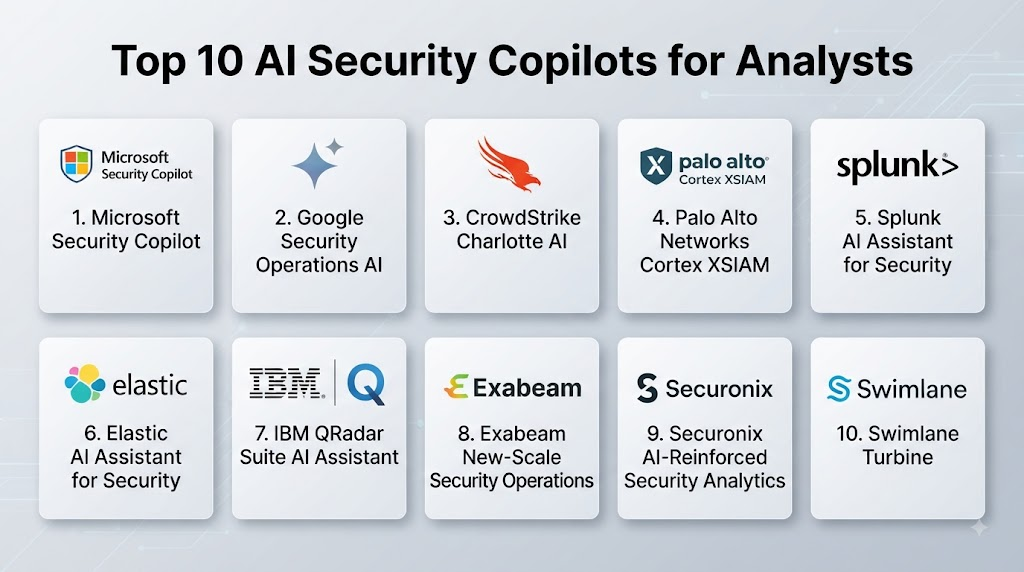
AI Incident Triage & Summarization platforms can significantly improve SOC productivity by reducing repetitive investigation and documentation work. Their value is strongest when AI is connected to reliable security telemetry, endpoint information, identity context, cloud activity, threat intelligence, and established incident-management workflows.Microsoft Security Copilot, Google Security Operations with Gemini, CrowdStrike Charlotte AI, SentinelOne Purple AI, Cortex XSIAM, Splunk AI Assistant, Elastic AI Assistant, IBM watsonx, Tines AI, and Torq AI represent different approaches to AI-assisted security operations and incident automation.The best platform depends on the organization’s existing security stack, incident volume, technical expertise, governance requirements, budget, and desired automation level. A platform that performs well in one SOC may not be the best fit for another.