Introduction
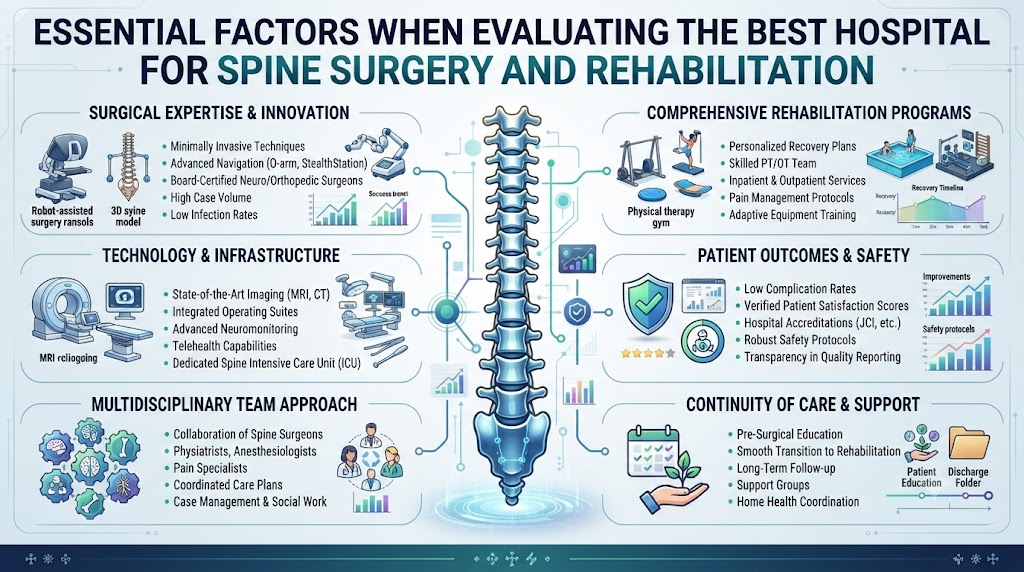
When spine problems begin affecting daily life, finding the right medical team can quickly become a priority. Patients often search online for the best spine hospitals, best spine surgeons, or the best hospital for spine surgery. But a hospital’s position in search results does not tell the whole story. The more useful question is whether a hospital has the right expertise, diagnostic facilities, treatment choices, and follow-up support for the patient’s particular situation. Spine care can range from non-surgical management and physical therapy to complex surgical treatment. Because every patient’s condition is different, hospital selection should be based on individual medical requirements rather than a single ranking or general reputation. can be used as a research resource for patients exploring spine hospitals, specialists, and treatment options. This guide explains the main points patients can consider before choosing a spine hospital and preparing for a specialist consultation.
The First Step Is Understanding Your Care Needs
Patients do not always know exactly what type of spine care they need when they begin searching.
Common reasons for visiting a spine specialist include:
- Persistent back pain
- Neck problems
- Herniated or slipped discs
- Spinal stenosis
- Scoliosis
- Spinal deformities
- Nerve compression
- Degenerative spine conditions
- Certain spinal injuries
These conditions can require different approaches.
For example, a patient with a manageable disc problem may receive conservative treatment, while someone with a complex spinal condition may require a surgical evaluation.
Symptoms alone are not enough to determine the correct treatment. A qualified healthcare professional should assess the patient’s medical history, symptoms, physical findings, and appropriate diagnostic information.
Look Beyond the Hospital Name
One of the easiest mistakes patients can make is choosing a hospital only because it is well known.
Reputation can be one consideration, but it should be combined with more practical questions.
Patients can investigate:
- Which spine specialists are available?
- Do they treat conditions similar to mine?
- What diagnostic services are provided?
- What treatment options are available?
- Is rehabilitation available?
- How is follow-up care managed?
- Is the hospital accessible for future appointments?
This approach can provide a more realistic picture of whether a hospital fits the patient’s needs.
Understanding Spine Specialist Expertise
The medical team plays a central role in spine care.
Depending on the patient’s condition, care may involve:
- Orthopedic spine surgeons
- Neurosurgeons
- Neurologists
- Radiologists
- Pain management specialists
- Physiotherapists
- Rehabilitation professionals
When researching the best spine surgeons, patients can look at relevant medical qualifications, specialist training, areas of practice, and experience with similar conditions or procedures.
It is also useful to consider how clearly the specialist explains the diagnosis and treatment choices.
Questions Patients Can Ask
During a consultation, patients may ask:
- What is causing my symptoms?
- What is my diagnosis?
- What treatment options are available?
- Is surgery necessary?
- Are there appropriate non-surgical options?
- What are the possible risks and benefits?
- What follow-up will be required?
Patients should feel comfortable asking for an explanation when medical terminology is unclear.
Diagnostic Facilities Matter, but More Tests Are Not Always Better
A proper evaluation is an important part of spine care.
Depending on the patient’s condition, a specialist may use:
- Physical examination
- Medical history
- X-rays
- MRI
- CT scans
- Neurological assessment
- Other appropriate investigations
The exact tests required depend on the clinical situation.
Patients should therefore focus on whether the hospital has appropriate diagnostic capabilities rather than simply looking for a facility that offers the largest number of tests.
Imaging results also need to be interpreted alongside symptoms, physical findings, and medical history.
Surgery Is Not Automatically the First Choice
The availability of surgery should not be the only factor used to judge a spine hospital.
Depending on the condition, patients may receive:
- Physical therapy
- Medicines
- Exercise guidance
- Activity modification
- Pain management
- Rehabilitation
- Other non-surgical care
- Surgery when clinically appropriate
This is especially relevant for patients researching spine surgery hospitals.
A hospital that provides comprehensive spine care should be able to discuss appropriate treatment options rather than making surgery appear necessary for every patient.
Patients should ask why surgery has been recommended and whether suitable alternatives exist.
Choosing the Best Hospital for Spine Surgery
When an operation is being considered, patients should evaluate the hospital’s care pathway from preparation to recovery.
Before Surgery
The process may include:
- Specialist consultation
- Diagnostic evaluation
- Preoperative testing
- Medical assessment
- Anesthesia assessment
- Discussion of the proposed procedure
- Review of possible alternatives and risks
Patients should understand the purpose of the procedure before deciding whether to proceed.
During Surgery
When comparing the best spine surgery hospitals, patients may consider:
- Operating facilities
- Qualified surgical professionals
- Anesthesia services
- Patient monitoring
- Inpatient support
- Emergency facilities
After Surgery
Recovery can involve:
- Follow-up appointments
- Physical therapy
- Rehabilitation
- Activity guidance
- Recovery monitoring
- Additional evaluation when required
Looking at postoperative support can help patients understand the complete care experience.
Minimally Invasive Spine Surgery: What Patients Should Know
Minimally invasive spine surgery is frequently discussed when patients compare treatment options.
People looking for the best hospital for minimally invasive spine surgery may be interested in procedures that use smaller incisions and specialized techniques.
However, minimally invasive surgery is not suitable for every patient.
Its suitability may depend on:
- The diagnosis
- The location of the problem
- Spinal anatomy
- Severity
- Procedure required
- Overall health
- Specialist evaluation
Patients should therefore ask whether a minimally invasive approach is actually appropriate rather than choosing a hospital simply because it advertises the technique.
Important Questions
Patients can ask:
- Why is this technique being recommended?
- Is it suitable for my condition?
- What alternatives are available?
- What are the potential risks?
- What follow-up care will I need?
The treatment decision should be based on medical suitability.
Finding the Best Hospital for Slipped Disc Treatment
A slipped disc, or herniated disc, may sometimes place pressure on nearby nerves.
Possible symptoms include:
- Back or neck pain
- Pain extending into an arm or leg
- Numbness
- Tingling
- Weakness
People searching for the best hospital for slipped disc treatment should look for a hospital that can provide proper evaluation and explain different treatment options.
Depending on the individual condition, care may involve:
- Physical therapy
- Medicines
- Activity modification
- Pain management
- Rehabilitation
- Other non-surgical treatment
- Surgery in selected cases
A slipped disc does not automatically mean surgery is required.
A specialist should consider the patient’s symptoms, examination, imaging, medical history, and previous treatment before recommending an approach.
Researching the Best Hospital for Scoliosis Surgery
Scoliosis can vary considerably from one patient to another.
Treatment depends on factors related to the spinal curvature, the patient’s circumstances, and the specialist’s evaluation.
Some patients may need monitoring or non-surgical management, while others may require an assessment for surgery.
When searching for the best hospital for scoliosis surgery, patients can investigate:
- Scoliosis expertise
- Spinal deformity experience
- Diagnostic capabilities
- Specialist availability
- Surgical infrastructure
- Rehabilitation services
- Follow-up care
The decision to undergo surgery should follow appropriate medical evaluation.
Rehabilitation Can Be an Important Part of Hospital Selection
Treatment does not necessarily end when a diagnosis is made or a procedure is completed.
Depending on the patient’s condition, rehabilitation may include:
- Physical therapy
- Exercise guidance
- Mobility training
- Pain management
- Follow-up consultations
- Recovery monitoring
This is why rehabilitation should be included when comparing best spine treatment hospitals.
For patients who need repeated sessions, convenient access to rehabilitation can also become an important practical consideration.
When Multidisciplinary Care Can Help
Some spine problems are complex and may require input from multiple specialists.
A multidisciplinary team may include:
- Spine surgeons
- Neurosurgeons
- Neurologists
- Radiologists
- Pain specialists
- Physiotherapists
- Rehabilitation professionals
The purpose is to bring together relevant expertise when necessary.
However, a hospital should not be judged simply by the number of specialists it has. What matters is whether the appropriate professionals are available for the patient’s particular condition.
A Simple Way to Compare Spine Hospitals
Patients can create a side-by-side comparison before making a decision.
| Factor | What Patients Should Review |
|---|---|
| Specialist expertise | Experience with the relevant condition |
| Diagnostic services | Appropriate evaluation and imaging |
| Treatment choices | Surgical and non-surgical options |
| Surgical care | Facilities and qualified support |
| Rehabilitation | Therapy and recovery services |
| Follow-up | Post-treatment monitoring |
| Location | Travel and appointment convenience |
| Emergency care | Availability of urgent services |
| Communication | Clear information from the care team |
This type of comparison can be more useful than simply asking which hospital has the highest ranking.
Best Spine Hospital Near Me: Balancing Convenience and Expertise
Searching for a best spine hospital near me is often about convenience.
A nearby hospital can make it easier to attend:
- Specialist consultations
- Diagnostic appointments
- Therapy sessions
- Rehabilitation
- Follow-up visits
However, proximity should be considered alongside medical expertise.
The closest hospital may not have the specialist or treatment services required for a particular condition.
Patients may therefore compare nearby hospitals with other relevant options when their condition requires specialized care.
Preparing for Your Specialist Appointment
Patients can make their consultation more productive by preparing in advance.
Bring:
- Previous medical reports
- Imaging reports
- Scan images, if available
- Medication information
- Previous treatment details
- A list of symptoms
- Questions for the specialist
It can also help to write down when symptoms began and how they affect daily activities.
Good preparation can make it easier to explain concerns and understand the specialist’s recommendations.
Questions to Ask Before Choosing a Hospital
When comparing best spine treatment hospitals, patients can ask the same questions at each hospital.
Consider asking:
- What is my diagnosis?
- What may be causing my symptoms?
- What treatment options are available?
- Is surgery necessary?
- Are non-surgical approaches suitable?
- Is minimally invasive surgery appropriate?
- What are the possible risks and benefits?
- Which specialist will manage my care?
- Will I need rehabilitation?
- What follow-up services are available?
Keeping notes can make it easier to compare answers afterward.
Why Online Rankings Should Not Make the Decision for You
Online rankings, reviews, and ratings can help patients begin their research, but they should not be treated as a final medical recommendation.
A hospital may be highly rated overall while not offering the specific expertise needed for an individual spine condition.
Patients can instead research:
- Relevant specialist experience
- Treatment services
- Diagnostic facilities
- Surgical infrastructure
- Rehabilitation
- Follow-up care
- Accessibility
This gives patients a broader basis for comparison.
Using BestSpineHospitals.com for Research
Patients exploring spine hospitals and specialists can visit to support their initial research.
Online information can help patients understand available options and prepare questions for a specialist.
It should not be used to diagnose a condition or determine an individual treatment plan. Those decisions should be made with a qualified healthcare professional after appropriate evaluation.
FAQs
FAQ 1
How can I identify the best spine hospitals for my needs?
Compare specialist expertise, relevant experience, diagnostic facilities, treatment choices, surgical capabilities, rehabilitation, accessibility, and follow-up care. The right hospital depends on the patient’s individual needs.
FAQ 2
What should I check when researching the best spine surgeons?
Consider relevant qualifications, specialist training, experience with similar conditions or procedures, hospital affiliation, communication, and follow-up arrangements.
FAQ 3
What should I look for in the best hospital for spine surgery?
Review the specialist team, diagnostic facilities, operating infrastructure, anesthesia support, inpatient services, emergency support, rehabilitation, and postoperative care.
FAQ 4
Does every spine condition require surgery?
No. Depending on the diagnosis, treatment may include physical therapy, medicines, exercise, activity modification, pain management, rehabilitation, or other non-surgical approaches. Surgery is used when clinically appropriate.
FAQ 5
How can I choose the best hospital for minimally invasive spine surgery?
Ask whether minimally invasive surgery is appropriate for your condition, why the specialist recommends it, and what alternatives are available. The decision should be based on medical evaluation.
FAQ 6
What factors matter when choosing the best hospital for scoliosis surgery?
Consider scoliosis and spinal deformity expertise, diagnostic services, specialist availability, surgical facilities, rehabilitation, and follow-up care. A qualified specialist should determine whether surgery is appropriate.
FAQ 7
What should I look for in the best hospital for slipped disc treatment?
Look for a hospital that can properly evaluate the condition and explain appropriate treatment options. Depending on the individual situation, treatment may be non-surgical or surgical.
FAQ 8
Why is rehabilitation important when comparing best spine treatment hospitals?
Some patients may need physical therapy, exercise guidance, recovery monitoring, or follow-up after treatment. Rehabilitation services can therefore be an important comparison factor.
FAQ 9
Is the best spine hospital near me always the most suitable option?
Not necessarily. A nearby hospital may be convenient, but patients should also consider specialist expertise, relevant treatment services, diagnostic facilities, rehabilitation, and follow-up care.
FAQ 10
When should I consult a qualified spine specialist?
Consult a qualified healthcare professional when spine symptoms persist, worsen, interfere with normal activities, or require specialist assessment. The professional can determine what evaluation or treatment may be appropriate.
Conclusion
Choosing among spine hospitals is not simply a matter of finding the hospital with the most impressive reputation. It is about understanding what type of care is needed and then comparing hospitals based on relevant expertise and services. Patients can review specialist qualifications, experience, diagnostic facilities, treatment options, surgical infrastructure, rehabilitation, accessibility, and follow-up care. If surgery is recommended, patients should understand why it has been suggested and discuss appropriate alternatives, potential risks, and the overall treatment process with a qualified specialist. The same principle applies when researching minimally invasive spine surgery, scoliosis surgery, or slipped disc treatment. The appropriate treatment depends on the patient’s individual condition. Online research is useful for preparing questions and comparing options, but it should not replace professional medical evaluation. A thoughtful, patient-focused comparison can help individuals and families approach spine-care decisions with better information and clearer expectations.