Introduction
AI Compensation Benchmarking Tools help organizations analyze salary, compensation, benefits, and workforce market data to make more informed pay decisions. As companies compete for specialized talent across different locations and increasingly flexible work arrangements, compensation teams need reliable ways to understand whether their pay structures remain competitive.Traditional compensation benchmarking often involves collecting survey data, comparing job titles, manually matching roles, reviewing market reports, and building spreadsheets. While these methods remain important, they can become difficult to manage when organizations have hundreds or thousands of employees across multiple job families, locations, and compensation structures.AI-powered compensation benchmarking tools can improve this process by helping organizations analyze large volumes of compensation data, identify comparable roles, normalize job information, detect patterns, and generate market insights. Some platforms use skills, job descriptions, workforce data, and market information to improve job matching and compensation analysis.
A major challenge in compensation benchmarking is that job titles alone are often unreliable. Two employees with the same title may have very different responsibilities, seniority levels, skills, or geographic markets. AI and data-driven systems can help organizations analyze broader job attributes rather than relying only on title-based comparisons.
What Are AI Compensation Benchmarking Tools?
AI Compensation Benchmarking Tools are platforms that use data analytics, machine learning, automation, and AI-assisted analysis to help organizations understand compensation levels and compare them with relevant market data.
They may analyze:
- Base salary
- Variable compensation
- Bonuses
- Equity
- Geographic location
- Job level
- Job family
- Skills
- Experience
- Company size
- Industry
- Market data
- Pay ranges
- Internal compensation structures
The goal is to help organizations answer questions such as:
- Are we paying competitively?
- What is the market range for this role?
- Are similar employees paid consistently?
- How should we structure salary bands?
- Where are potential pay gaps?
- Which roles may be difficult to hire because of market compensation?
- How do compensation ranges differ by location?
Why AI Compensation Benchmarking Matters
Organizations operate in increasingly dynamic talent markets. Compensation information can change as demand for skills changes, new roles emerge, and organizations expand into different geographic regions.
AI-powered benchmarking can help organizations:
- Analyze compensation data at scale
- Improve job matching
- Reduce manual spreadsheet work
- Identify market trends
- Build compensation ranges
- Support compensation planning
- Improve pay transparency
- Analyze pay equity
- Support global workforce compensation
- Connect skills with compensation insights
Key Features
Market Compensation Benchmarking
Compare internal compensation with relevant market data.
AI-Assisted Job Matching
Analyze job descriptions and responsibilities to identify comparable market roles.
Salary Range Management
Create and manage salary bands and compensation structures.
Geographic Compensation Analysis
Compare compensation across cities, regions, and countries.
Pay Equity Analysis
Identify potential pay differences that may require further human investigation.
Compensation Planning
Support annual compensation reviews, salary increases, bonuses, and other planning activities.
Total Rewards Analysis
Analyze salary alongside bonuses, equity, and other compensation components.
Skills-Based Compensation Insights
Connect employee skills and market demand with compensation analysis.
Compensation Analytics
Provide dashboards and workforce-level compensation insights.
Scenario Modeling
Analyze potential compensation changes under different workforce or budget scenarios.
Data Integration
Connect with HRIS, HCM, payroll, and workforce management systems.
Pay Transparency Support
Help organizations manage salary ranges and compensation communication.
Common Use Cases
Salary Benchmarking
Compare internal salaries against relevant external market information.
New Hire Compensation
Support compensation teams when creating offers for new employees.
Annual Compensation Reviews
Analyze market movement and internal pay positioning.
Pay Range Creation
Develop salary bands for roles, levels, and locations.
Pay Equity Reviews
Analyze compensation patterns and identify areas requiring investigation.
Global Compensation
Compare compensation structures across international workforce locations.
Skills-Based Pay Analysis
Understand how specialized or high-demand skills may influence compensation.
Workforce Planning
Use compensation insights to estimate talent costs for future workforce plans.
Budget Planning
Model the financial impact of salary adjustments and compensation programs.
Benefits
Faster Compensation Analysis
AI and automation can reduce repetitive data preparation and comparison work.
Better Job Matching
Analyzing job content can provide more context than title-only comparisons.
Improved Market Awareness
Organizations can monitor compensation positioning more effectively.
Reduced Spreadsheet Dependency
Centralized compensation platforms can improve consistency and governance.
Better Pay Range Management
Compensation teams can maintain structured salary ranges across roles and locations.
Stronger Pay Equity Processes
Data analysis can help identify patterns that deserve additional investigation.
Improved Decision Support
Leaders can use compensation insights during hiring and workforce planning.
Global Scalability
Platforms can help manage compensation across multiple geographic markets.
Challenges and Risks
Market Data Quality
Benchmarking accuracy depends heavily on the quality, relevance, and freshness of available market data.
Incorrect Job Matching
AI may incorrectly identify comparable roles when job descriptions or organizational data are incomplete.
Bias
Historical compensation data may contain existing inequities that should not be automatically reproduced.
Privacy
Compensation information is highly sensitive employee data.
Geographic Complexity
Compensation varies significantly by country, region, city, and remote-work policies.
Over-Reliance on Recommendations
Market benchmarks should inform decisions rather than automatically determine employee pay.
Explainability
Compensation professionals need to understand the basis of recommendations and comparisons.
Regulatory Requirements
Pay transparency and compensation regulations vary across jurisdictions.
Responsible AI Practices for Compensation Benchmarking
Organizations should apply strong governance when using AI in compensation processes.
Recommended practices include:
- Keep humans responsible for final compensation decisions
- Validate benchmark data
- Review AI-generated job matches
- Monitor for biased recommendations
- Protect sensitive compensation information
- Maintain access controls
- Document compensation methodologies
- Review geographic assumptions
- Allow correction of inaccurate job data
- Regularly audit compensation outcomes
AI can improve analysis, but it should not replace professional compensation judgment.
Evaluation Criteria
The following factors can be used to evaluate AI Compensation Benchmarking Tools:
- Compensation data coverage
- Market benchmarking quality
- AI-assisted job matching
- Geographic analysis
- Salary range management
- Pay equity analysis
- Compensation planning
- Analytics
- Data integrations
- Security
- Privacy
- Ease of use
- Global coverage
- Scalability
Key Trends
Skills-Based Compensation
Organizations are increasingly analyzing skills alongside traditional job architecture and salary structures.
AI-Assisted Job Matching
AI can help interpret job descriptions and identify more relevant market comparisons.
Continuous Market Intelligence
Organizations are moving toward more frequent compensation monitoring instead of relying exclusively on periodic surveys.
Pay Transparency
Compensation teams increasingly need systems capable of managing salary ranges and communicating compensation information.
Global Compensation Intelligence
Distributed workforces are increasing demand for location-aware compensation analysis.
Pay Equity Analytics
Organizations are using advanced analytics to identify patterns that may require review.
Scenario-Based Compensation Planning
Compensation teams can model different salary, budget, and workforce scenarios.
Integration with Workforce Planning
Compensation intelligence is increasingly connected with headcount planning and talent strategy.
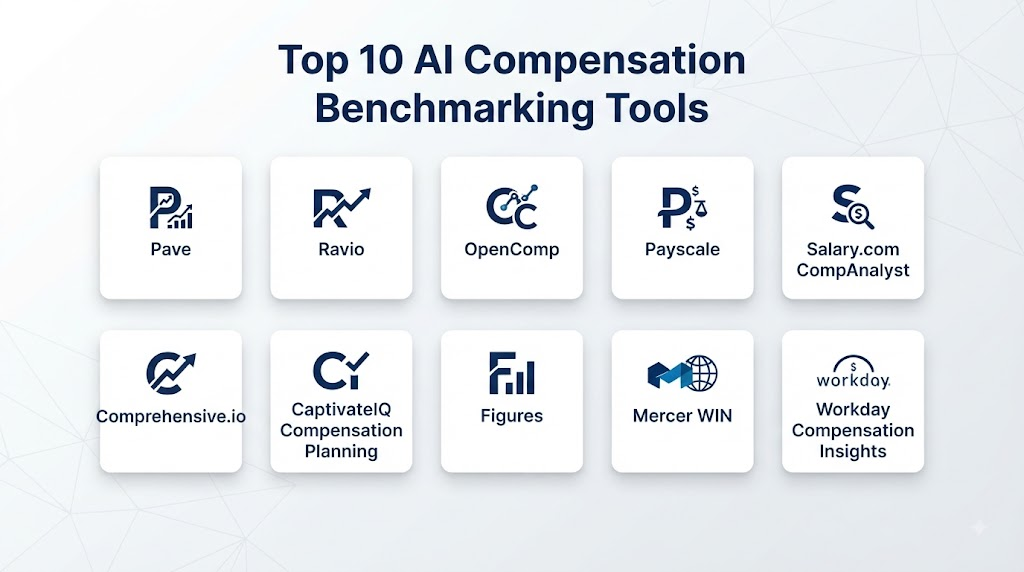
Top 10 AI Compensation Benchmarking Tools
1. Payscale
Payscale provides compensation data and software designed to support salary benchmarking, compensation planning, and pay management.
Key Features
- Compensation benchmarking
- Salary data
- Pay range management
- Compensation planning
- Job matching
- Compensation analytics
Pros
- Strong compensation-focused platform
- Useful salary benchmarking capabilities
- Supports compensation planning
- Broad compensation management functionality
Cons
- Data relevance depends on role and market coverage
- Organizations may need careful job architecture alignment
2. Mercer Comptryx
Mercer provides compensation and workforce benchmarking capabilities through its broader rewards and workforce intelligence offerings.
Key Features
- Compensation benchmarking
- Market data
- Job analysis
- Pay structures
- Rewards intelligence
- Workforce insights
Pros
- Strong compensation and rewards expertise
- Suitable for complex enterprise environments
- Broad market intelligence
- Global relevance
Cons
- May require specialized compensation expertise
- Enterprise benchmarking processes can be complex
3. Salary.com
Salary.com provides compensation data, salary benchmarking, job matching, and compensation management capabilities.
Key Features
- Salary benchmarking
- Market pricing
- Compensation analytics
- Job descriptions
- Salary structures
- Pay range management
Pros
- Strong focus on compensation information
- Useful salary data capabilities
- Supports structured compensation workflows
- Good fit for compensation teams
Cons
- Data applicability varies by market and role
- Advanced implementation may require compensation expertise
4. Aon Radford
Aon Radford provides compensation and workforce benchmarking information, particularly relevant to technology and innovation-focused organizations.
Key Features
- Market compensation data
- Technology workforce benchmarking
- Total rewards analysis
- Salary data
- Job benchmarking
- Global compensation insights
Pros
- Strong technology-sector relevance
- Useful global compensation data
- Established compensation benchmarking capabilities
- Supports total rewards analysis
Cons
- Best fit may depend on industry and survey participation
- Specialized data products may require expert interpretation
5. Ravio
Ravio focuses on compensation benchmarking and compensation intelligence for modern organizations.
Key Features
- Compensation benchmarking
- Market intelligence
- Salary range analysis
- Pay positioning
- Compensation analytics
- Market updates
Pros
- Modern compensation intelligence approach
- Useful benchmarking workflows
- Strong focus on compensation teams
- Supports market-aware pay decisions
Cons
- Market coverage should be evaluated for specific locations
- Organizations with highly specialized compensation requirements may need additional data sources
6. Figures
Figures provides compensation benchmarking and salary intelligence focused on helping organizations understand market compensation.
Key Features
- Salary benchmarking
- Compensation intelligence
- Pay range insights
- Market comparisons
- Compensation analytics
- Benchmarking reports
Pros
- Strong focus on compensation benchmarking
- Useful market intelligence
- Modern compensation workflows
- Supports structured salary analysis
Cons
- Geographic and industry coverage should be evaluated
- Organizations may need additional data for specialized roles
7. Compa
Compa provides compensation intelligence and planning capabilities designed to support data-driven compensation decisions.
Key Features
- Compensation planning
- Market benchmarking
- Compensation intelligence
- Salary analysis
- Offer insights
- Pay analytics
Pros
- Strong compensation operations focus
- Useful planning workflows
- Supports market-informed decisions
- Designed for modern compensation teams
Cons
- Organizations should evaluate available market coverage
- Integration requirements may vary
8. Pave
Pave provides compensation benchmarking and compensation planning capabilities for organizations managing modern workforce compensation.
Key Features
- Market compensation data
- Benchmarking
- Compensation planning
- Salary bands
- Pay analytics
- Total rewards insights
Pros
- Modern user experience
- Strong compensation planning capabilities
- Useful market intelligence
- Supports structured compensation processes
Cons
- Benchmark coverage should be evaluated by role and location
- Organizations with complex global structures may require additional configuration
9. Carta Total Comp
Carta provides equity and total compensation capabilities, particularly useful for organizations that need to understand compensation beyond base salary.
Key Features
- Equity compensation
- Total compensation analysis
- Compensation benchmarking
- Salary insights
- Equity management
- Workforce compensation data
Pros
- Strong equity compensation capabilities
- Useful for startup and growth-stage organizations
- Supports total rewards analysis
- Connects equity and compensation information
Cons
- Best fit may depend on the organization’s equity compensation requirements
- Organizations focused only on salary benchmarking may need additional functionality
10. beqom
beqom provides enterprise compensation management and total rewards capabilities.
Key Features
- Compensation management
- Salary planning
- Bonus planning
- Total rewards
- Pay equity analysis
- Compensation analytics
Pros
- Strong enterprise compensation functionality
- Supports complex compensation structures
- Useful planning capabilities
- Suitable for large organizations
Cons
- Enterprise implementation may require significant configuration
- May offer more functionality than smaller organizations require
Comparison Table
| No. | Platform | Best For | Benchmarking | Compensation Planning | Pay Equity | Global Coverage | Analytics |
|---|---|---|---|---|---|---|---|
| 1 | Payscale | Compensation management | Strong | Strong | Strong | Strong | Strong |
| 2 | Mercer Comptryx | Enterprise benchmarking | Strong | Strong | Strong | Strong | Strong |
| 3 | Salary.com | Salary benchmarking | Strong | Strong | Moderate | Strong | Strong |
| 4 | Aon Radford | Technology compensation | Strong | Strong | Moderate | Strong | Strong |
| 5 | Ravio | Modern compensation teams | Strong | Strong | Moderate | Strong | Strong |
| 6 | Figures | Salary intelligence | Strong | Moderate | Moderate | Moderate | Strong |
| 7 | Compa | Compensation operations | Strong | Strong | Moderate | Moderate | Strong |
| 8 | Pave | Modern compensation planning | Strong | Strong | Moderate | Strong | Strong |
| 9 | Carta Total Comp | Equity and total rewards | Strong | Strong | Moderate | Strong | Strong |
| 10 | beqom | Enterprise total rewards | Strong | Strong | Strong | Strong | Strong |
Weighted Evaluation Table
| No. | Platform | Benchmarking 25% | AI & Analytics 15% | Planning 15% | Pay Equity 10% | Integrations 15% | Global Coverage 10% | Ease of Use 10% | Total Score |
|---|---|---|---|---|---|---|---|---|---|
| 1 | Payscale | 25 | 14 | 15 | 9 | 14 | 9 | 9 | 95 |
| 2 | Mercer Comptryx | 25 | 14 | 14 | 10 | 15 | 10 | 7 | 95 |
| 3 | Salary.com | 24 | 13 | 14 | 8 | 14 | 9 | 9 | 91 |
| 4 | Aon Radford | 25 | 13 | 13 | 8 | 14 | 10 | 8 | 91 |
| 5 | Ravio | 23 | 14 | 14 | 8 | 13 | 9 | 10 | 91 |
| 6 | Figures | 23 | 14 | 12 | 8 | 12 | 8 | 10 | 87 |
| 7 | Compa | 22 | 14 | 15 | 8 | 13 | 8 | 9 | 89 |
| 8 | Pave | 23 | 14 | 15 | 8 | 14 | 9 | 10 | 93 |
| 9 | Carta Total Comp | 22 | 14 | 14 | 8 | 14 | 9 | 9 | 90 |
| 10 | beqom | 23 | 14 | 15 | 10 | 15 | 10 | 8 | 95 |
Which AI Compensation Benchmarking Tool Is Right for You?
Choose Payscale if you need a compensation-focused platform for benchmarking, pay structures, and compensation management.
Choose Mercer Comptryx if your organization requires enterprise-level compensation and rewards benchmarking.
Choose Salary.com if salary benchmarking and structured compensation data are your main priorities.
Choose Aon Radford if technology, innovation, and specialized market compensation data are important to your organization.
Choose Ravio if you want a modern platform focused on compensation intelligence and market-aware pay decisions.
Choose Figures if you need streamlined compensation benchmarking and salary intelligence.
Choose Compa if compensation planning and operational workflows are central to your requirements.
Choose Pave if you want modern compensation benchmarking combined with planning and total rewards insights.
Choose Carta Total Comp if equity compensation is an important part of your total rewards strategy.
Choose beqom if you manage complex enterprise compensation and total rewards programs.
Common Mistakes
- Comparing salaries using job titles alone
- Using outdated benchmark data
- Ignoring geographic differences
- Failing to consider total compensation
- Automatically accepting AI-generated job matches
- Using historical pay data without equity analysis
- Treating market data as the only compensation factor
- Ignoring internal pay consistency
- Using incomplete employee data
- Failing to document compensation methodology
- Allowing automated systems to make final salary decisions
- Ignoring privacy and security requirements
FAQs
1. What are AI Compensation Benchmarking Tools?
They are platforms that use compensation data, analytics, automation, and AI-assisted analysis to help organizations compare pay with relevant market information.
2. How does AI improve compensation benchmarking?
AI can help analyze job descriptions, identify comparable roles, process large datasets, detect patterns, and improve compensation analysis workflows.
3. Can AI determine an employee’s salary?
AI can provide analysis and recommendations, but final compensation decisions should remain under appropriate human and organizational oversight.
4. What data is used for compensation benchmarking?
Common data includes job information, salary, bonuses, equity, location, experience, skills, job level, industry, and external market data.
5. Can these tools help with pay equity?
Many compensation platforms provide analytics that can help identify pay patterns requiring further investigation.
6. Why is job matching important?
Job titles alone may not accurately represent job scope. Better job matching can improve the relevance of market comparisons.
7. Can compensation benchmarking tools support global teams?
Yes. Some platforms provide multi-country or global market analysis, although coverage should be evaluated for specific locations and roles.
8. What is skills-based compensation?
It is an approach that considers relevant employee capabilities and in-demand skills alongside traditional job and salary structures.
9. What should companies check before selecting a tool?
Organizations should evaluate data quality, market coverage, job matching, integrations, security, privacy, analytics, geographic coverage, and compensation planning capabilities.
10. What is the future of AI compensation benchmarking?
The category is moving toward AI-assisted job matching, continuous market intelligence, skills-based compensation analysis, pay equity analytics, scenario modeling, global compensation intelligence, and deeper workforce planning integration.
Conclusion
AI Compensation Benchmarking Tools can help organizations analyze compensation data more efficiently and understand how their pay practices compare with relevant labor markets. They can support job matching, salary range development, compensation planning, pay equity analysis, and global workforce compensation strategies.Payscale, Mercer Comptryx, Salary.com, Aon Radford, Ravio, Figures, Compa, Pave, Carta Total Comp, and beqom offer different approaches to compensation intelligence and benchmarking.The right choice depends on organizational size, industry, geographic footprint, job complexity, compensation philosophy, existing HR systems, and total rewards strategy.