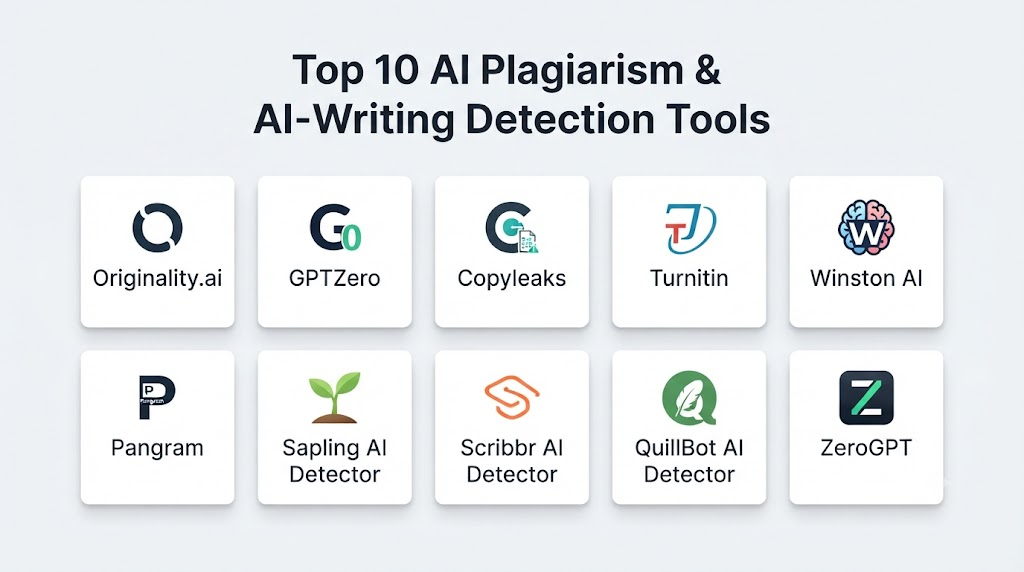
Introduction
AI Plagiarism & AI-Writing Detection tools help educators, publishers, businesses, and organizations review written content for potential text similarity, possible copied material, and indicators associated with AI-generated writing. These tools are increasingly used alongside traditional plagiarism checking rather than as a replacement for human judgment.
Traditional plagiarism detection primarily looks for matching or highly similar text across known sources. AI-writing detection is different: it attempts to estimate whether a piece of text may have been generated or substantially assisted by an AI system. Because AI-generated text can be edited by humans and detection systems can produce both false positives and false negatives, results should generally be treated as signals for review rather than definitive proof.
Best for: Schools, universities, publishers, editors, content teams, businesses, online educators, and organizations that need scalable originality and writing-risk checks.
Not ideal for: Situations where a detector’s result is expected to prove authorship with certainty, highly edited text where detection signals may be unreliable, or high-stakes decisions made without human review.
What Is AI Plagiarism & AI-Writing Detection?
AI Plagiarism & AI-Writing Detection combines two related but distinct capabilities.
Plagiarism detection looks for overlap or similarity between submitted content and existing material.
AI-writing detection analyzes linguistic and statistical patterns to estimate whether text may have been generated or substantially modified using AI.
A modern review workflow may therefore look like:
Submit text → Check similarity → Analyze AI-writing signals → Review evidence → Investigate context → Make a human decision
The distinction is important.
A high similarity result can provide identifiable matching text or sources. An AI-writing score is generally an inference about how the text was produced.
These should not be treated as equivalent forms of evidence.
How AI Plagiarism Detection Works
Traditional plagiarism systems typically compare submitted text against large collections of material.
Potential sources may include:
- Public web pages
- Academic publications
- Student-paper repositories
- Institutional databases
- Previously submitted documents
- Licensed content collections
The system identifies matching or similar passages and presents them for review.
Exact Matching
The simplest approach identifies identical phrases or sentences.
Partial Matching
More advanced systems can identify sections that have been modified while retaining substantial similarity.
Semantic Similarity
Some systems use machine learning to identify conceptually similar passages even when wording is different.
Source Reporting
The tool can present matching sources and similarity indicators so reviewers can investigate the material.
How AI-Writing Detection Works
AI-writing detection is fundamentally different from plagiarism detection.
An AI detector may analyze characteristics such as:
- Sentence structure
- Predictability of word choices
- Linguistic patterns
- Phrase distributions
- Stylometric characteristics
- Statistical patterns associated with model-generated text
The system may then provide a probability, percentage, classification, or indicator.
However, a detector cannot reliably establish authorship simply from the text itself.
Human editing, paraphrasing, translation, and changes in writing style can affect results.
Why AI-Writing Detection Matters
The increasing use of generative AI has changed how organizations think about authorship and originality.
Students can use AI to brainstorm or improve writing. Employees can use AI assistants to draft documents. Publishers can encounter machine-generated submissions. Businesses can generate large amounts of marketing content.
The challenge is not simply identifying AI use.
Organizations need to determine:
- What AI usage is permitted?
- What constitutes unacceptable copying?
- What evidence is sufficient for investigation?
- How should human editing be handled?
- How should false positives be addressed?
- Who makes the final decision?
A responsible detection workflow therefore combines technology with clear policies and human review.
Key Features to Look For
When evaluating these tools, consider:
- Similarity detection
- AI-writing detection
- Source identification
- Sentence-level matching
- Paraphrase detection
- Cross-document comparison
- Academic databases
- Web indexing
- Institutional repositories
- Citation analysis
- Document reports
- AI-writing indicators
- Writing-style analysis
- Browser or LMS integration
- API access
- Batch processing
- Privacy controls
- Data retention settings
- Role-based access
- Audit trails
- Human review workflows
- Reporting
- Export capabilities
Major Use Cases
Academic Integrity
Universities and schools can review assignments for similarity and potential AI-generated writing.
Publishing
Editors can screen manuscripts and submissions for copied material or unusual originality concerns.
Research
Research organizations can use similarity detection during manuscript and document review.
Content Publishing
Editorial teams can review externally submitted content before publication.
Corporate Content
Businesses can perform originality checks on reports, articles, marketing content, and other written materials.
Student Support
Instead of using detection only for enforcement, educators can use results to discuss writing practices, citations, and responsible AI use.
Top 10 AI Plagiarism & AI-Writing Detection Tools
1. Turnitin
One-line verdict: Best for academic institutions needing comprehensive similarity checking and AI-writing review within established integrity workflows.
Short description:
Turnitin is widely used in education for originality and academic-integrity workflows. Its ecosystem includes similarity checking and AI-writing detection capabilities designed to support educators and institutions.
Standout Capabilities
- Similarity checking
- Academic integrity workflows
- AI-writing detection
- Source comparison
- Assignment review
- Instructor feedback
- Institutional reporting
- LMS integration
AI-Specific Depth
- Model support: Managed/proprietary detection capabilities.
- RAG / knowledge integration: Academic and web-content comparison rather than conventional RAG.
- Evaluation: Detection systems are continuously evaluated, but exact methodology varies.
- Guardrails: Institutional academic-integrity controls.
- Observability: Similarity and institutional reporting.
Pros
- Strong academic-integrity ecosystem
- Designed for institutional use
- Combines similarity and AI-writing workflows
Cons
- Primarily education-focused
- AI-writing results require careful interpretation
- Institutional pricing varies
Security & Compliance
Security, privacy, retention, access control, and compliance should be verified against the institution’s current agreement.
Deployment & Platforms
- Deployment: Cloud
- Platforms: Web and supported educational systems
- Self-hosted: Not publicly stated
Integrations & Ecosystem
- LMS platforms
- Assignment systems
- Academic databases
- Similarity checking
- Feedback tools
- Institutional workflows
Pricing Model
Institutional pricing varies.
Best-Fit Scenarios
- Universities
- Academic integrity
- Large-scale assignment checking
2. Copyleaks
One-line verdict: Best for organizations wanting plagiarism detection, AI-content analysis, and developer-friendly content verification capabilities.
Short description:
Copyleaks provides content analysis solutions covering plagiarism detection and AI-generated content detection. It is used across education, business, and content workflows.
Standout Capabilities
- Plagiarism detection
- AI-writing detection
- Source comparison
- Paraphrase analysis
- API access
- LMS integrations
- Enterprise workflows
- Reporting
AI-Specific Depth
- Model support: Proprietary/managed detection models.
- RAG / knowledge integration: Web and document comparison; API-based workflows.
- Evaluation: Detection model evaluation varies by product.
- Guardrails: Content-analysis controls.
- Observability: Reports and API-related analytics vary.
Pros
- Broad use-case coverage
- Strong API orientation
- Supports enterprise workflows
Cons
- Detection accuracy can vary by text type
- Advanced capabilities may require paid plans
- AI detection should not be treated as definitive authorship proof
Security & Compliance
Verify current security certifications, privacy policies, retention options, and enterprise controls before deployment.
Deployment & Platforms
- Deployment: Cloud
- Platforms: Web and API
- Self-hosted: Not publicly stated
Integrations & Ecosystem
- APIs
- LMS
- Enterprise platforms
- Content systems
- Document workflows
- Educational platforms
Pricing Model
Tiered and usage-based options vary.
Best-Fit Scenarios
- Education
- Enterprise content review
- API-based originality checking
3. Originality.ai
One-line verdict: Best for publishers, content teams, and agencies reviewing originality and potential AI-generated content.
Short description:
Originality.ai focuses on content originality and AI-writing detection. It is particularly relevant to publishers, agencies, SEO teams, and organizations managing substantial volumes of web content.
Standout Capabilities
- AI-writing detection
- Plagiarism checking
- Content scanning
- Team workflows
- Reporting
- Website-content analysis
- API capabilities
- Content quality workflows
AI-Specific Depth
- Model support: Proprietary/managed detection.
- RAG / knowledge integration: Web and content comparison.
- Evaluation: Detection models are updated over time.
- Guardrails: Content review controls.
- Observability: Scan reports and team-level workflows.
Pros
- Strong publisher orientation
- Useful for content agencies
- Combines AI and plagiarism checks
Cons
- Detection results are probabilistic
- Less suited to some traditional academic workflows
- Pricing depends on usage and plan
Security & Compliance
Verify current enterprise security and data-retention policies for the intended deployment.
Deployment & Platforms
- Deployment: Cloud
- Platforms: Web
- Self-hosted: Not publicly stated
Integrations & Ecosystem
- Content platforms
- API
- Browser-based workflows
- Team accounts
- Website analysis
- Content-management workflows
Pricing Model
Usage-based and subscription options vary.
Best-Fit Scenarios
- Publishers
- SEO agencies
- Content teams
4. GPTZero
One-line verdict: Best for educators and institutions looking for accessible AI-writing analysis and document-level writing review.
Short description:
GPTZero focuses primarily on detecting text that may have been generated using AI. It provides writing-analysis workflows for education and other users.
Standout Capabilities
- AI-writing detection
- Document analysis
- Writing review
- Sentence-level analysis
- Education workflows
- Reporting
- Document uploads
- Detection dashboards
AI-Specific Depth
- Model support: Proprietary/managed detection.
- RAG / knowledge integration: Not primarily a RAG platform.
- Evaluation: Detection evaluation and benchmarking vary.
- Guardrails: Detection-focused safeguards.
- Observability: Detection reports and analysis.
Pros
- Strong focus on AI-writing detection
- Useful for educational workflows
- Straightforward analysis experience
Cons
- AI detection remains probabilistic
- False positives are possible
- Should not be used as sole evidence of misconduct
Security & Compliance
Verify current privacy, retention, security, and institutional controls before using sensitive documents.
Deployment & Platforms
- Deployment: Cloud
- Platforms: Web
- Self-hosted: Not publicly stated
Integrations & Ecosystem
- Document uploads
- Education workflows
- Browser-related tools
- API capabilities
- Reporting
Pricing Model
Free and paid offerings may vary over time.
Best-Fit Scenarios
- Education
- AI-writing review
- Individual document analysis
5. Winston AI
One-line verdict: Best for educators, publishers, and businesses seeking AI-writing and plagiarism analysis in one workflow.
Short description:
Winston AI provides AI-content detection and plagiarism-checking capabilities for written material. It is designed for users who need to review documents and content for originality signals.
Standout Capabilities
- AI-writing detection
- Plagiarism detection
- Document analysis
- Reports
- Content review
- Scanning
- Team workflows
- Writing analysis
AI-Specific Depth
- Model support: Proprietary/managed detection.
- RAG / knowledge integration: Document and web comparison.
- Evaluation: Detection performance varies by content.
- Guardrails: Content-review controls.
- Observability: Reports and scan results.
Pros
- Combines two important checks
- Useful for content workflows
- Supports multiple document formats
Cons
- Detection can vary across writing styles
- Results require interpretation
- Pricing varies
Security & Compliance
Verify current privacy and security information for sensitive documents.
Deployment & Platforms
- Deployment: Cloud
- Platforms: Web
- Self-hosted: Not publicly stated
Integrations & Ecosystem
- Document uploads
- Content workflows
- Reports
- Writing platforms
- API capabilities where supported
Pricing Model
Subscription and usage models vary.
Best-Fit Scenarios
- Content review
- Education
- Publishing
6. Quetext
One-line verdict: Best for accessible plagiarism checking and originality review for students, writers, educators, and content teams.
Short description:
Quetext provides plagiarism detection and citation-related tools for people who need to review written content for originality.
Standout Capabilities
- Plagiarism checking
- Source identification
- Similarity reports
- Citation assistance
- Document scanning
- Writing review
- Originality reports
AI-Specific Depth
- Model support: Managed detection capabilities vary.
- RAG / knowledge integration: Web and document comparison.
- Evaluation: Similarity evaluation.
- Guardrails: Content-review controls.
- Observability: Similarity reports.
Pros
- Accessible interface
- Useful for individual writers
- Straightforward plagiarism workflow
Cons
- Less enterprise-focused than some institutional platforms
- AI-writing capabilities vary
- Large-scale integrations may be more limited
Security & Compliance
Verify current security, privacy, and retention information before uploading sensitive content.
Deployment & Platforms
- Deployment: Cloud
- Platforms: Web
- Self-hosted: Not publicly stated
Integrations & Ecosystem
- Document uploads
- Citation tools
- Web sources
- Similarity reports
- Writing workflows
Pricing Model
Subscription and plan-based options vary.
Best-Fit Scenarios
- Students
- Freelance writers
- Small content teams
7. PlagiarismCheck.org
One-line verdict: Best for educational organizations seeking plagiarism detection with institutional assessment and reporting workflows.
Short description:
PlagiarismCheck.org provides originality-checking capabilities for education and other organizations. Its tools are designed to identify similarities and support content-review workflows.
Standout Capabilities
- Plagiarism checking
- Similarity analysis
- Document review
- Educational workflows
- Reports
- LMS-related integrations
- API capabilities
- Content verification
AI-Specific Depth
- Model support: Managed detection; exact model architecture varies.
- RAG / knowledge integration: Web and document comparison.
- Evaluation: Similarity analysis.
- Guardrails: Institutional review workflows.
- Observability: Reports and document analysis.
Pros
- Education-focused
- Useful for institutional workflows
- Supports structured reporting
Cons
- AI-writing detection capabilities vary
- Results require human interpretation
- Enterprise capabilities should be validated
Security & Compliance
Verify current security, privacy, retention, and compliance documentation.
Deployment & Platforms
- Deployment: Cloud
- Platforms: Web
- Self-hosted: Not publicly stated
Integrations & Ecosystem
- LMS
- APIs
- Educational systems
- Document management
- Reports
- Assignment workflows
Pricing Model
Institutional and subscription pricing varies.
Best-Fit Scenarios
- Schools
- Universities
- Academic content review
8. Unicheck
One-line verdict: Best for education-focused similarity checking integrated into digital learning and academic workflows.
Short description:
Unicheck is known for plagiarism and similarity detection in education. Its workflows help educators and institutions identify potentially copied material.
Standout Capabilities
- Similarity detection
- Academic document checking
- Source comparison
- Assignment workflows
- Reports
- LMS integration
- Institutional administration
AI-Specific Depth
- Model support: Managed detection.
- RAG / knowledge integration: Web and document similarity.
- Evaluation: Similarity analysis.
- Guardrails: Institutional controls vary.
- Observability: Similarity reporting.
Pros
- Education-focused workflow
- Useful similarity reports
- Supports digital learning environments
Cons
- Primarily associated with similarity checking
- AI-writing detection capabilities may vary
- Institutional availability and product direction should be confirmed
Security & Compliance
Verify current security and privacy requirements before deployment.
Deployment & Platforms
- Deployment: Cloud
- Platforms: Web and supported integrations
- Self-hosted: Not publicly stated
Integrations & Ecosystem
- LMS
- Academic platforms
- Assignment workflows
- Document systems
- Similarity reports
Pricing Model
Institutional pricing varies.
Best-Fit Scenarios
- Academic institutions
- Similarity checking
- Digital assignments
9. Scribbr Plagiarism Checker
One-line verdict: Best for students, researchers, and individual writers seeking straightforward plagiarism and similarity checking.
Short description:
Scribbr provides plagiarism-checking services designed primarily for students, academics, and writers. It helps users review documents for potentially matching content.
Standout Capabilities
- Plagiarism checking
- Similarity analysis
- Source identification
- Academic writing support
- Citation-related guidance
- Document review
AI-Specific Depth
- Model support: Managed similarity detection.
- RAG / knowledge integration: Academic and web sources.
- Evaluation: Similarity comparison.
- Guardrails: Writing-review workflows.
- Observability: Similarity reports.
Pros
- User-friendly
- Useful for academic writing
- Straightforward plagiarism workflow
Cons
- Individual-user orientation
- Not designed primarily as an enterprise AI governance platform
- AI-writing detection is not its central use case
Security & Compliance
Verify current document-handling and privacy policies before uploading sensitive material.
Deployment & Platforms
- Deployment: Cloud
- Platforms: Web
- Self-hosted: Not publicly stated
Integrations & Ecosystem
- Academic writing
- Document uploads
- Similarity reports
- Citation workflows
- Writing assistance
Pricing Model
Document-based or subscription options vary.
Best-Fit Scenarios
- Students
- Researchers
- Individual writers
10. ZeroGPT
One-line verdict: Best for users seeking accessible AI-generated-text analysis alongside broader writing and content-checking capabilities.
Short description:
ZeroGPT provides AI-text detection and related writing-analysis tools. It is intended to help users assess whether submitted content contains characteristics associated with AI-generated text.
Standout Capabilities
- AI-text detection
- Document analysis
- Text scanning
- Writing tools
- AI-content review
- Detection reports
AI-Specific Depth
- Model support: Proprietary/managed detection.
- RAG / knowledge integration: Not primarily a RAG system.
- Evaluation: Detection evaluation varies.
- Guardrails: Content analysis controls.
- Observability: Detection reports.
Pros
- Accessible AI-text analysis
- Simple workflow
- Useful for preliminary screening
Cons
- Detection results are probabilistic
- False positives and false negatives remain possible
- Should not be used as sole evidence of authorship
Security & Compliance
Verify current privacy, retention, and security practices before submitting confidential content.
Deployment & Platforms
- Deployment: Cloud
- Platforms: Web
- Self-hosted: Not publicly stated
Integrations & Ecosystem
- Text analysis
- Document uploads
- Writing tools
- Detection reports
- Content workflows
Pricing Model
Free and paid plans vary.
Best-Fit Scenarios
- Preliminary AI-writing screening
- Individual writers
- Content review
Comparison Table
| Tool | Best For | Deployment | Model Flexibility | Strength | Watch-Out | Public Rating |
|---|---|---|---|---|---|---|
| Turnitin | Academic integrity | Cloud | Managed | Institutional similarity workflows | AI detection needs human review | N/A |
| Copyleaks | Enterprise content analysis | Cloud | Managed/API | Plagiarism + AI detection | Results vary by content | N/A |
| Originality.ai | Publishers | Cloud | Managed | Content originality | Probabilistic AI detection | N/A |
| GPTZero | AI-writing analysis | Cloud | Managed | AI-text detection | False positives possible | N/A |
| Winston AI | Content review | Cloud | Managed | AI + plagiarism checks | Validate sensitive workflows | N/A |
| Quetext | Individual originality | Cloud | Managed | Simple plagiarism checking | Limited enterprise depth | N/A |
| PlagiarismCheck.org | Education | Cloud | Managed | Academic checking | AI capabilities vary | N/A |
| Unicheck | Academic similarity | Cloud | Managed | Digital education workflows | Product availability varies | N/A |
| Scribbr | Students and researchers | Cloud | Managed | Academic plagiarism checking | Individual-user focus | N/A |
| ZeroGPT | AI-writing screening | Cloud | Managed | Accessible AI detection | Detection uncertainty | N/A |
Scoring & Evaluation
These scores are comparative editorial assessments rather than official vendor ratings. Because plagiarism detection and AI-writing detection measure different things, organizations should evaluate each capability separately.
| Tool | Core | Reliability/Eval | Guardrails | Integrations | Ease | Perf/Cost | Security/Admin | Support | Weighted Total |
|---|---|---|---|---|---|---|---|---|---|
| Turnitin | 10 | 9 | 9 | 10 | 8 | 8 | 9 | 10 | 9.15 |
| Copyleaks | 9 | 9 | 9 | 9 | 9 | 9 | 9 | 9 | 9.00 |
| Originality.ai | 9 | 8 | 8 | 9 | 9 | 9 | 8 | 8 | 8.55 |
| GPTZero | 8 | 8 | 8 | 8 | 9 | 9 | 8 | 8 | 8.25 |
| Winston AI | 9 | 8 | 8 | 8 | 9 | 8 | 8 | 8 | 8.30 |
| Quetext | 8 | 8 | 8 | 7 | 9 | 9 | 8 | 8 | 8.05 |
| PlagiarismCheck.org | 8 | 8 | 8 | 8 | 8 | 8 | 8 | 8 | 8.00 |
| Unicheck | 8 | 8 | 8 | 9 | 8 | 8 | 8 | 8 | 8.20 |
| Scribbr | 8 | 8 | 7 | 6 | 9 | 8 | 8 | 9 | 7.90 |
| ZeroGPT | 7 | 7 | 7 | 6 | 9 | 9 | 7 | 7 | 7.35 |
Top 3 for Enterprise
- Turnitin
- Copyleaks
- Originality.ai
Top 3 for SMB
- Copyleaks
- Originality.ai
- Winston AI
Top 3 for Developers
- Copyleaks
- Originality.ai
- GPTZero
Which AI Plagiarism & AI-Writing Detection Tool Is Right for You?
Solo / Freelancer
Individual writers generally need a simple originality workflow rather than a complex institutional platform.
Prioritize:
- Easy document uploads
- Clear similarity reports
- Source identification
- Reasonable usage limits
- Privacy controls
- Simple reporting
For personal writing, Quetext or Scribbr-style workflows may be more practical than enterprise academic systems.
SMB
Small content teams should consider:
- Batch scanning
- AI-writing analysis
- Plagiarism detection
- Team accounts
- Reporting
- API access
- Content workflow integration
Originality.ai, Copyleaks, and similar platforms can be useful depending on the team’s requirements.
Mid-Market
Mid-sized organizations should evaluate:
- API access
- CMS integration
- Team administration
- Data retention
- Document privacy
- Workflow automation
- Auditability
- Detection consistency
Testing with the organization’s actual content is essential.
Enterprise
Large organizations should treat detection as part of a broader content-governance workflow.
Important capabilities include:
- SSO
- RBAC
- Audit logs
- API access
- Batch processing
- Data retention controls
- Privacy controls
- Enterprise integrations
- Reporting
- Human-review workflows
For educational institutions, LMS and student-information-system compatibility may be especially important.
Regulated Industries
Organizations handling sensitive documents should carefully evaluate:
- Data processing
- Retention
- Encryption
- Access controls
- Data residency
- Confidentiality
- Vendor subprocessors
- Document deletion
- Auditability
Do not upload sensitive material until the provider’s current data-handling practices have been reviewed.
Budget vs Premium
Lower-cost tools can be sufficient for occasional plagiarism checks or preliminary AI-writing screening.
Premium solutions become more useful when organizations need:
- Large-scale scanning
- Institutional integrations
- APIs
- Central administration
- Detailed reporting
- Enterprise workflows
- Academic databases
Build vs Buy
Buy when:
- You need established source databases.
- You want fast deployment.
- You need LMS or CMS integrations.
- You require mature reporting.
Build when:
- You have a specialized internal corpus.
- You need custom similarity algorithms.
- You have strong machine-learning infrastructure.
- Detection is part of a larger proprietary content platform.
For most organizations, building a competitive plagiarism database from scratch is considerably more difficult than integrating an established provider.
Implementation Playbook: 30 / 60 / 90 Days
First 30 Days: Define the Policy and Pilot
Before buying a detector, define what you actually want to detect.
Separate:
Similarity detection
from:
AI-writing detection
Create a representative evaluation dataset containing:
- Original human writing
- Known copied passages
- Properly cited material
- AI-generated writing
- Human-edited AI writing
- Paraphrased material
- Non-native English writing
- Different academic and professional styles
Then compare results.
Days 31–60: Validate and Govern
Test the tools for:
- False positives
- False negatives
- Source quality
- AI-detection consistency
- Paraphrasing
- Translation
- Human editing
- Different document types
Establish a human-review procedure.
For education, define what evidence is required before an academic-integrity investigation begins.
Also establish:
- Data-retention rules
- Access controls
- Document deletion
- Audit procedures
- AI-use policies
- Escalation procedures
Days 61–90: Integrate and Scale
Once the system is validated:
- Integrate with the LMS or CMS.
- Automate routine scanning.
- Create review queues.
- Train staff.
- Monitor detector performance.
- Track false positives.
- Update institutional policies.
- Review vendor model changes.
- Audit sensitive workflows.
Do not optimize only for the highest detection percentage.
Optimize for useful evidence and fair decision-making.
Common Mistakes and How to Avoid Them
- Treating an AI score as proof: AI detection is an indicator, not definitive evidence.
- Confusing plagiarism with AI writing: They are separate problems.
- Using one detector as absolute truth: Compare results and investigate context.
- Ignoring false positives: Human writing can sometimes trigger AI detectors.
- Ignoring human-edited AI content: Editing can significantly change detection behavior.
- Punishing students based solely on AI scores: Use multiple forms of evidence.
- Ignoring proper citations: Similarity does not automatically mean plagiarism.
- Uploading confidential documents without checking retention: Review data policies first.
- Using outdated detection assumptions: AI-generated text changes rapidly.
- Ignoring multilingual writing: Detection performance may vary by language and writing background.
- Skipping evaluation: Test the system using representative content before deployment.
- No human review: Automated detection should support, not replace, professional judgment.
- Ignoring vendor model updates: Detection behavior can change over time.
- Overlooking paraphrasing: Reworded content can require different detection approaches.
FAQs
What is AI Plagiarism Detection?
AI plagiarism detection uses machine learning and text-comparison techniques to identify similarities between submitted content and existing sources.
What is AI-Writing Detection?
AI-writing detection estimates whether text contains characteristics associated with machine-generated writing. It is fundamentally different from plagiarism detection.
Can AI detectors prove that someone used ChatGPT?
No detector should be treated as definitive proof of AI use based solely on a text classification or probability score.
Can AI-generated content pass AI detectors?
Yes. AI-generated text can sometimes be modified, paraphrased, translated, or otherwise edited in ways that affect detection results.
Can human writing be incorrectly flagged as AI-generated?
Yes. False positives are possible, which is why AI-detection results should be reviewed in context.
Is plagiarism detection the same as AI detection?
No. Plagiarism detection generally looks for similarity with existing material, while AI detection attempts to estimate whether text may have been generated by an AI system.
Which tool is best for universities?
Turnitin is a strong option for institutions that need established academic-integrity and similarity workflows. Other tools may be appropriate depending on institutional requirements.
Which tool is best for content publishers?
Originality.ai, Copyleaks, and similar content-oriented platforms can be useful for publishers and agencies, depending on their workflow and integration needs.
Can AI detectors detect paraphrased plagiarism?
Some systems attempt to identify paraphrased or semantically similar content, but performance varies. Human investigation is still important.
Should businesses use AI-writing detection?
Businesses can use AI-writing detection as one content-review signal, but they should define clear policies about acceptable AI use before implementing enforcement workflows.
Does AI detection work for every language?
No. Performance can vary substantially across languages, writing styles, and content types. Organizations should test their actual languages before deployment.
Can these tools integrate with an LMS?
Many education-oriented platforms offer LMS integrations, but the specific systems and capabilities vary by provider.
How should an organization evaluate an AI detector?
Use a representative dataset containing human writing, AI-generated content, edited AI content, copied material, paraphrased text, and properly cited content. Measure both false positives and false negatives.
Conclusion
AI Plagiarism & AI-Writing Detection tools can provide valuable support for originality checking, academic integrity, publishing, and content-quality workflows.However, the most important distinction is between finding evidence of similarity and inferring how text was produced.Plagiarism detection can often provide concrete matching sources. AI-writing detection is more probabilistic and should be treated with greater caution.Tools such as Turnitin and Copyleaks are particularly relevant to organizations seeking broad institutional or enterprise workflows, while Originality.ai, GPTZero, Winston AI, Quetext, and other platforms can serve different publishing, education, and individual-content needs.