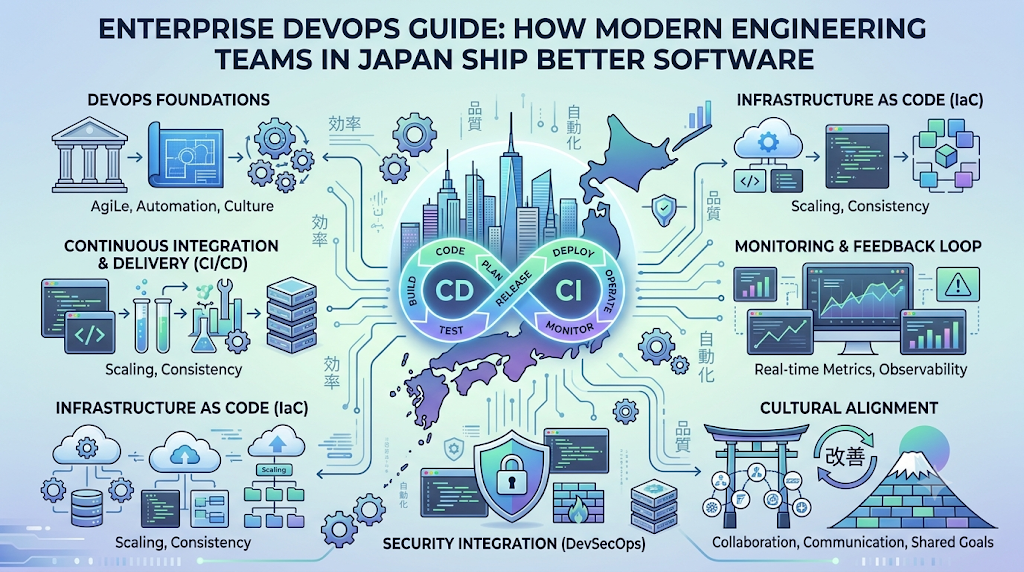
Software needs to change very fast today, yet many companies across Japan face wide tech skill gaps. Teams often struggle to balance daily system operations with frequent application updates. At the same time, modernizing manual delivery methods and cloud setups can feel overwhelming for growing engineering departments. Many internal IT leaders find that older tools slow their engineers down during major business releases. Finding trusted guidance makes a big difference when transforming your technical culture from the ground up. This is where DevOpsSchool.jp acts as a dedicated technical learning and advisory partner for modern Japanese businesses. By focusing on practical steps, clear learning tracks, and direct mentoring, engineering managers can help their people build confidence, reduce downtime, and ship clean software updates faster every single week.
What is DevOpsSchool.jp?
DevOpsSchool.jp is a dedicated platform designed to help technical teams build modern software skills. It provides hands-on programs for engineers who want to learn automation, cloud design, and smooth software delivery. The platform covers three main areas: corporate training, project consulting, and ongoing technical guidance.
Engineers do not just listen to long lectures. Instead, they complete live labs and work through real problems. DevOpsSchool.jp serves technical leaders across Japan who need dependable, enterprise-grade learning paths. The goal is to build strong in-house knowledge so your internal teams can run their systems smoothly on their own.
Building Strong Internal Engineering Skills
Many companies want to update their applications faster without causing bugs. Traditional development teams write code, while operations teams run the servers. When these two groups work apart, releases become slow and stressful. Training your staff bridges this gap. Engineers learn how to share work, use common tools, and automate code testing.
Enrolling your staff in structured DevOps 研修 helps developers and server teams speak the same language. They build automated pipelines together to test code as soon as someone writes it. A pipeline is just a set of automatic checks that inspects code step by step. When companies invest in DevOps corporate training Japan, their engineers learn to solve delivery problems early. This structured learning reduces manual rework and protects online systems from bad updates.
Hands-On Expert Guidance for Transformations
Adopting new delivery workflows can feel tricky when your team has never done it before. Many organizations spend months arguing over which cloud platform or delivery pipeline to buy. Outside specialists bring helpful experience from dozens of past projects. They can review your current architecture and spot slow steps right away.
Partnering with an experienced DevOps consultant Japan gives your engineering unit an objective plan. These specialists help set up your code pipelines and guide your team through daily culture changes. Through dedicated DevOps コンサルティング, companies avoid common setup traps and choose the right tools for their exact scale. With hands-on guidance, your teams modernize their daily tasks without risking live customer services.
Mastering Cloud-Native Infrastructure Tools
Modern companies rely heavily on cloud computing, but managing hundreds of servers by hand causes errors. To fix this, teams use containers. A container packages an application and all its files into one neat box. This box runs identically on any computer.
Managing thousands of containers by hand is impossible, so teams use an orchestration tool called Kubernetes. Joining a focused Kubernetes 研修 teaches engineers how to group containers, restart failing apps, and balance server traffic automatically.
Next, teams must build their cloud networks using code instead of clicking buttons on a screen. This practice is called infrastructure as code. Through practical Terraform 研修, engineers write simple files that define their databases, virtual servers, and firewalls. Because the server setup is saved as code, your staff can recreate an entire cloud environment in minutes.
Core Technical Training Tracks
| Training Domain | Core Tool/Focus | Business Benefit | Target Team |
| Core Delivery & Automation | Git, Jenkins, GitLab CI | Faster releases with fewer manual handoffs | Software Developers & Sysadmins |
| Container Orchestration | Kubernetes, Docker | High application availability and easy scaling | Infrastructure & Cloud Engineers |
| Infrastructure Automation | Terraform, Ansible | Repeatable server setups without human error | Cloud Platform & DevOps Engineers |
| System Reliability | Prometheus, Grafana, SLOs | Fewer outages and faster recovery from crashes | Site Reliability & Operations Engineers |
| Pipeline Security | Trivy, SonarQube, Vault | Safe code releases with built-in compliance | Security Specialists & Dev Leads |
| AI Pipeline Operations | MLflow, Kubeflow | Smooth deployment of machine learning models | Data Scientists & Machine Learning Engineers |
Ensuring System Reliability and Uptime
Keeping online services running smoothly is critical for enterprise trust. When an application crashes, businesses lose revenue and customer goodwill. Site Reliability Engineering, or SRE, uses software engineering methods to manage IT operations. It treats operations as if it were a software problem.
Taking part in an SRE 研修 teaches engineers how to measure real user happiness. Teams define service level objectives, which are simple targets for how reliable a system must be. They also create automated alert systems using tools like Prometheus and Grafana. Instead of panicking during an outage, engineers follow clear incident playbooks. They learn how to spot issues before users notice them and hold blameless reviews to fix root causes.
Integrating Security into Daily Delivery
In traditional setups, security teams test software only right before it goes live. If they find a serious bug at the very end, releases are delayed for weeks. Modern teams integrate security checks into every stage of their delivery pipeline. This practice is called shifting security to the left.
Through focused DevSecOps 研修, developers learn how to scan their code for weak spots while writing it. The pipeline automatically checks application libraries for known flaws before creating the container. Security becomes a daily team habit rather than a scary final gatekeeper. Because checks happen automatically every day, companies release new features quickly without exposing customer data to hackers.
Scaling AI and Machine Learning Pipelines
Many enterprises in Japan build machine learning models to help make business choices. However, running an AI model on a laptop is very different from serving millions of live customer requests. Machine learning code often breaks when underlying data patterns shift over time.
Completing an MLOps 研修 helps data teams apply strong engineering standards to their data workflows. Engineers set up automated tests for incoming data, track model training versions, and automate deployments. They also build live dashboards to monitor how well models predict outcomes in production. This practice keeps intelligent applications accurate, stable, and simple to update as market needs change.
Continuous Technical Assistance for Enterprise Teams
Adopting modern engineering practices is a journey that continues long after initial classes end. Even skilled teams encounter confusing production bugs, tricky network errors, and complex container networking issues. Having access to ongoing technical support gives engineering leaders total peace of mind.
Reliable DevOps support Japan provides prompt advice for unexpected cloud issues. Senior engineers review your configuration files, inspect your pipeline designs, and troubleshoot unexpected outages alongside your team. This continuous backup helps your internal staff overcome technical hurdles quickly so your core business projects stay right on schedule.
Evaluating Training and Consulting Providers in Japan
| Evaluation Factor | What to Look For | Why It Matters for Japanese Enterprises |
| Real Hands-On Labs | Dedicated cloud lab environments for every student | Practical practice builds muscle memory better than passive slide lectures. |
| Tailored Corporate Roadmaps | Customized courses based on existing enterprise tech stacks | Large enterprises have legacy systems that need step-by-step modernization. |
| Production-Experienced Mentors | Instructors who have resolved real enterprise outages | Real-world experience ensures teams learn practical solutions, not just theory. |
| Comprehensive Curriculum | Broad tracks covering containers, automation, security, and SRE | Prevents isolated tool silos by teaching how all cloud systems connect. |
| Ongoing Post-Training Backup | Access to mentors, code reviews, and technical advice | Helps teams apply classroom lessons directly to daily enterprise tasks. |
Real-Life Scenarios and Team Experiences
- Moving Away from Manual Server Maintenance: A traditional IT infrastructure team spent hours every weekend updating servers by hand. After learning container tools, they packaged their legacy apps into standardized containers. They now deploy updates in the middle of the workday with zero system downtime.
- Fixing Broken Code Deliveries: A software team suffered from constant deployment failures because their testing was done manually. By setting up an automated pipeline, their code is tested automatically after every commit. They cut their release bugs by half in just three months.
- Stopping Emergency Night Outages: An operations group was exhausted from waking up at night to fix server crashes. By adopting site reliability patterns, they set up auto-healing rules for their servers. Now, their cloud platform recovers from crashes automatically without human intervention.
Common Mistakes to Avoid in Tech Transformations
- Buying Tools Before Training People: Many companies buy expensive cloud software before teaching their staff how to use it. Without proper skills, new tools only create confusion and waste IT budget.
- Skipping Hands-On Practice Labs: Reading books or watching passive presentations does not build real skills. Engineers must write code and fix broken environments during practical training sessions.
- Treating Security as an Afterthought: Waiting until the day of release to inspect code leads to long delays. Security checks must run automatically inside daily delivery pipelines.
- Ignoring Observability and System Monitoring: You cannot fix problems you cannot see. Teams must install clear monitoring dashboards and log analyzers before shipping code to production.
- Attempting to Automate Everything on Day One: Trying to automate an entire legacy system all at once causes project failure. Start small by automating one simple build step first.
- Leaving Operations and Developers in Separate Silos: Giving developers new tools without involving operations teams creates conflict. Both groups must learn and plan delivery workflows together.
- Focusing on Speed While Forgetting Reliability: Releasing code ten times a day is harmful if your system crashes every hour. Balance deployment speed with strong site reliability engineering practices.
- Failing to Measure Progress with Metrics: Teams often adopt new tools without tracking results. Track tangible metrics like deployment frequency, lead time, and mean time to recovery.
How DevOpsSchool.jp Can Help
DevOpsSchool.jp helps organizations build modern, capable engineering cultures without unnecessary friction. The platform delivers customized corporate roadmaps designed specifically around your current technology stack and business goals. Certified instructors guide your engineers through live, interactive labs where they solve practical operational problems.
Whether your staff needs foundational automation basics or advanced cloud orchestration, the learning formats remain flexible to match your work schedules. Through its blend of interactive workshops, focused consulting, and continuous advisory backup, DevOpsSchool.jp equips your workforce with the skills needed to succeed in modern cloud environments.
A Simple 7-Step Upskilling & Advisory Roadmap
- Step 1: Goal: Define your main business targets, such as faster software releases, lower cloud spend, or higher system uptime.
- Step 2: Search: Look for trusted learning platforms and advisory partners that specialize in enterprise cloud operations and automation.
- Step 3: Shortlist: Select experienced training providers that offer hands-on practice labs and comprehensive courses.
- Step 4: Compare: Review course roadmaps, instructor backgrounds, and the depth of practical lab exercises across your shortlisted options.
- Step 5: Ask: Talk directly with course advisors about your current tech stack, existing skill gaps, and scheduling needs.
- Step 6: Verify: Check customer case studies, mentor qualifications, and verify that the provider offers ongoing technical support.
- Step 7: Decide: Select the right learning path, schedule your corporate sessions, and start modernizing your engineering workflows.
Frequently Asked Questions (FAQ)
Question 1: What is the main purpose of DevOps for an enterprise?
The main purpose is to help teams build, test, and release software faster and more safely. It breaks down walls between developers and operations staff. By using automated pipelines, companies reduce human error, fix bugs early, and deliver helpful digital services to their customers with minimal downtime.
Question 2: Why should our company invest in corporate training rather than self-study?
Self-study often lacks structure, and engineers can easily get lost in complex online tutorials. Structured corporate training provides a curated path tailored to your real systems. It offers live mentors, hands-on practice labs, and shared learning experiences that get your entire engineering team aligned on standard delivery practices quickly.
Question 3: How does Kubernetes help our existing cloud operations?
Kubernetes automates the management of software containers across many servers. If an application crashes, Kubernetes restarts it automatically. It balances traffic across healthy servers during busy hours and scales services up or down based on demand. This saves manual labor and keeps your digital applications reliable for your end users.
Question 4: What is the difference between DevOps and SRE?
DevOps is a wide culture that focuses on speed, collaboration, and automating the path from code to production. SRE is a concrete way to apply software engineering practices to system administration. SRE uses clear targets like service level objectives and error budgets to protect application uptime while allowing regular feature releases.
Question 5: Can our legacy software applications run inside modern containers?
Yes, many legacy software applications can be packaged into containers. While some very old systems require minor architectural adjustments, containerizing them makes them easier to test, move, and run across modern cloud servers. Professional training shows your team how to migrate these existing tools step by step without risk.
Question 6: How does Terraform improve cloud infrastructure management?
Terraform lets your team write code to define cloud servers, storage, and networks. Instead of clicking buttons in a cloud console, engineers run automated commands. This makes server setups repeatable, documents your infrastructure history, eliminates manual setup mistakes, and allows your team to spin up new environments in minutes.
Question 7: When should an enterprise consider hiring an outside consultant?
You should hire an outside consultant when your internal staff lacks hands-on experience with modern cloud tools. Specialists save time by designing clean architectures, setting up initial delivery pipelines, and training your team along the way. This avoids expensive trial-and-error mistakes during critical technical migrations.
Question 8: Why is security important inside an automated delivery pipeline?
Adding automated security scans into your daily pipeline catches code vulnerabilities and weak dependencies immediately. Finding security flaws early is much cheaper and faster than fixing breaches after software goes live. This practice keeps customer data safe and ensures your company meets strict enterprise compliance standards every day.
Question 9: What technical prerequisites do our engineers need before training?
Engineers only need basic familiarity with basic system commands, general software concepts, and an eagerness to learn modern automation. Professional programs start with clear fundamentals before advancing to complex cloud orchestration. Custom learning tracks can always be adjusted to match your team’s current skill level.
Question 10: How does MLOps differ from standard software DevOps?
Standard DevOps tracks code changes, builds applications, and monitors server performance. MLOps handles all of that plus shifting data sets, model training parameters, and predictive accuracy over time. It automates model testing and deployment so artificial intelligence models continue performing well when real-world data patterns change.
Question 11: How long does it take for a team to complete an upskilling track?
Most intensive corporate training tracks run between three and five days of focused workshop sessions. However, mastering daily implementation across an enterprise takes a few months of regular practice. Ongoing mentorship and lab access ensure that engineers continue growing their skills while working on their regular daily tasks.
Question 12: How do we measure the return on investment from technical training?
You can measure return on investment by tracking key operational metrics after training ends. Look for faster deployment frequencies, shorter lead times for code changes, fewer release bugs, and quicker recovery times during outages. Happier engineers, lower server costs, and reduced staff turnover also show strong value.
Conclusion
Modernizing enterprise software delivery is essential for organizations that want to stay competitive and agile. Building lasting success requires more than just installing new cloud tools. True technical progress happens when engineering teams master core automation skills, adopt shared reliability habits, and learn how to secure their delivery pipelines daily. By starting with focused learning tracks and getting support from experienced practitioners, companies eliminate operational bottlenecks and protect system uptime. With its practical labs and dedicated guidance, DevOpsSchool.jp stands ready to help your enterprise build confident engineers, modernize its cloud foundations, and deliver dependable software to customers.