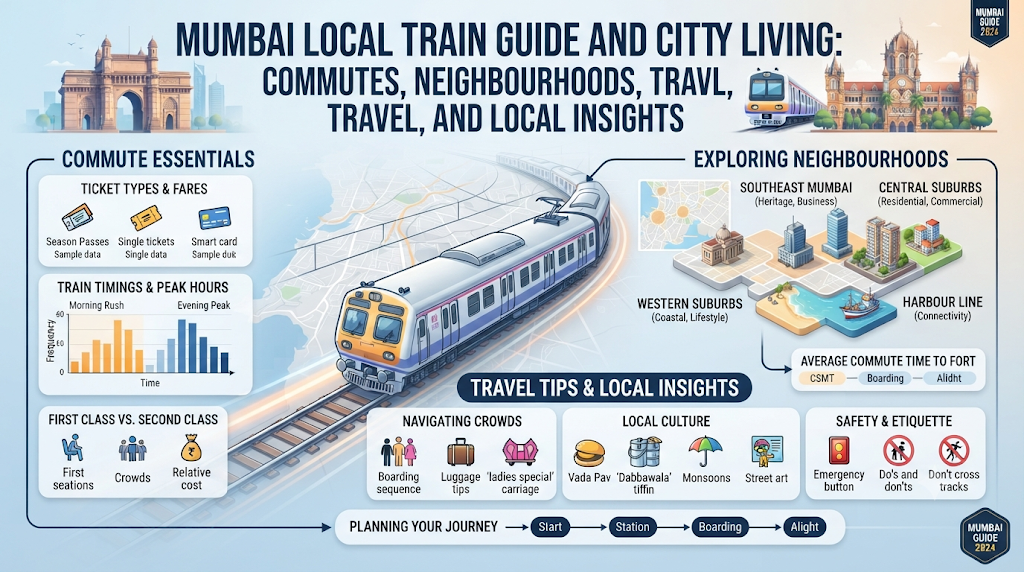
Mumbai moves on energy, tight schedules, and street-level resilience. Whether you are catching a morning train toward Churchgate or CSMT, picking a flat near a metro stop, planning a short trip out of town, or opening a small shop, knowing how the city works day to day saves time and stress.
A clear Mumbai local train guide helps newcomers and longtime residents alike make sense of suburban rail lines, connections, and peak-hour realities. At the same time, city life rarely stops at the station—it spans where you live, what you eat after work, where you shop, how you unwind on weekends, and how local ventures take shape.
This guide brings together practical Mumbai city essentials for commuters, visitors, newcomers, and aspiring entrepreneurs. For local questions, neighbourhood updates, and resident-to-resident exchanges, explore MumbaiOrbit and join conversations on the Mumbai community forum.
Understanding Mumbai and Its Commuting Backbone
Mumbai stretches along a narrow peninsula and expands northward into the wider Mumbai Metropolitan Region (MMR), connecting island-city business districts like Fort, Nariman Point, and Ballard Estate with suburbs such as Bandra, Andheri, Borivali, Dadar, Kurla, Thane, and Navi Mumbai.
Because road traffic can be heavy during rush hours, suburban rail and metro lines form the backbone of daily movement. Local terms you will hear often include Fast and Slow trains (fast trains skip smaller stations on main corridors), CSMT (Chhatrapati Shivaji Maharaj Terminus), Churchgate, and Dadar, which acts as a major junction linking Western and Central corridors.
How Suburban Rail and Metro Lines Fit Together
- Western Line: Runs from Churchgate through Dadar, Bandra, Andheri, and Borivali toward Virar and Dahanu Road.
- Central Line: Runs from CSMT through Dadar and Kurla toward Thane, Kalyan, Kasara, and Khopoli.
- Harbour Line: Connects CSMT toward Panvel and Goregaon via key junctions like Kurla and Vashi.
- Mumbai Metro Network: Complements suburban trains across key corridors, including Mumbai Metro Line 3 (the underground Aqua Line linking Colaba, Cuffe Parade, BKC, and SEEPZ/Andheri areas), helping reduce transfers on busy stretches.
| Corridor / Mode | Key Areas Served | Practical Strength | What to Check Before Riding |
| Western Suburban Rail | Churchgate, Dadar, Bandra, Andheri, Borivali, Virar | Direct north-south spine along the western suburbs | Fast vs. slow stop list and peak-hour crowding |
| Central Suburban Rail | CSMT, Dadar, Kurla, Thane, Kalyan | Wide reach into central suburbs and beyond | Platform changes at junctions like Dadar and Kurla |
| Harbour Line | CSMT, Kurla, Vashi, Panvel, Goregaon | Links island city, Navi Mumbai, and parts of western suburbs | Destination board on the train before boarding |
| Mumbai Metro (incl. Line 3) | Key urban and suburban nodes (e.g., Colaba–BKC–SEEPZ on Line 3) | Modern rail alternative for supported routes | Operational stations, timings, and ticketing rules |
Always check official updates from Indian Railways, Western Railway, Central Railway, MMRDA, and Mumbai Metro Rail Corporation (MMRC) before travelling, as schedules and station openings can change.
Step-by-Step Guide to Planning a Mumbai Commute
If you are new to Mumbai’s transit system, a simple six-step routine helps you travel smoothly:
- Pinpoint Your Starting Station: Find the closest suburban railway station, metro station, or BEST bus stop, and factor in walking or auto/cab time to reach it.
- Confirm Your Exact Destination: Check which line and station sit closest to your office, college, market, or attraction.
- Pick Fast, Slow, or Metro: Choose a Fast train only if your destination is a designated halt; otherwise take a Slow train or a connected metro/bus route.
- Verify Live Timings and Status: Check current train or metro schedules on official channels before leaving home.
- Arrange Valid Tickets or Passes: Buy single tickets, season passes, or smart cards/QR tickets through authorized channels before boarding to avoid fines.
- Plan the Last Mile: Check station exits, skywalks, BEST buses, autos, or app cabs for the final stretch to your destination.
Best Areas to Live in Mumbai: Balancing Commute and Lifestyle
Choosing among the best areas to live in Mumbai depends less on hype and more on your daily commute, budget, family needs, and preferred neighbourhood feel.
- Bandra & Santacruz: Known for lively cafes, markets, schools, and strong connectivity to both Western Railway and nearby business hubs like Bandra-Kurla Complex (BKC). Expect higher rents and busy streets.
- Andheri & Powai: Popular with working professionals and students thanks to rail, metro, road access, and proximity to commercial and tech hubs. Traffic near major junctions can get congested during peak hours.
- Dadar & Matunga: Central, well-connected residential pockets with easy rail links, markets, and established schools, though space is compact and demand stays steady.
- Thane & Navi Mumbai (e.g., Vashi, Nerul, Kharghar): Widely considered by families seeking planned layouts, larger housing societies, and comparatively calmer surroundings within the broader MMR, balanced against longer travel times to far-south Mumbai.
Before signing a lease or buying property, visit the neighbourhood at both morning rush hour and evening hours, check water supply and society rules, and verify actual commute times rather than relying on straight-line map distances.
Places to Visit in Mumbai, Food, Shopping, and Weekend Getaways
Mumbai blends coastal walks, heritage architecture, bustling bazaars, and easy escapes into the Sahyadri hills or Konkan coast.
Places to Visit and a Mumbai 3 Day Itinerary
Popular places to visit in Mumbai span South Mumbai’s historic precincts, suburban beaches like Juhu or Aksa, museums, and local cultural spots. When planning a Mumbai 3 day itinerary, grouping stops by neighbourhood prevents hours lost in traffic:
- Day 1 — South Mumbai Heritage & Waterfront: Explore landmarks around Fort, Colaba, and Marine Drive in the morning and late afternoon when coastal breezes offer relief.
- Day 2 — Bandra, Juhu & West Coast: Spend the day around Bandra’s streets and coastal stretches, then head toward Juhu for sunset views and evening snacks.
- Day 3 — Culture, Markets & Local Flavours: Visit a museum or local cultural spot early, browse a nearby market, and wrap up with a relaxed dinner.
Check official timings and entry rules before visiting any attraction, and plan outdoor sightseeing around weather and tides.
Best Street Food in Mumbai and Shopping Markets in Mumbai
Food is central to everyday life in the city. Looking for the best street food in Mumbai often leads locals and visitors to classic evening spots—like vada pav, pav bhaji, bhel puri, sev puri, and cutting chai near busy stations, beaches, or neighbourhood khau gallis. Choose busy stalls with fresh turnover, clean preparation, and bottled or boiled water if you have a sensitive stomach.
When exploring shopping markets in Mumbai, match the market to what you want:
- Street & Fashion Shopping: Areas around Colaba Causeway, Linking Road (Bandra), and Hill Road are known for casual wear, accessories, and bargaining.
- Traditional & Festive Wear: Markets around Dadar, Kalbadevi, and Zaveri Bazaar/Bhuleshwar offer ethnic wear, textiles, and jewellery options.
- Books, Electronics & Everyday Goods: Specific commercial lanes across South Mumbai and suburbs cater to specialist needs—always compare quality and ask for bills on electronics.
Weekend Getaways from Mumbai
When you need a break from city pace, popular weekend getaways from Mumbai include hill stations like Lonavala and Khandala, Matheran, coastal spots like Alibaug, and heritage or nature escapes across Maharashtra. Check road and rail conditions, monsoon advisories, and Maharashtra Tourism updates before setting out.
How to Start a Small Business in Mumbai
Entrepreneurs eyeing the city often ask how to start a small business in Mumbai because of its large customer base, diverse neighbourhoods, and strong service economy. High commercial rents and strict local rules mean careful homework pays off:
- Study Local Demand: Validate whether nearby residents, office workers, students, or visitors actually need your product or service at your target price.
- Pick the Right Micro-Location: Footfall in a retail lane differs sharply from order volume in a residential suburb or coworking hub.
- Estimate Full Costs in INR: Factor in security deposits, commercial rent, fit-out, inventory, utilities, staffing, and a cash buffer for slow months.
- Complete Registrations & Licenses: Review requirements such as Udyam registration for MSMEs, GST registration where applicable, shop and establishment rules, and sector-specific licenses (such as food safety permissions for eateries) via official government portals.
- Plan Operations & Compliance: Keep accounting clean, understand housing society or municipal rules for signage and timings, and test demand before signing long leases.
Practical Tips, Common Mistakes, and MumbaiOrbit Community
A few everyday habits help avoid avoidable trouble in Mumbai:
- Don’t Underestimate Peak Hours: Morning and evening rush hours on trains, buses, and roads test patience—leave buffer time for appointments and flights.
- Verify Timings and Prices Fresh: Attraction hours, metro/train updates, and market prices change; check official sources rather than old posts.
- Pack for Weather: Mumbai is warm and humid for much of the year, while June to September brings heavy monsoon rain that can slow local transit and weekend hill travel.
If you want to ask locals about a commute route, compare residential areas, trade street-food tips, or talk through Maharashtra travel plans, head to MumbaiOrbit and post in relevant sections like Ask Mumbai, Trains & Transport, Housing, Khau Galli, or Maharashtra Matters on the Mumbai community forum. Sharing real questions with people who know the city helps turn guesswork into practical local insight.
Frequently Asked Questions (FAQs)
1. How do I use a Mumbai local train guide as a first-time commuter?
Start by identifying whether your route uses the Western, Central, or Harbour line, check if your destination station has a Fast or Slow train halt, buy a valid ticket in advance, and avoid peak rush hours when possible.
2. Which are the top places to visit in Mumbai for a short trip?
South Mumbai’s historic areas and Marine Drive, Bandra, Juhu, local markets, and key cultural landmarks are popular choices; group them by area to save travel time.
3. What are good weekend getaways from Mumbai?
Nearby options include Lonavala and Khandala, Alibaug, Matheran, and other destinations across Maharashtra, depending on whether you prefer hills, beaches, or heritage sites.
4. How do I choose among the best areas to live in Mumbai?
Compare daily commute time to your workplace or college, monthly rent in INR, housing society facilities, and nearby essentials like groceries, healthcare, and transit stops.
5. What should commuters know about Mumbai Metro Line 3?
Mumbai Metro Line 3 is an underground corridor connecting key business and transit hubs across the city; check MMRC’s official updates for active stations, timings, and fare rules before riding.
6. How can I plan a practical Mumbai 3 day itinerary?
Dedicate each day to a distinct cluster of neighbourhoods—such as South Mumbai, Bandra/Juhu, and local markets/culture—rather than crisscrossing the city repeatedly.
7. Where can I find the best street food in Mumbai safely?
Look for popular, high-turnover spots in lively areas or khau gallis, observe basic hygiene, and stick to freshly cooked items and safe drinking water.
8. Which shopping markets in Mumbai are best for budget and variety?
Colaba Causeway, Linking Road, Hill Road, and Dadar are well known for clothing, accessories, and everyday shopping, while specialty lanes serve specific goods.
9. What is the first step in how to start a small business in Mumbai?
Research local customer demand and commercial costs in INR for your specific neighbourhood, then check applicable Udyam, GST, municipal, and licensing rules on official government websites.
10. How can I connect with locals on a Mumbai community forum?
Visit MumbaiOrbit to browse guides and join topic discussions such as Ask Mumbai, Trains & Transport, Housing, Khau Galli, and Maharashtra Matters.
Conclusion
Understanding Mumbai gets easier once you look at how its neighbourhoods, rail and metro lines, markets, and food culture connect in daily life. Whether you are planning a three-day visit, picking a place to live, heading out for a weekend break, or starting a small business, clear planning and up-to-date local checks make all the difference.
Take one practical next step today—map out your route or shortlist two neighbourhoods—and check MumbaiOrbit to read local guides and join ongoing conversations on the Mumbai community forum.