Introduction
Japan is one of the world’s best countries for a road trip. The asphalt is smooth. The mountain passes curve like ribbons. Neon city streets hum with energy after dark. Riding here gives you true travel independence.
You can stop at a quiet shrine whenever you like. You can chase coastal views along the Izu Peninsula. You can glide across Tokyo’s wide avenues at sunset. A rented vehicle turns a good trip into a great one.
MotoShare.jp makes this freedom easy to find. It is a dual-sided marketplace. Riders and tourists discover trusted bikes, scooters, and cars. Local fleet owners list and manage their vehicles. One platform serves both sides of the rental journey.
Renting in Japan is simple when you know the rules. This guide explains licenses, insurance, parking, and booking steps. It also helps shop owners who manage rental fleets. So read on before you twist the throttle.
Why Rent a Motorcycle in Japan?
Japan was built for riders. The roads are clean and well marked. Highway rest stops, called Michi-no-Eki, sell local snacks and fresh farm produce. They make every long ride feel like a food tour.
Mountain roads wind through cedar forests and past hot spring towns. Countryside shrines sit in silence, far from tour buses. A motorcycle brings you close to all of it. You feel the air cool as you climb. You smell rain before it arrives.
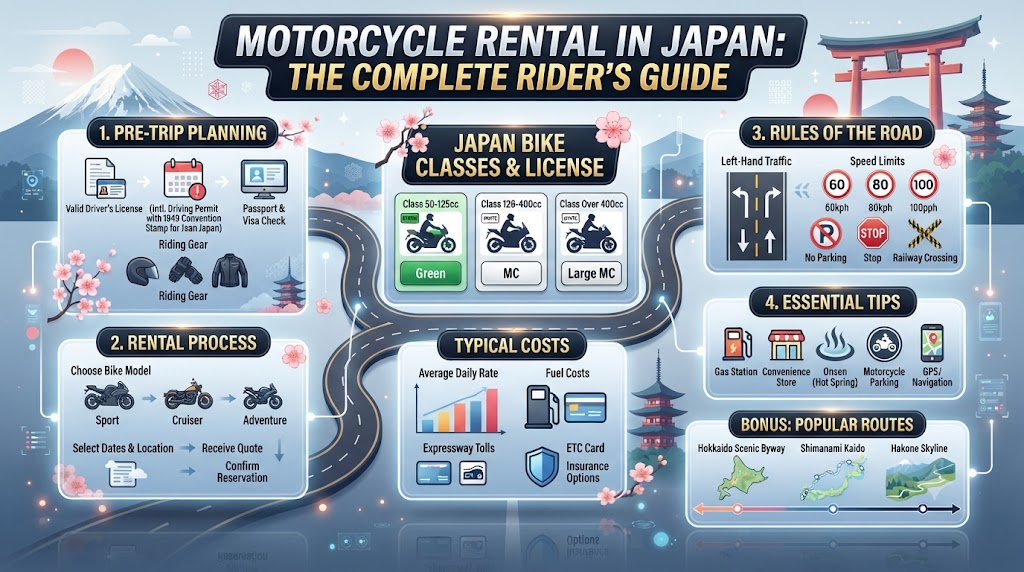
But pick the right engine class first. Japan sorts bikes into clear groups. A 50cc moped suits flat city errands. A 125cc small motorcycle handles longer city trips. A 250cc light motorcycle is ideal for rural touring. A 400cc or bigger heavy motorcycle rules the expressways.
Match the machine to your real skill and route. New riders should always start small. Bigger engines demand more control and calm judgment on busy roads.
Riding also beats train timetables. You set your own start time and your own stops. A train passes a small mountain village in seconds. But a bike lets you stop and stay as long as you like. Fuel costs stay low too. Small engines sip fuel all day.
Choosing Your Ride: Scooters, Touring Bikes, and Cars
Japanese streets change fast. One minute you roll through a tight alley. The next minute you merge onto a wide tollway. So pick a vehicle that fits your real route. Think about speed, luggage, and passengers before you book. The options below make that choice simple.
| Vehicle Type | Best Use | Rider License Class Needed | Luggage Space | Road Comfort |
|---|---|---|---|---|
| City Scooter (50cc–125cc) | Short city hops and daily errands | Moped or ordinary two-wheel license | Under-seat space for one small bag | Smooth on flat streets, firm on rough roads |
| Standard Commuter (250cc) | Weekend rides and rural national routes | Ordinary two-wheel license (AT option available) | Small top box or tank bag | Steady at 60 km/h on open roads |
| Touring Motorcycle (400cc–1000cc+) | Expressway touring and mountain passes | Large two-wheel license | Full panniers plus a tail bag | Best comfort on long high-speed rides |
| Compact Rental Car / Kei Car | Family trips, luggage, and rainy days | Standard Japanese car license | Full boot plus rear seats | Smooth and sheltered in all weather |
Expressways carry a 100 km/h limit for most passenger vehicles. So you need real power to keep up with traffic. Ask for an ETC card too. ETC means Electronic Toll Collection, a card that pays each toll gate automatically. Also check passenger rules before you ride. Tandem riding on some expressways has strict age and license conditions.
レンタルバイク 東京 and Motorcycle Rental Tokyo
Tokyo looks crowded, but it is a wonderful city to ride. Start your engine near Shinagawa and glide onto the Metropolitan Expressway. The elevated lanes curve above the rooftops. Soon the bay opens up in front of you.
Cross the Rainbow Bridge to Odaiba. Stop for photos with the skyline behind you. Then ride back into the city and cruise wide central avenues. Night riding here feels electric. The towers glow, and the asphalt flows under your wheels.
Searching for レンタルバイク 東京, or motorcycle rental Tokyo, brings up many shops. Compare prices in JPY, engine sizes, and rental hours first. Good shops explain the Shuto Expressway rules in plain English. They also offer helmets, gloves, and rain gear with the bike.
Tokyo is also a perfect touring base. On the weekend, ride out toward Hakone. Soak in a hot spring after the twisty mountain roads. Or point your front wheel at Mount Fuji and watch it grow on the horizon.
The best part is choice. You can rent a nimble 250cc for city streets. You can also pick a big touring bike for the whole Kanto region. Book early in spring and autumn, because those seasons fill up fast.
One quick tip: skip the morning rush. Traffic on the expressways peaks between 7 and 9 a.m. Mid-morning rides feel calm and open.
スクーターレンタル 東京 and Affordable Urban Cruising
Not every trip needs a big engine. A light city scooter does most Tokyo jobs well. It slips through gaps in slow traffic. It parks in tiny spaces. It also sips fuel, so daily costs stay small.
Many travelers search for スクーターレンタル 東京 for simple city hopping. A 50cc moped feels easy after a short practice ride. A 125cc scooter adds speed for longer hops between wards. Both are cheap to rent for a day or a full week.
Locals often search 東京 バイク レンタル 安い when they need a budget ride. Short commutes, grocery runs, and station-to-office trips all fit a scooter. But remember the parking rules. Central wards such as Shibuya and Minato provide marked motorcycle parking bays. Ward monitors patrol the streets and issue swift fines.
Never park on a public sidewalk. Never block a shop entrance either. Use a paid motorcycle lot near train stations instead. Most cost a few hundred JPY per day. Convenience stores sit on every corner for quick breaks. A cheap scooter plus smart parking equals total city freedom.
Helmets are still required by law on small scooters. So carry a light helmet bag for your stops. Ask for a helmet lock on the rental as well.
レンタルバイク 日本 and Touring Across the Country
Japan is small enough to cross and big enough to surprise you. Many riders search for レンタルバイク 日本 before a multi-day trip. Motorcycle rental Japan options range from light 250cc tourers to full-size adventure bikes.
Head south from Tokyo to the Izu Peninsula. The coastal road curves beside turquoise water. Stop at a beach town for grilled fish and a hot spring soak. Then turn north to Nagano. Mountain switchbacks climb through cedar forests and old post towns.
Hokkaido is the dream for many riders. Wide open roads, green dairy farms, and cool summer air make it special. Even Kyoto and Osaka sit within reach on a one-week loop. Osaka adds street food energy, and Kyoto adds temple calm.
But plan for weather shifts. Mountain mornings can be cold even in May. Ask for heated grips and a tall screen when you book. Between June and October, typhoons can close roads for a day. Check forecasts each morning before you ride.
Use roadside stations, called Michi-no-Eki, for your breaks. They offer free parking, clean toilets, and hot local food. So a long touring day in Japan almost always ends well.
Pack rain gear in your bag too. Mountain weather changes fast, and dry gloves keep your hands steady on the bars.
Pre-Ride Safety Check and Highway Rules
Never trust a bike just because it looks new. A five-minute check protects your whole trip. Walk around the machine before you sign anything. Bring a checklist, or use the one below. Ask the shop staff to fix any problem before you leave.
| Check Point | What to Look For | Why It Matters |
|---|---|---|
| Tire Tread & Air Pressure | Deep grooves and maker-spec pressure | Worn or soft tires lose grip, most of all in rain |
| Front & Rear Brake Levers | Firm bite with no spongy feel | Good brakes are your main safety tool in traffic |
| Headlight & Turn Signals | All lamps work and lenses are clean | Japanese law expects working lights on each ride |
| Jibaiseki Insurance Papers | Valid 自賠責保険 certificate in the folder | This mandatory cover protects people hurt in a crash |
| ETC Card Unit & Reader | Card seated and reader shows a green light | It pays toll gates without stopping at booths |
| Mirrors & Handlebar Controls | Clear rear view; horn and switches respond | Fast reactions matter in dense city traffic |
Japan drives on the left side of the road. So keep left, overtake on the right, and look right first at intersections. Tandem rules are strict on the Shuto Expressway. The rider must be over 20 years old and must have held a motorcycle license for over 20 years. Always take check-in photos of every scratch before you leave the shop.
レンタカー 東京 and Car Rental Tokyo for Groups
Sometimes two wheels are not the right tool. Japan’s rainy season, called tsuyu, runs from early June to late July. A dry, warm cabin beats wet gear on those days. Winter mountain routes can also turn icy and risky for bikes.
Families with small children need car seats and safe space. Travelers with heavy suitcases need a boot, not a backpack. Group trips also cost less per person in one shared car. In these cases, search レンタカー 東京 and compare nearby shops.
Car rental Tokyo desks offer many sizes. A compact Kei car is a Japanese special. Its tiny engine and narrow body suit tight alleyways and small lots. A hybrid sedan suits longer family trips, such as a day visit to the temples of Nikko.
Every expressway charges a toll. So ask about an ETC card at the counter. The card sits in a dash reader and pays each gate without stopping. Your toll bill arrives later as one card charge.
In the city, use parking towers, called mechanical car parks. They lift your car into a slot and save street space. Book well before Golden Week and New Year holidays, because fleets sell out fast then.
Fuel stays easy to find in Japan. Most city stations stay open late, and many run all night. Ask for a hybrid model to cut fuel costs on long family days.
Modern Fleet Software: バイクレンタル 管理システム
This guide now turns to shop owners and fleet managers. Running a rental business in Japan brings daily puzzles. Bookings arrive by phone, email, and walk-ins. Paper logs get lost. Two customers want the same bike on the same day.
A modern バイクレンタル 管理システム solves this. That means a motorcycle rental management system in plain English. It is software built for rental fleets, and digital tools do the heavy lifting. Online bookings flow straight into one shared calendar.
Live bike lists stop double bookings at once. You can see which bike is rented, cleaned, or in service. Customer license records stay stored safely in one place. The system can even match each rider to the right license class.
Deposits and pricing become simple too. The software can calculate hold amounts in JPY and track every return. The same idea powers a レンタカー 管理システム, or car rental management system, for car fleets.
Small shops gain the most. One owner can run thirty bikes without stress. Maintenance reminders also arrive on time. So the fleet stays safe, and customers stay happy.
Reports also show which bikes earn the most money. Owners can spot slow months and plan smart discounts. So the software pays for itself fast. The setup takes one day. Most screens also work in English.
How MotoShare Connects Renters and Rental Businesses
MotoShare.jp serves two sides of one journey. For travelers, it works as a discovery marketplace. You can find bikes, scooters, and cars across Japan in one place. Each listing shows clear photos, engine size, and full rental terms.
Prices appear in JPY with zero hidden platform fees. So the number you see is the number you pay. Verified local fleet partners list their vehicles. That gives renters real shops with real support, not faceless listings.
For rental businesses, MotoShare acts as a management platform. Operators can list vehicles, take bookings, and track their fleet in real time. The rental tools cut manual work and paperwork. Small shops reach a wider audience without a big ad budget.
This two-sided design keeps everything honest. Renters get fair prices and trusted machines. Owners get steady demand and clean records. One platform connects the whole rental journey across Japan. Riders can browse, compare, and book in a few minutes.
Support stays close in English as well. Renters can ask questions before they book. Shop owners get help setting up their listings step by step. So both sides start on the right foot.
Real-Life Travel and Business Scenarios
- An international tourist lands at Haneda Airport with a 1949 Geneva Convention permit. She rents a 250cc bike and rides toward Mount Fuji. By evening she reaches Hakone, parks at her inn, and soaks her tired shoulders in a hot spring.
- A Tokyo local wants a cheap weekend escape. He books an affordable scooter and rides down the coast to Kamakura. He hops between seaside cafes, eats fresh fish, and returns before dark with money still in his pocket.
- A family of four rents a spacious hybrid car in Tokyo. They drive north to Nikko and visit its famous shrines. Nobody checks train timetables, and the boot swallows every jacket, snack, and souvenir with room to spare.
- A motorcycle shop owner in Tokyo manages a growing fleet. Her rental software tracks bookings, deposits, and service dates in one dashboard. Double bookings vanish, customers get quick replies, and her small business scales without chaos.
Common Mistakes to Avoid When Renting Vehicles in Japan
- Carrying the wrong type of permit. Japan only accepts the 1949 Geneva Convention International Driving Permit. Some countries issue permits under other conventions, and police will reject them. So check your permit format before you fly.
- Parking motorcycles on public sidewalks. Ward monitors patrol central Tokyo streets and issue swift fines. Always use a designated motorcycle parking bay or a paid lot instead.
- Forgetting an ETC card on long trips. Expressway toll gates without an ETC reader force slow cash lines. Request the card when you book and confirm the reader works before you leave.
- Riding tandem on the Shuto Expressway unqualified. The rider must be over 20 years old and have held a motorcycle license for over 20 years. Check the rule before you plan a pillion trip.
- Skipping the walk-around inspection. Small scratches become your bill when you return the bike. Photograph each panel, wheel, and mirror before you ride out of the shop.
- Entering an expressway on a moped. Bikes under 126cc cannot use any Japanese expressway. Plan surface roads for a 50cc or 125cc machine, and rent a bigger bike for highway touring.
- Assuming full-service gas stations everywhere. Many rural pumps are automated and self-service, with Japanese-language screens. Ask staff to teach you the flow once, or watch a short guide before your trip.
- Running dry in rural mountain areas. Unmanned toll gates and small-town shops may not take foreign credit cards. So carry enough JPY cash for tolls, fuel, and food on country routes.
Simple Rental Booking Checklist
- Valid 1949 Geneva Convention International Driving Permit, or an official Japanese license with a certified translation where allowed. Check your home license type before you fly.
- Original passport for all foreign travelers. Rental shops verify identity and age at pickup, and photocopies are not accepted.
- A major credit card for the security deposit hold. Shops place a temporary hold in JPY and release it after a clean return.
- A certified motorcycle helmet meeting Japanese JIS or equal safety standards. Most shops lend one free, but check the fit and strap first.
- Full-tank fuel policy confirmation plus your planned return schedule. Note the closing hours, because late returns can trigger extra fees.
Frequently Asked Questions
1. What driver’s license do foreign tourists need to rent a motorcycle in Japan?
Foreign tourists need an International Driving Permit issued under the 1949 Geneva Convention. Japan rejects permits from any other convention. You must carry the permit together with your home license and your passport.
Some countries, such as France, Germany, Switzerland, and Taiwan, can use an official Japanese translation instead. Ask your rental shop about the exact rule before you fly.
2. Which side of the road do vehicles drive on in Japan?
All traffic drives on the left side of the road in Japan. So you keep to the left lane and overtake on the right. Look right first when you pull into traffic.
This feels strange at first for visitors from right-side countries. Take a slow practice ride in a quiet area before you join busy streets. Roundabouts are rare, so turns stay simple.
3. Are motorcycle helmets legally required for all riders across Japan?
Yes, helmets are required by law for every rider and passenger. The police can stop and fine riders without one. Always fasten the chin strap fully before you move.
Choose a helmet that meets Japanese JIS standards or an equal safety mark. A loose or cracked helmet gives almost no protection, so check it at the shop. Rental shops lend clean helmets in many sizes.
4. Are motorcycles permitted to ride on Japanese expressways and toll roads?
Yes, but only motorcycles over 125cc may enter expressways. A 50cc moped or a 125cc machine must stay on surface roads. So plan your route around this limit.
You must also pay at every toll gate. An ETC card makes this easy, because the reader charges each gate without stopping. A 250cc bike or bigger gives you the best highway touring experience.
5. What is the mandatory Jibaiseki insurance policy in Japan?
Jibaiseki, written as 自賠責保険, is Japan’s compulsory liability insurance. It pays for injuries to people hurt in a crash you cause. Every legal rental vehicle must carry it.
Ask to see the certificate at pickup and keep the copy with the bike. It does not cover vehicle damage, so ask about extra optional coverage too. The cover must stay valid for your whole rental period.
6. What is an ETC card, and why should motorcycle renters ask for one?
ETC means Electronic Toll Collection. The card sits in a small reader on the bike. It pays every expressway toll gate without stopping for cash.
Renters should ask for one because many gates are unmanned. The tolls are billed to your card after the trip. It saves time and stress on long touring days. The card fits most rental bikes with a small reader mount.
7. Where can riders legally park motorcycles and scooters in central Tokyo?
Riders must use marked motorcycle bays or paid bike lots. Central wards such as Shibuya, Shinjuku, and Minato run these bays near stations.
Parking on sidewalks is illegal, and ward monitors issue swift fines. Some lots charge a few hundred JPY per day. Look for the blue motorcycle parking signs. Never leave your bike overnight in a no-parking zone.
8. Can two people ride tandem on a motorcycle in Japan?
Yes, tandem riding is legal on normal roads with a proper two-seat bike. Both people must wear helmets by law.
But expressways add strict rules. The rider must be over 20 years old and have held a motorcycle license for over 20 years. Your rental bike also needs an official pillion seat. Small children can never ride as passengers at any time.
9. When should a traveler choose a rental car instead of a motorcycle in Tokyo?
Choose a car during the June rainy season or the winter cold. Cars also win for heavy luggage, small children, and family groups.
A Kei car handles tight Tokyo alleyways with ease. Trains stop late at night, so a car also helps after the last service. Compare total costs and parking fees before you decide. A car also shields you from summer heat.
10. What should a rider do if they encounter an accident or flat tire on a Japanese highway?
Pull over to the left shoulder and switch on your hazard lights. Place a warning triangle behind your bike if you have one.
For accidents, call the police at 110 and report your location. For breakdowns, call your rental shop or JAF roadside assistance at #8139. Many shops offer an English support line, so save the number in your phone.
11. How does a rental management system help Japanese vehicle shop operators?
A rental management system brings every task into one dashboard. Online bookings, live availability, and service schedules stay in sync all day.
It stores customer license records safely and calculates deposits in JPY. Double bookings stop because the calendar updates in real time. One owner can run a large fleet without extra staff. Maintenance reminders keep every bike safe and road-ready.
12. Why should riders and fleet owners use a platform like MotoShare in Japan?
Riders get verified local fleets, clear JPY pricing, and zero hidden platform fees. Every listing shows real photos and full terms, so booking feels safe and simple.
Fleet owners get bookings, tools, and a wider audience in one place. MotoShare connects both sides, so honest shops grow and travelers ride with confidence. That trust makes every trip across Japan smoother.
Conclusion
Match your vehicle to your route, your luggage, your license, and the season before you book anything in Japan. A small scooter rules the city. A 250cc light bike opens the countryside. A big tourer earns its keep on the expressways. When the mountain weather turns or the family grows, a rental car keeps the journey warm and dry. Check your permit, your Jibaiseki papers, and your tires every single time. Respect the left-side traffic and the sidewalk rules. Good manners travel as far as good machines. The asphalt is smooth, the rest stops serve hot food, and Mount Fuji waits on the horizon. So gear up, ride smart, and enjoy every curve of Japan’s open highway.