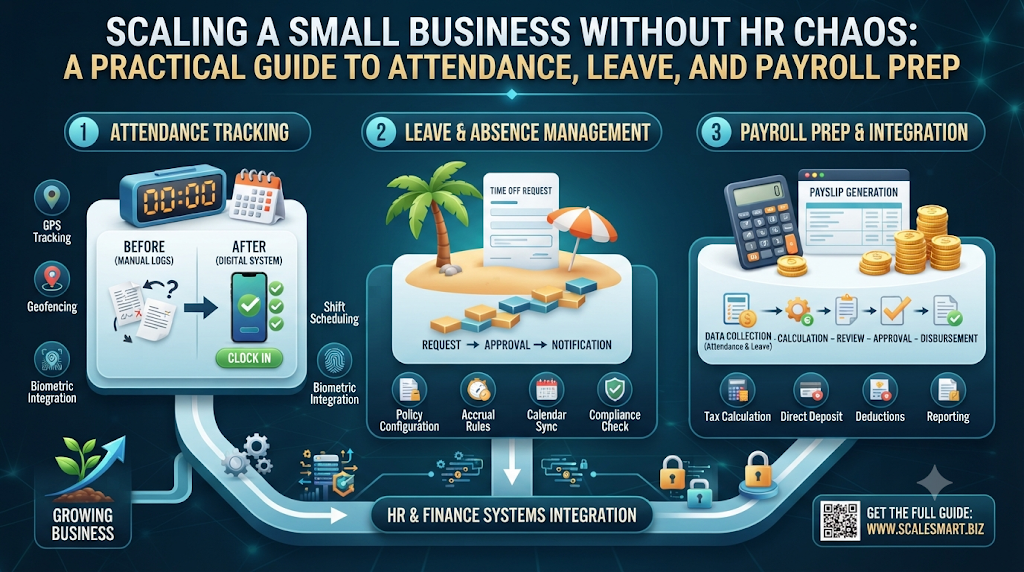
Hiring your tenth, twentieth, or thirtieth employee is an exciting milestone. Yet growth often breaks the informal habits that worked when your whole team sat around one table. Suddenly, managers lose track of overlapping vacations, daily attendance logs show missing hours, and HR spends days fixing spreadsheets before payday. A cloud-based Attendance and Leave Management System like InOrOff gives growing companies one structured workspace for daily check-ins, time-off approvals, and monthly summaries.
This guide explores Employee Attendance Management Software from a business-scaling perspective. You will learn how repeatable check-in routines, clear PTO rules, fast approval queues, and exportable reports keep your operations running smoothly as your headcount grows.
Why Informal HR Habits Break When Your Team Expands
In a five-person startup, everyone knows who is in the office and who took Friday off. Once you add new departments or shift schedules, informal tracking creates four big bottlenecks:
- Scattered Attendance Logs: Staff record start times in different chat channels, notebooks, or local spreadsheets.
- Hidden Vacation Overlaps: Two people on the same project book time off on the same week because nobody sees a shared calendar.
- Manual Balance Errors: Calculating accrued leave and half-days by hand leads to mistakes as policies get updated.
- Slow Month-End Audits: HR teams waste valuable hours matching attendance notes against public holidays before payroll starts.
Adopting Time and Attendance Software for Small Business teams builds a repeatable foundation before small gaps turn into major headaches.
Creating a Repeatable Daily Routine with Employee Check In Check Out Software
When new hires join your company, they need a simple, obvious way to log their workday from day one. Employee Check In Check Out Software replaces messy manual logs with a clear digital routine.
Browser Check-Ins and Server-Verified Timestamps
Cloud platforms let employees check in and check out directly through a standard web browser. Each click saves a server-verified timestamp, creating a consistent record of working hours, breaks, late arrivals, and early departures.
It is important to keep timestamps in perspective. A timestamp shows when a user recorded their check-in or check-out action—it does not by itself verify physical presence at a specific desk. Combining simple logs with clear team expectations builds healthy accountability.
Fixing Missed Punches Through Attendance Corrections
As teams get busier, people occasionally forget to click check-out after wrapping up a late client call or project deadline. A structured workflow lets staff submit an attendance correction request with a short explanation. Managers or HR reviewers then approve or reject the update, preserving a clean history of every edit.
Using an Optional Office IP Attendance System
When growing businesses want on-site staff to log check-ins only from the workplace, an Office IP Attendance System allows administrators to restrict browser check-ins to approved office network IP addresses.
- Practical Purpose: It helps confirm that office check-ins happen while connected to the company’s workplace network.
- Things to Watch: Router resets, internet provider updates, or approved remote days can block check-ins if rules are too rigid.
- Privacy Respect: Network IP checks only verify the connection network—they are not GPS tracking or continuous employee surveillance.
Scaling Time-Off Rules with Employee Leave Management Software
More employees naturally mean more vacation requests, sick days, and half-day appointments every week. Employee Leave Management Software keeps absence tracking fair and predictable without burying managers in emails.
Faster Team Coordination with Leave Approval Workflow Software
When leave requests sit unread in inboxes, project timelines suffer and staff feel frustrated. Leave Approval Workflow Software creates a fast, repeatable path from application to decision:
- Submit a Request: The employee selects the leave category, start and end dates, and half-day option if needed.
- Check Team Overlap: The manager views who else is scheduled off during those dates before replying.
- Approve or Reject Clearly: The manager records an approval or rejection with instant status updates.
- Sync Records Automatically: Approved absences appear on the team calendar and deduct days from the employee’s balance right away.
Standardizing Policies with PTO Tracking Software
Many scaling companies group vacation, sick leave, and personal days into one Paid Time Off (PTO) pool. PTO Tracking Software applies your written leave policy evenly across new hires and long-time staff alike.
Core policy settings to configure include:
- Accrual Rules: Decide whether staff receive their full annual allowance upfront or earn days gradually each month.
- Half-Day Tracking: Let employees take half-day leave for short appointments without losing a full day’s allowance.
- Holiday Exclusions: Protect employee balances by excluding official public holidays from PTO deductions.
- Carry-Forward and Expiry: Spell out how many unused days roll into the next cycle and when those carried-over days expire.
Because labour laws vary across countries and states, businesses should always verify that their PTO rules match local employment regulations.
Supporting Self-Service with an Employee Leave Balance Tracker
As headcount grows, answering individual emails about remaining vacation days eats up hours of HR time. An Employee Leave Balance Tracker displays used, approved, pending, and remaining leave in real time.
When employees check their own numbers anytime, they plan holidays responsibly and HR teams stay focused on hiring and onboarding.
Ad-Hoc Spreadsheets vs. Scalable Attendance and Leave Systems
Comparing early-stage manual tracking with a structured digital platform shows how growing companies stay organized.
| Growth Challenge | Ad-Hoc Spreadsheets & Chat Logs | Scalable Digital Platform |
|---|---|---|
| Onboarding New Hires | Adding rows manually to fragile sheets | Instant profile setup with clear check-in access |
| Leave Approvals | Buried in emails or verbal promises | Structured manager approval workflow |
| Balance Calculations | Error-prone manual formula updates | Live tracking of used, pending, and remaining days |
| Schedule Corrections | Unclear edits with no audit trail | Reviewed correction requests with notes |
| Payroll Preparation | Hours of manual cross-checking | Clean monthly summaries and file exports |
Illustrative Scenarios from Growing Companies
The examples below are hypothetical illustrations created to show how structured workflows support growth. They do not represent actual customer data or guaranteed outcomes.
Scenario 1: Managing Leave Across a Growing 25-Person Team
Siddharth leads operations at a 25-person logistics startup that recently doubled in size. Three team members across two departments request leave during the same month—including two half-day requests and one week-long vacation. Using a centralized leave approval queue, department leads spot overlaps immediately, approve requests cleanly, and keep shift coverage balanced.
Scenario 2: Exporting Clean Data with Payroll Ready Attendance Software
At the close of the month, an HR manager reviews attendance logs for a 35-person tech agency. Every missed check-out correction has been reviewed, public holidays are excluded from leave deductions, and half-day absences are properly recorded. Using Payroll Ready Attendance Software, the manager exports a versioned CSV and PDF summary to share with the external payroll processor.
Note: Payroll-ready attendance exports support payroll preparation, but they do not calculate salaries, income taxes, or statutory deductions.
Common Mistakes That Slow Down Growing Teams
Expanding businesses can avoid unnecessary growing pains by steering clear of four common traps:
- Keeping Verbal Leave Approvals: Casual “sure, take Friday off” replies stop working once you manage more than a handful of people.
- Applying Half-Day Rules Inconsistently: Treating half-day absences unevenly across departments creates confusion and unfair balances.
- Letting Correction Requests Pile Up: Waiting until payday to review missed check-outs turns a quick weekly habit into a month-end bottleneck.
- Confusing Attendance Exports with Full Payroll: Attendance summaries track working hours and absences, while final paychecks require proper payroll and tax processing.
Four Best Practices for Repeatable HR Operations
Build a system that scales effortlessly as your team adds new roles:
- Write a Clear Onboarding Policy Guide: Explain check-in expectations, breaks, PTO accruals, holiday calendars, and carry-forward limits in plain language for every new hire.
- Protect Employee Privacy: Restrict access to attendance and leave records so only authorized HR staff, direct managers, and the employee themselves view personal data.
- Review Requests Every Week: Encourage team leads to approve leave applications and attendance corrections every Friday.
- Archive Versioned Exports: Store monthly CSV and PDF attendance summaries securely for clean payroll records and future audits.
How InOrOff Supports Small and Growing Businesses
InOrOff is a cloud-based employee attendance and leave management platform built for small and growing businesses. It combines browser-based employee check-in and check-out, server-verified timestamps, working-hour tracking, centralized leave requests, manager approval workflows, and employee leave balance visibility in one workspace.
Its advertised capabilities also include optional office IP attendance restrictions, PTO and half-day leave tracking, holiday exclusions, leave accrual and carry-forward policies, attendance correction workflows, and monthly attendance summaries with versioned CSV and PDF exports for external payroll processing. Businesses should confirm how each advertised feature aligns with their internal HR policies and local employment regulations before rollout.
Conclusion
Growing a small business is much easier when your daily HR routines scale alongside your team. When check-ins, manager approvals, leave balances, and monthly exports live in one organized workspace, leaders stay focused on strategy and employees enjoy clear, consistent rules.
Take a simple next step today by reviewing where manual tracking slows your team down, writing down clear leave guidelines, and exploring how a unified platform can support your next stage of growth.
Frequently Asked Questions (FAQs)
1. What is Employee Attendance Management Software?
It is a digital tool that helps businesses log daily employee attendance, working hours, breaks, late arrivals, and check-in or check-out times in one organized system.
2. How does Employee Leave Management Software help scaling companies?
It keeps every leave request, manager approval, holiday calendar, and leave allowance in one workspace so growing teams avoid schedule clashes and manual errors.
3. Why combine attendance and leave into one Attendance and Leave Management System?
Keeping attendance and leave together ensures that approved vacations or half-days automatically reflect in daily schedules and monthly summaries without duplicate entry.
4. Is Time and Attendance Software for Small Business teams useful before reaching 50 employees?
Yes. Adopting structured tracking at 10 to 30 employees prevents spreadsheet chaos and builds clean habits before your headcount grows even larger.
5. How does Employee Check In Check Out Software work in a web browser?
Employees sign in through a web browser to record their check-in and check-out actions, which the platform saves with server-verified timestamps and working-hour totals.
6. How does Leave Approval Workflow Software help team leads?
Employees submit requests easily in one place, and team leads can check project coverage, approve or reject requests promptly, and keep records updated automatically.
7. What does PTO Tracking Software manage for growing teams?
PTO tracking software manages paid time off according to written company policies, including leave accruals, half-day requests, holiday exclusions, and carry-forward or expiry rules.
8. How does an Office IP Attendance System work, and does it track GPS location?
An office IP attendance system only checks whether a browser check-in comes from an approved office network IP address—it does not track continuous physical GPS coordinates.
9. What makes software qualify as Payroll Ready Attendance Software?
It summarizes monthly working hours, reviewed attendance corrections, and approved absences into clean CSV and PDF exports that support external payroll processing.
10. Why do employees appreciate an Employee Leave Balance Tracker?
It gives staff direct self-service visibility into their used, approved, pending, and remaining leave days so they can plan personal time off without repeatedly asking HR.
11. Does attendance software automatically calculate salaries and taxes?
No. Attendance software prepares accurate time and absence summaries, while salary calculations, tax deductions, and statutory filings require dedicated payroll processing.
12. How should growing businesses protect employee attendance records?
Businesses should use role-based access controls, explain attendance rules clearly to staff, and store exported attendance files securely.