Introduction
As digital landscapes expand, individuals and organizations manage hundreds—if not thousands—of web addresses across various channels. From social media landing pages and marketing campaigns to internal documentation, portfolio pieces, and affiliate programs, keeping track of every link quickly becomes a complex challenge. Unorganized web addresses lead to broken customer journeys, lost revenue, and reduced search engine visibility. When links break or point to outdated resources without notice, your brand reputation takes an immediate hit. Implementing structured strategies with a reliable URL management tool solves these operational headaches. Centralizing your link directory allows team members, content creators, and businesses to store, monitor, tag, and distribute web addresses efficiently from a single location. Whether you are scaling an e-commerce business, launching multi-channel marketing campaigns, or organizing personal digital portfolios, structured link management provides the framework needed for digital growth. Utilizing modern solutions like URLsNow transforms disorganized web links into organized, high-performing digital assets. In this comprehensive guide, you will learn how modern link management improves productivity, protects search engine rankings, and optimizes your digital footprint.
What Is a URL Management Tool?
Definition
A URL management tool is a software solution designed to help individuals and businesses store, organize, categorize, monitor, and distribute web addresses from a single dashboard. Instead of relying on cluttered browser bookmarks, scattered spreadsheets, or unsaved notes, users maintain a structured repository of all digital links.
How URL Management Works
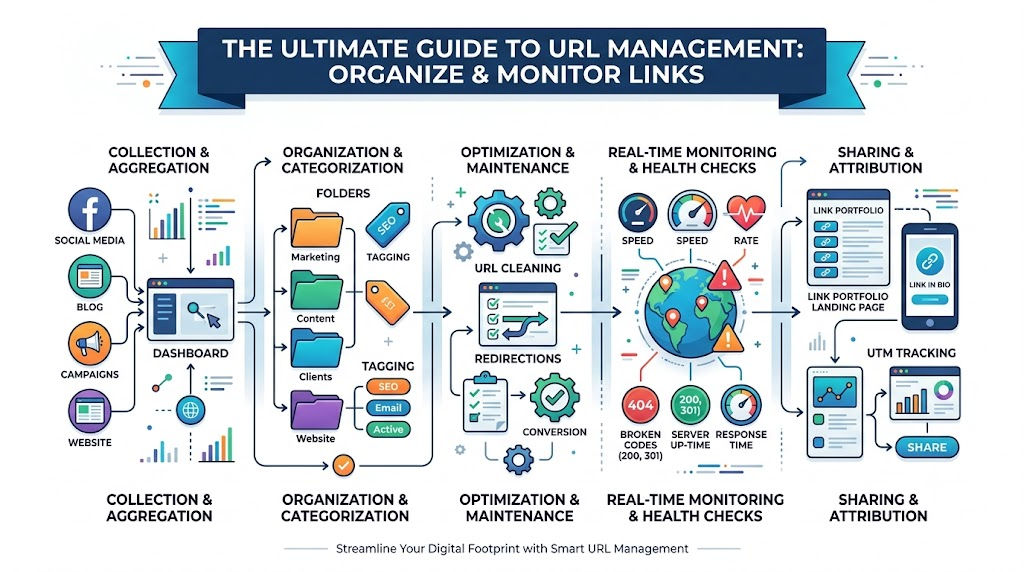
Modern platforms process URLs by grouping them into dedicated collections, assigning tags, validating destination status, and tracking link performance. Advanced systems constantly check destination URLs to ensure links remain active and error-free.
+-----------------------------------------------------------------------+
|                         CENTRALIZED DASHBOARD                         |
+-----------------------------------------------------------------------+
                                    |
     +------------------------------+------------------------------+
     |                              |                              |
     v                              v                              v
[ Categorization ]         [ Health Monitoring ]         [ Asset Distribution ]
- Folders & Collections    - Broken Link Detection        - Link in Bio Profiles
- Custom Tagging           - Redirect Verification        - Digital Portfolios
- Advanced Search          - Status Code Audits           - Campaign Tracking
Why Link Organization Matters
Without structure, web addresses are easily lost, duplicated, or forgotten. Proper organization allows teams to retrieve crucial landing pages instantly, update outdated campaign URLs, and prevent audience friction caused by broken connections.
Benefits of Centralized URL Management
Adopting a link management platform turns web links into valuable, searchable business assets. Key benefits include:
- Centralized Access: Access all project links across devices and departments.
- Error Prevention: Identify dead links before they harm client experience or search visibility.
- Streamlined Sharing: Create custom portfolios and bio links to present resources professionally.
Why Link Management Is Important
Effective link oversight impacts business operations, user experience, and search rankings.
Better Organization & Improved Productivity
Searching through chat histories or spreadsheets to find a specific landing page wastes valuable hours. Systematic folder hierarchies and search filters allow team members to retrieve correct web links in seconds.
Easier Collaboration
When marketing, sales, and development teams share a single link directory, everyone uses the correct, up-to-date web addresses for campaigns and client interactions.
Better User Experience
Nothing frustrates visitors faster than clicking a link that leads to a 404 error page. Ensuring links direct users smoothly to active content builds trust and increases conversion rates.
Stronger SEO Performance
Search engines crawl web pages using links. Broken or misdirected URLs waste crawl budgets and hurt search visibility. According to guidance from Google Search Central, maintaining clean site structures and functional links supports efficient indexing and crawling.
Consistent Brand Presence
Centralizing digital links ensures that public-facing channels—including social bios, email signatures, and advertising assets—always point to active, accurate destinations.
Essential Features of a Modern Link Management Platform
To manage complex link structures efficiently, modern tools provide features tailored for clarity and ease of use:
URL Organization & Folder Management
Users can create nested folders and collections based on specific projects, departments, clients, or content categories.
Tagging & Categorization
Tagging web addresses with custom keywords allows for instant sorting across distinct categories, regardless of folder depth.
Search & Filtering
Robust search functionality allows users to locate specific URLs instantly by title, tag, web domain, or creation date.
Link Sharing & Team Collaboration
Granular access controls allow team leads to share specific link collections securely with internal staff or external partners.
A practical URL organizer tool simplifies digital clutter, transforming chaotic link lists into organized, actionable workflows.
Automatic Broken Link Monitoring
Why Broken Links Matter
Web pages change, domains expire, and folder structures adapt over time. When external pages disappear without warning, links point to non-existent destinations, breaking user navigation.
SEO and User Experience Impact
Search engines penalize websites that deliver poor user experiences. High numbers of broken outbound links signal poor site maintenance, which can lower search engine rankings over time.
   [ Active Web Link ]
            |
            v
  ( Periodic Health Check )
            |
   +--------+--------+
   |                 |
   v                 v
[ 200 OK ]      [ 404 Error Detected ]
(Healthy)            |
                     v
         [ Automated Alert Sent ]
                     |
                     v
       [ Instant URL Update/Fix ]
Website Maintenance & Auditing
Manually clicking every web link to verify its functionality is impractical for growing sites. Using an automatic broken link monitoring protocol automates this verification process. A dedicated URL health monitoring tool runs scheduled health checks, testing status codes (such as 200 OK, 301 Redirect, or 404 Not Found) and alerting users immediately when a URL breaks. Technical standards defined by the W3C emphasize the importance of persistent URIs to preserve long-term web usability.
Campaign Link Management for Marketers
Marketers launch campaigns across multiple channels, including social media ads, partner programs, email newsletters, and influencer promotions.
Centralized Campaign Tracking
Using a dedicated campaign link management tool allows marketing teams to store, organize, and update all promotional links in one place.
E-Commerce and Content Promotion
When running seasonal sales or launching new products, marketers need instant access to correct tracking links. Centralizing campaign URLs ensures the entire marketing team uses verified destination links, preventing costly redirect errors during live launches.
Link Portfolio Management for Professionals
Presenting your body of work professionally requires more than sending scattered links to prospective clients or employers.
Using link portfolio management strategies, professionals can aggregate diverse digital assets into an organized visual portfolio:
- Published Articles: Showcase written work, guest posts, and industry analysis.
- Project Case Studies: Organize client deliverables, design mockups, and strategy decks.
- Code Repositories: Share development projects, API documentations, and GitHub links.
- Video & Media: Aggregate tutorials, podcasts, keynotes, and webinar recordings.
- Certifications: Display verified professional credentials and educational achievements.
Grouping these elements into branded collections allows professionals to share a single, polished link that highlights their full expertise.
Free Link in Bio Tool for Creators
Social media platforms limit bios to a single clickable web link. Managing that single touchpoint effectively is crucial for creator monetization and audience growth.
Streamlining Social Touchpoints
Using a free link in bio tool allows creators, influencers, and small brands to direct traffic from Instagram, TikTok, YouTube, or X to a customizable hub featuring all key destinations.
                    +-----------------------+
                    |  Social Media Bio URL |
                    +-----------------------+
                                |
                                v
               +---------------------------------+
               |    CUSTOM LINK IN BIO HUB       |
               +---------------------------------+
                 |              |              |
                 v              v              v
           [ Latest Video ] [ Store/Merch ] [ Newsletter ]
Enhancing Audience Engagement
Instead of updating social bios manually for every new post or video, creators simply add new links to their central bio hub. This keeps content fresh, captures leads, and ensures audiences always find your latest offers.
Content Link Management for Bloggers & Publishers
Managing long-form content portfolios requires continuous oversight. Over time, internal and external links within articles can decay or become outdated.
Content Maintenance Strategies
A dedicated content link management tool helps publishers track all URLs used across their blog networks.
Updating Older Posts
When external research sources move or rebrand, updating those links across hundreds of articles manually takes hours. A central management platform allows editors to locate every instance of an outdated domain and replace it with a fresh, authoritative reference instantly.
Digital Footprint Management
Protecting Online Identity
Your digital footprint consists of every profile, article, directory listing, and social channel associated with your brand. Leaving old, unmanaged links active across the web creates security risks and confuses customers.
Digital Asset Organization
Using a digital footprint management tool allows brands to maintain an accurate inventory of every live web property. Documenting and reviewing external brand touchpoints regularly ensures consistent messaging and protects brand reputation.
User-Specific Comparison
Different professionals rely on URL management tools for distinct operational needs:
| User Type | Primary Challenge | Link Management Solution | Key Benefit |
| Bloggers | Outdated resource links & broken affiliate URLs | Content link collections & health tracking | Preserves SEO rankings & protects affiliate revenue |
| Content Creators | Single-link limits on social platforms | Integrated link in bio profiles | Maximizes social traffic & audience engagement |
| Digital Marketers | Managing complex multi-channel campaign links | Centralized campaign folders & tag systems | Eliminates wrong-link mistakes during launches |
| Businesses | Scattered corporate links & unmanaged brand assets | Team workspace & permission controls | Ensures brand consistency & smooth collaboration |
| Agencies | Handling URL lists across multiple client accounts | White-label portfolios & client collections | Streamlines client reporting & link delivery |
| Developers | Tracking API docs, staging links, & repositories | Tagged tech link repositories & status checks | Saves developer time & prevents broken dev links |
| Freelancers | Sharing work samples with prospective clients | Custom digital portfolios | Delivers a polished, professional client presentation |
| Students | Managing academic research sources | Subject-based URL collections | Simplifies citations & keeps study materials organized |
Best Practices for Managing URLs Effectively
Adopting structured link habits ensures long-term organization and operational clarity:
- Establish Clear Folder Hierarchies: Organize links logically by project, client, year, or department.
- Implement Consistent Tagging: Use descriptive tags (e.g.,
#blog,#campaign2026,#client-a) to make cross-folder searching easy. - Schedule Automatic Health Checks: Set up regular URL health checks to identify and fix broken links before users encounter them.
- Enforce Descriptive Title Conventions: Save links using clear, recognizable titles rather than default, unformatted web strings.
- Archive Expired Assets: Move ended campaign pages and retired project links into an archive folder to keep primary workspaces clean.
- Audit Public-Facing Links Quarterly: Regularly review social bios, email signatures, and active promo links to ensure destinations remain accurate.
- Document Core Brand Links: Keep a protected directory of essential company links, such as press kits, privacy policies, and main contact forms.
Common URL Management Mistakes to Avoid
Even experienced digital teams make mistakes that compromise link efficiency:
- Relying on Browser Bookmarks: Browser bookmarks are device-bound, making them difficult to share across teams or back up securely.
- Ignoring Redirect Chains: Allowing destination URLs to bounce through multiple redirects slows down page loads and hurts user experience.
- Using Unformatted Tracking Strings: Sharing long, raw tracking links looks unprofessional. Clean up and organize destination links before public distribution.
- Failing to Track Destination Changes: Assuming external websites will keep their URLs active indefinitely leads to unexpected broken links over time.
- Mixing Personal and Professional Links: Storing personal bookmarks alongside corporate campaign assets causes clutter and accidental misshares.
The Future of URL Management
As digital content creation accelerates, managing web addresses will require smarter automation and integration:
- AI-Assisted Categorization: Future management systems will analyze destination page content automatically and assign relevant tags and folders upon link import.
- Real-Time Health Verification: Real-time status checks will alert users the moment a destination server experiences downtime or URL changes.
- Unified Asset Hubs: Link management platforms will continue integrating with digital asset platforms, bringing web links, media files, and documentation together into unified knowledge bases.
- Enhanced Digital Footprint Analytics: Managing personal brands and corporate identities will rely on centralized portals that track live digital touchpoints across the open web.
According to marketing benchmarks from HubSpot and industry insights from Ahrefs, keeping digital assets organized directly improves campaign efficiency and organic search performance.
How URLsNow Helps Users Stay Organized
Managing web links across multiple tools, channels, and campaigns can quickly become overwhelming. Modern platforms address these hurdles by bringing every step of link organization under a single, intuitive interface.
Using URLsNow allows individual creators, marketing teams, and enterprises to build structured link directories effortlessly:
- Central Dashboard: View, search, and manage all stored web addresses from one clean control panel.
- Smart Collections: Group URLs by project, client, department, or content type for quick retrieval.
- URL Health Tracking: Automated monitoring scans your saved links continuously, alerting you to status changes and broken pages.
- Campaign & Portfolio Management: Build custom link hubs, bio pages, and digital portfolios to showcase your work or run marketing campaigns smoothly.
- Team Collaboration: Share curated link collections with colleagues and partners to keep everyone aligned on official landing pages.
By turning raw web links into organized, monitored assets, modern management solutions save time, protect user experience, and keep your online presence operating at peak performance.
Frequently Asked Questions (FAQ)
What is a URL management tool?
A URL management tool is a specialized software application that allows individuals and organizations to store, organize, monitor, categorize, and share web addresses from a centralized dashboard. Instead of relying on cluttered browser bookmarks or spreadsheets, users can create structured folder hierarchies, assign descriptive tags, run automated broken link checks, and generate custom link collections for projects, campaigns, or digital portfolios.
Why is link management important for businesses?
Link management is essential because modern businesses handle hundreds of active web links across marketing campaigns, customer support documentation, sales decks, and internal resources. Proper link management prevents dead links, improves team collaboration, protects search engine optimization (SEO) efforts, and ensures that customers, partners, and employees always access accurate, active web destinations without frustration.
How does automatic broken link monitoring work?
Automatic broken link monitoring regularly scans saved URLs by sending automated server requests to check destination status codes. If a destination page returns an error (such as a 404 Not Found or 500 Server Error), the monitoring system flags the broken link immediately and alerts the user. This allows managers to update or fix invalid links before they impact user experience or search engine rankings.
What is URL health monitoring?
URL health monitoring is the process of tracking the operational status, response speed, and redirect paths of saved web links over time. A URL health monitoring tool verifies that web addresses load correctly, do not experience unexpected server downtime, and do not lead to broken redirect chains. Maintaining healthy URLs ensures seamless web navigation and preserves domain authority.
What is a link portfolio?
A link portfolio is a curated, public-facing or private showcase that aggregates multiple web links into a clean, visually organized presentation. Professionals, freelancers, agencies, and creators use link portfolios to showcase published articles, completed client projects, code repositories, video channels, and professional certifications through a single, easy-to-share web page.
How does a link in bio tool help creators?
A link in bio tool allows social media creators to overcome platform limits that restrict accounts to a single clickable web link in profile descriptions. By placing a centralized bio link in their profile, creators direct followers to a customizable landing page featuring links to their latest videos, blog posts, merchandise stores, affiliate offers, and social profiles.
Why should businesses organize their URLs?
Businesses should organize URLs to increase operational efficiency, protect brand integrity, and eliminate costly communication errors. Centralizing web links ensures that marketing, sales, customer service, and development teams use correct tracking and landing pages. It also speeds up employee onboarding and prevents outdated or broken links from appearing in live marketing campaigns.
Can proper URL management improve SEO performance?
Yes, effective URL management supports SEO performance by identifying and fixing broken links that waste search engine crawl budgets and create poor user experiences. According to search engine guidelines documented by resource platforms like Semrush and developer networks like the Mozilla Developer Network, maintaining functional links and clean redirect structures helps search engine spiders crawl, index, and evaluate web pages efficiently.
Who should use URLsNow?
URLsNow is designed for a broad range of users, including bloggers, digital marketers, content creators, small business owners, agency teams, developers, freelancers, and students. Anyone who manages multiple web links, runs digital campaigns, curates online research, or needs a organized system to monitor link health can benefit from the platform’s central dashboard and link organization features.
How often should links be audited for broken URLs?
Links should ideally be audited continuously using automated health tracking tools. For manual reviews or high-priority assets like main navigation menus, social bios, and active advertising campaigns, conducting a thorough monthly or quarterly link audit is recommended. Continuous monitoring ensures broken URLs are flagged and fixed before they impact users or marketing campaigns.
Conclusion
Managing web addresses effectively has evolved from a basic bookmarking habit into a crucial strategy for digital success. As brands and creators publish content across multiple platforms, unorganized link systems lead to lost productivity, broken user journeys, and damaged search engine performance. Adopting a centralized URL management tool provides the structure, security, and visibility needed to control your digital footprint. By organizing links into dedicated collections, implementing continuous link health checks, and utilizing custom bio hubs and portfolios, businesses and creators can streamline their workflows and build stronger connections with their audiences. Solutions like URLsNow simplify link organization by bringing storing, monitoring, and sharing tools into a single, intuitive interface. Prioritizing structured link management today ensures your digital assets remain organized, accessible, and high-performing for the long term.