INTRODUCTION
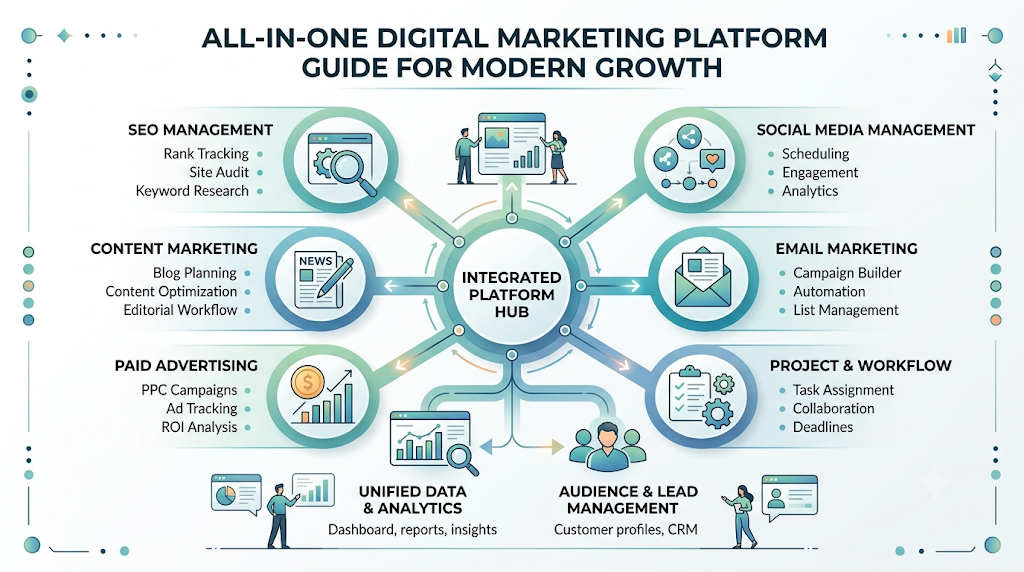
Managing modern digital campaigns often feels like juggling too many subscriptions at once. Marketing teams frequently split their attention between separate apps for keyword research, backlink monitoring, project tracking, asset storage, and influencer outreach. This fragmented setup creates data siloes, increases recurring costs, and drains daily team productivity. When critical marketing data is scattered across multiple logins, cross-channel reporting becomes a slow, error-prone task instead of a clear strategic advantage. To stay competitive, growing brands and agencies are shifting toward centralized operating environments. Using an all-in-one digital marketing platform allows marketing teams to unify campaign planning, technical audits, asset storage, and performance analytics within a single, streamlined interface. By automating repetitive tasks and maintaining a single source of truth, teams eliminate manual coordination bottlenecks and make faster, data-backed growth decisions. In this guide, you will learn how consolidating your SEO management, rank tracking, technical site audits, backlink monitoring, project management, and asset handling transforms operational efficiency.
WHAT IS AN ALL-IN-ONE DIGITAL MARKETING PLATFORM?
Definition
An all-in-one digital marketing platform is a centralized software ecosystem designed to manage, execute, track, and optimize multi-channel marketing campaigns from a single dashboard. Instead of purchasing standalone tools for each marketing task, organizations use a unified solution to control their entire digital marketing lifecycle.
Core Components
A comprehensive marketing system integrates several functional modules into one interface:
- SEO & Keyword Intelligence: Tools for tracking rankings, auditing site architecture, and analyzing backlink profiles.
- Project & Workflow Management: Task boards, automated sequences, and collaboration spaces for content teams.
- Digital Asset Management (DAM): Centralized file repositories with strict version control for brand collateral.
- Influencer & Outreach Portals: Discovery marketplaces and communication tracking for external partnerships.
- Unified Reporting & Analytics: Multi-channel dashboards that consolidate campaign metrics for stakeholders.
Why Businesses Need One
As marketing tactics expand, managing disconnected single-purpose tools introduces severe operational overhead. Teams waste hours copying data between spreadsheets, managing multiple software licenses, and attempting to fix broken data integrations. A centralized platform eliminates these pain points by offering integrated workflows, shared data streams, and consistent team permissions.
Key Benefits
- Cost Efficiency: Consolidate multiple tool subscriptions into one scalable platform license.
- Data Consistency: Maintain unified metrics across all campaign reporting modules.
- Higher Team Output: Reduce time spent toggling between disconnected software applications.
- Enhanced Transparency: Give stakeholders direct visibility into task status and campaign ROI.
SEO MANAGEMENT SOFTWARE
Executing a successful search engine optimization strategy requires continuous planning, precise execution, and detailed post-campaign analysis. Modern SEO management software provides the strategic structure required to manage organic growth initiatives predictably across large web portfolios.
Keyword Research
Effective search strategy begins with thorough keyword research. Integrated SEO software allows marketers to discover high-intent target queries, evaluate search volume trends, assess keyword difficulty scores, and identify contextual long-tail opportunities. Centralizing keyword discovery ensures that content strategists and copywriters target terms with high commercial value.
Campaign Planning
Once high-value keywords are identified, marketing leads can group them into structured topic clusters and assign targeted pages. Integrated tools allow managers to convert keyword research directly into actionable content briefs, set production deadlines, and assign editorial responsibility without leaving the platform.
Performance Monitoring
Search performance changes constantly due to algorithm updates and competitor activity. Integrated management tools continuously pull organic traffic metrics, tracking impression growth, click-through rates (CTR), and conversion pathways to confirm that published content meets performance expectations.
Competitor Analysis
Understanding competitor strategy is critical to capturing market share. Comprehensive software evaluates competitor ranking footprints, identifies content gaps, monitors keyword acquisitions, and tracks domain visibility changes over time, helping teams adjust strategies proactively.
Reporting
Customized automated reporting translates complex SEO data into clear visual charts for clients and leadership. Automated reporting scheduling ensures stakeholders receive accurate updates regarding campaign health, traffic acquisition, and organic keyword trajectory.
SEO RANK TRACKING
Accurate keyword tracking provides visibility into organic search performance across markets, devices, and search intent categories. Using a real-time SEO rank tracking tool gives search marketers immediate visibility into ranking fluctuations and position updates.
Keyword Monitoring
Tracking keyword performance daily allows marketing teams to isolate position changes immediately. Whether monitoring primary head terms or localized long-tail phrases, continuous keyword tracking ensures sudden drops are addressed before impacting overall organic revenue.
Ranking Trends
Individual ranking positions bounce naturally due to minor search engine algorithm tweaks. Analyzing long-term rank trends over weekly, monthly, and quarterly windows reveals true organic trajectory, helping strategists separate minor algorithmic noise from real performance trends.
Device Tracking
Search engine results pages (SERPs) vary considerably between mobile and desktop devices due to localized features and screen sizes. Precise tracking tools segment keyword rankings by device type, enabling teams to optimize user experience specifically for mobile or desktop audiences.
Location-Based Rankings
For businesses operating across multiple geographic regions or managing local franchises, hyper-local rank tracking is essential. Modern tracking features allow users to monitor rankings down to specific zip codes, cities, or national borders to measure local campaign reach accurately.
Competitor Comparison
Side-by-side keyword rank comparisons reveal how your domain performs against key market competitors. Tracking rank distribution overlap helps teams spot competitor gains early and protect valuable page-one rankings.
Practical Example: A multi-location healthcare provider uses localized rank tracking to monitor search positions across 15 distinct metropolitan branches. When a specific location drops out of the top three local pack results, the team receives an immediate automated alert, enabling them to update localized citations and content before patient inquiries decline.
TECHNICAL SEO SITE AUDIT
A website cannot achieve optimal organic search rankings if technical defects block search engine bots from crawling and indexing pages effectively. A robust technical SEO site audit tool continuously scans site architecture to catch structural issues before they harm visibility.
Broken Links & Crawl Errors
Broken links (404 errors) disrupt crawler navigation and frustrate human users. Site audit scanners identify broken internal links, faulty redirect chains (301/302 loops), and server response errors (5xx) across thousands of URLs simultaneously.
Duplicate Content & Indexing Problems
Duplicate title tags, meta descriptions, or thin body text confuse search engine indexers regarding which URL to rank. Automated technical audits flag canonical tag misconfigurations, duplicate content blocks, and incorrect noindex directives that block valuable pages from search indexes.
Missing Metadata & On-Page Errors
Audit modules evaluate on-page parameters across the entire site architecture. They highlight missing alt text, missing H1 tags, suboptimal meta title lengths, and unformatted structured data schemas, ensuring every page complies with technical guidelines established by Google Search Central.
Mobile Usability & Site Speed
With mobile-first indexing, page loading speed and responsive layout execution directly impact organic rankings. Site audit engines measure key Core Web Vitals metrics—such as Largest Contentful Paint (LCP) and Cumulative Layout Shift (CLS)—alerting technical teams to heavy media files or slow server scripts.
Sitemap & Robots.txt Issues
Faulty robots.txt rules can unintentionally block search engine crawlers from indexing core product pages. Audit suites analyze sitemap accuracy and file accessibility to ensure search bots navigate site structures smoothly.
BACKLINK ANALYSIS
Inbound links from authoritative third-party websites remain one of the strongest organic search ranking signals. Leveraging an enterprise backlink analysis tool allows SEO specialists to evaluate domain authority, measure link velocity, and build sustainable off-page authority.
Referring Domains & Anchor Text
Total backlink count is less important than the quality and diversity of unique referring domains. Advanced backlink analysis evaluates domain trust scores, IP diversity, and anchor text distribution to ensure your site maintains a natural, high-performing link profile.
Link Quality & Toxic Link Identification
Not all backlinks help search performance; spammy or low-quality inbound links can trigger manual search penalties or algorithmic filtering. Automated backlink monitoring evaluates incoming link toxicity based on domain relevance, spam signals, and artificial link farm patterns.
Competitor Backlinks & Link Building Opportunities
Analyzing the backlink profiles of industry leaders highlights proven outreach targets. By comparing referring domain overlaps through backlink gap analysis, teams quickly identify high-value resource pages, media outlets, and industry directories to target in outreach campaigns.
SEO PROJECT MANAGEMENT
Executing organic search strategies requires close coordination between content creators, web developers, outreach specialists, and executive stakeholders. Purpose-built SEO project management software structures complex optimization plans into clear, trackable execution phases.
+-------------------------------------------------------------------+
|                   SEO PROJECT MANAGEMENT WORKFLOW                 |
+-------------------------------------------------------------------+
|  1. DISCOVERY    -->  Technical Audits & Keyword Research         |
|  2. PLANNING     -->  Brief Creation & Task Assignments           |
|  3. EXECUTION    -->  Content Drafting & On-Page Optimization     |
|  4. REVIEW       -->  Quality Assurance & Schema Validation       |
|  5. PUBLISHING   -->  Indexing Requests & Rank Track Activation   |
+-------------------------------------------------------------------+
Task Assignment & Milestone Management
Large-scale optimization campaigns involve dozens of recurring deliverables. Project management features allow campaign leads to assign individual tasks—such as updating meta descriptions, fixing broken redirects, or writing technical content—to specific team members with clear dependencies and firm target deadlines.
Campaign Planning & Workflow Tracking
Integrated project tracking connects specific operational tasks directly to overarching campaign milestones. Team leads can visualize project timelines using interactive Gantt charts or Kanban boards, helping identify workflow bottlenecks early and keep deliverables moving on schedule.
DIGITAL MARKETING WORKFLOW MANAGEMENT
Managing complex multi-channel campaigns across social media, email marketing, pay-per-click (PPC) ads, and content production requires organized process governance. Adopting digital marketing workflow management software standardizes execution standards across every department.
Campaign Workflows & Team Coordination
Standardized workflow templates define the exact review stages required before any creative asset or content piece goes live. Team members follow structured hand-off paths—from copywriting to design review, legal approval, and final publishing—reducing operational friction and preventing compliance errors.
Process Automation & Productivity
Automated notification triggers eliminate the need for manual check-ins. When a writer finishes an article draft, the system automatically routes the task to the editor, notifies the graphic design team to produce custom images, and updates campaign status dashboards in real time.
DIGITAL ASSET MANAGEMENT
Marketing teams produce thousands of visual and text assets every year, including campaign banners, logos, brand guidelines, product photography, and video promo clips. Utilizing digital asset management software for marketing teams eliminates file clutter and ensures brand assets are easy to organize and retrieve.
Centralized Storage & Asset Search
Centralized digital asset management provides a single, secure cloud library where teams store, organize, and retrieve media assets. Advanced metadata tagging, keyword categorizations, and file filters allow team members to find specific campaign assets instantly.
Version Control & Permission Controls
Using outdated brand graphics or unapproved promotional banners damages brand consistency. Built-in version control ensures users always access the most recent, approved asset file, while granular role-based permissions protect core files from unauthorized access or accidental deletion.
INFLUENCER MARKETING
Influencer collaborations allow brands to expand their reach, build domain credibility, and engage dedicated niche audiences. Accessing an integrated influencer marketing marketplace simplifies creator discovery, outreach coordination, and campaign ROI calculation.
Finding Influencers & Campaign Management
Integrated influencer discovery modules help brands search candidate databases using specific audience demographic filters, engagement rate thresholds, niche topics, and platform preferences. Campaign management tools track creator agreements, content deadlines, and asset submissions directly within the platform.
Performance Tracking & Brand Partnerships
Measuring creator performance requires accurate tracking parameters. Integrated platforms generate unique tracking links, promo codes, and custom conversion paths for each creator, allowing marketers to measure campaign engagement, site traffic, and revenue generated by each influencer partnership.
WHO SHOULD USE WIZBRAND?
SEO Agencies
Agencies managing client portfolios use WizBrand to centralize technical audits, rank tracking, backlink monitoring, and white-label client reporting within a single operational platform, lowering software expenses while scaling client onboarding.
Digital Marketing Agencies
Full-service marketing firms streamline cross-departmental operations by connecting content creation, paid campaign workflows, digital asset distribution, and client management inside one shared software workspace.
Freelancers
Independent marketing consultants gain access to enterprise-grade SEO, site auditing, and project tracking tools without managing multiple software subscriptions, helping them deliver polished client reporting efficiently.
In-House Marketing Teams
Internal corporate marketing teams use centralized workflow and asset management features to align remote team members, maintain consistent brand standards, and report performance metrics directly to executive leadership.
Enterprises
Large organizations with extensive domain portfolios rely on enterprise-grade role permissions, scaled site auditing capabilities, and unified data streams to manage multi-brand digital initiatives cleanly.
Startups
Fast-growing startups leverage all-in-one functionality to launch organic search strategies, track early growth metrics, manage brand creative assets, and control software spend during early scale-up phases.
Content Teams
Publishing teams and blog managers use integrated workflow boards, digital asset libraries, and on-page SEO optimization tools to streamline editorial production and publish optimized articles on schedule.
E-commerce Businesses
Online retailers use comprehensive technical site auditing to identify product page errors, track thousands of commercial product keywords, and manage extensive media catalogs without performance delays.
Influencers
Digital creators and brand partners connect with growing brands through dedicated outreach portals, manage campaign deliverables, submit content assets for review, and track earnings transparently.
Advertisers
Performance marketers and paid media strategists align search keyword research, promotional landing page creation, and creative asset management to build cohesive, high-converting digital ad campaigns.
MANAGING MULTIPLE TOOLS VS. AN ALL-IN-ONE PLATFORM
Relying on separate tools for individual marketing functions introduces organizational friction, higher subscription overhead, and disjointed reporting metrics. The comparative analysis below illustrates the clear operational advantages of consolidating your marketing stack into a unified platform.
| Functional Area | Multiple Separate Tools | WizBrand Unified Platform |
| SEO & Rank Tracking | Requires distinct tool subscriptions for rank tracking, keyword research, and site audits. | Fully integrated suite connecting keyword research, rank tracking, and site audits in one dashboard. |
| Project Management | Separate task management tools disconnect task lists from live campaign data. | Native project tracking links individual operational tasks directly to live marketing campaigns. |
| Backlink Analysis | Requires standalone off-page SEO applications with distinct billing plans. | Built-in backlink tracking continuously monitors domain authority, toxicity, and link profiles. |
| Asset Management | Files scattered across personal cloud storage accounts, leading to lost assets. | Centralized media library featuring clear metadata tags, search filters, and strict version control. |
| Reporting & Analytics | Manual data extraction into spreadsheets; high risk of copy-paste reporting errors. | Automated, cross-channel dashboards generate clear, real-time reports for executive review. |
| Team Collaboration | Disjointed communication across external chat apps and disconnected project boards. | Unified activity streams keep task discussions, file approvals, and audit data in one shared space. |
BUSINESS BENEFITS OF USING WIZBRAND
Adopting an integrated marketing platform delivers immediate operational improvements that support sustainable growth across all digital marketing channels.
+--------------------------------------------------------------------+
|                  KEY ENTERPRISE BUSINESS BENEFITS                  |
+--------------------------------------------------------------------+
|  [+] Reduced Software Costs       -->  Eliminate redundant plans   |
|  [+] Improved Team Output         -->  Standardized task workflows |
|  [+] High Data Accuracy           -->  Unified performance views  |
|  [+] Accelerated SEO Growth       -->  Continuous technical audits |
|  [+] Seamless Team Alignment      -->  Centralized permissions     |
+--------------------------------------------------------------------+
- Higher Operational Efficiency: Standardized process workflows eliminate redundant administrative tasks, allowing marketing teams to spend more time executing high-impact campaigns.
- Streamlined Software Overhead: Consolidating separate software solutions into a unified platform subscription lowers monthly software spend and simplifies software management.
- Faster Cross-Team Collaboration: Shared task boards and unified media libraries keep writers, web developers, graphic designers, and SEO leads aligned on shared campaign milestones.
- Improved Organic Search Visibility: Continuous site audits, precise keyword rank tracking, and proactive backlink monitoring protect and expand your organic search presence.
- Reliable Reporting: Automated performance dashboards pull live operational data directly from active campaign modules, ensuring stakeholders receive accurate performance metrics.
BEST PRACTICES FOR SEO & DIGITAL MARKETING MANAGEMENT
- Schedule Regular Site Audits: Run automated technical site scans weekly to identify broken links, crawl issues, and indexing errors before they hurt search rankings.
- Monitor Keywords Consistently: Track keyword rank trends across mobile and desktop devices daily to spot shifts in search intent and competitor rank gains.
- Centralize Brand Assets: Store all official logos, campaign graphics, and media templates inside a managed digital asset repository with clear file permissions.
- Enforce Standardized Workflows: Define clear task hand-off procedures for content creation, technical fixes, and campaign launches to maintain consistent execution standards.
- Audit Backlink Profiles Continuously: Track new inbound links regularly to identify toxic link patterns early and discover high-value outreach opportunities.
- Align KPIs Across Teams: Ensure content creators, SEO leads, and paid media strategists track shared conversion targets within a single, unified analytics interface.
COMMON DIGITAL MARKETING MISTAKES
Ignoring Technical SEO Health
Many content teams focus exclusively on writing new blog posts while ignoring technical crawl errors, broken canonical links, and slow page loading speeds.
- The Solution: Use automated site audit modules to catch and correct technical errors continuously.
Fragmented File Storage
When creative assets are stored across individual employee desktop drives or personal cloud folders, teams waste time searching for missing files or publish outdated design graphics.
- The Solution: Enforce centralized asset management with clear file tagging and strict version controls.
Tracking Irrelevant Vanity Metrics
Focusing solely on impressions or unrefined keyword counts obscures actual campaign business value and ROI.
- The Solution: Configure analytics dashboards to track high-intent organic traffic, lead capture events, and keyword conversion rates.
Disjointed Department Communication
When SEO leads, content writers, and web engineering teams work in isolated silos, priority technical fixes and content updates stall.
- The Solution: Centralize project planning within shared workflow boards where technical audit tasks link directly to editorial schedules.
FUTURE OF SEO & DIGITAL MARKETING PLATFORMS
The digital marketing ecosystem continues to evolve rapidly. Staying competitive requires adopting modern management practices and keeping pace with industry standards outline by research hubs like HubSpot and Content Marketing Institute.
- Automated Process Optimization: Modern marketing systems increasingly automate repetitive operational tasks, such as generating performance reports, monitoring site health, and routing content approvals.
- Predictive Performance Analytics: Advanced data analytics engines analyze historical ranking patterns to forecast search traffic trends and identify high-potential keyword opportunities proactive.
- Unified Cross-Channel Attribution: As user buyer journeys become more complex, modern platforms connect organic search, content marketing, and paid channels into single-touch attribution models.
- Advanced Enterprise Collaboration: Remote and distributed marketing teams require centralized cloud environments featuring granular permission governance, shared asset access, and clear task visibility.
HOW WIZBRAND HELPS MARKETING TEAMS GROW
WizBrand provides an end-to-end management framework that simplifies digital marketing operations, improves organic search visibility, and fosters effective team collaboration across all campaign channels.
- Unified SEO Suite: Access comprehensive keyword research, continuous rank tracking, and in-depth backlink monitoring inside a single user interface.
- Automated Site Audits: Keep web properties technically sound with automated site health scans that identify broken links, page speed bottlenecks, and indexing errors.
- Structured Workflows: Streamline project management using native task boards, custom approval hand-offs, and clear deadline tracking for content teams.
- Centralized Asset Repository: Store, tag, and distribute brand creative assets securely using a managed digital asset library equipped with version control.
- Influencer Discovery & Outreach: Connect directly with niche digital creators, coordinate promotional agreements, and track campaign ROI transparently.
- Actionable Analytics: Generate clear executive reports using real-time campaign performance dashboards.
To learn more about feature deployment or platform integrations, explore the detailed guides available in the WizBrand Help Center.
FREQUENTLY ASKED QUESTIONS (FAQ)
What is an all-in-one digital marketing platform?
An all-in-one digital marketing platform is a centralized software system that consolidates essential online marketing tools—including SEO, keyword tracking, project management, digital asset storage, and campaign reporting—into a single interface. Instead of paying for and switching between standalone tools, teams use a single platform to execute, monitor, and optimize multi-channel marketing campaigns. This integration reduces software subscription costs, eliminates data siloes, improves cross-team communication, and simplifies performance tracking across all active digital marketing initiatives.
What is SEO management software?
SEO management software is a specialized application designed to help digital marketers plan, execute, and evaluate search engine optimization campaigns. It provides strategic modules for keyword research, competitor analysis, campaign task tracking, technical health auditing, and custom performance reporting. By organizing search strategies into structured, actionable workflows, SEO management software enables brands and agencies to improve organic search visibility, capture high-intent search traffic, and scale digital operations predictably across multiple online domains.
How does an SEO rank tracking tool work?
An SEO rank tracking tool regularly queries search engine results pages (SERPs) to record current ranking positions for specified target keywords. It tracks performance variations across different search environments, including desktop versus mobile devices, distinct geographic locations, and localized language preferences. Modern rank tracking software visualizes performance changes over time, helping marketing teams spot search engine algorithm updates, analyze competitor position shifts, evaluate keyword optimization results, and refine search strategies based on accurate, real-time position data.
Why are technical SEO audits important?
Technical SEO audits are critical because search engines cannot rank web pages properly if underlying structural errors hinder crawling and indexing. An automated technical audit scans site architecture to identify broken internal links, slow page load speeds, unoptimized canonical tags, duplicate content blocks, and indexing directives. Catching and resolving these technical defects ensures search engine bots navigate site structures easily, helping preserve domain authority, optimize crawl budgets, improve user experience metrics, and protect organic search rankings.
What is backlink analysis?
Backlink analysis is the process of evaluating inbound hyper-links pointing to your domain from third-party websites. It measures critical off-page SEO indicators, including referring domain authority, anchor text distribution, link toxicity levels, and overall link acquisition velocity. Performing regular backlink analysis helps search marketers identify high-value outreach opportunities, analyze competitor link-building strategies, detect low-quality or spammy inbound links, and build a natural, authoritative link profile that supports long-term organic search ranking growth.
How does SEO project management improve productivity?
SEO project management improves operational productivity by organizing complex optimization strategies into clear, trackable steps. It allows leads to assign specific deliverables—such as content revisions, technical bug fixes, link outreach, and schema updates—to team members with firm deadlines and dependencies. Centralizing task planning alongside active campaign data eliminates communication friction, prevents missed deadlines, reduces administrative check-ins, and ensures content writers, developers, and SEO leads stay focused on shared organic growth targets.
What is digital asset management for marketing teams?
Digital asset management (DAM) is a centralized storage system built to organize, secure, and distribute digital marketing files, including logos, campaign banners, brand videos, product photography, and graphic templates. Featuring automated metadata tagging, intuitive search filters, and strict version control, DAM software ensures team members access approved, up-to-date brand assets quickly. Centralizing file management prevents asset loss, protects brand consistency, streamlines creative review hand-offs, and removes storage clutter across marketing departments.
What is an influencer marketing marketplace?
An influencer marketing marketplace is an integrated discovery portal that connects brands directly with digital creators and niche influencers. It allows marketing leads to filter candidate profiles based on audience demographics, niche topics, engagement rates, and platform channels. These marketplaces simplify collaboration by managing communication, content submission reviews, campaign delivery timelines, and performance tracking within a single secure workspace, making influencer campaigns easier to manage and evaluate.
Is WizBrand suitable for digital marketing agencies?
Yes, WizBrand is designed specifically to support digital marketing and SEO agencies managing multi-client portfolios. Its unified architecture allows agencies to consolidate technical site audits, rank tracking, backlink monitoring, project management, and asset storage into one scalable system. Agencies can replace expensive standalone tool subscriptions, streamline cross-department workflows, manage client access levels securely, and generate polished, white-label performance reports that demonstrate clear campaign ROI to clients efficiently.
How can businesses improve their digital marketing workflows?
Businesses can optimize digital marketing workflows by centralizing campaign operations within a unified software platform that links project planning, file storage, execution tasks, and analytics. Standardizing process hand-offs between copywriting, design, and technical teams reduces administrative confusion and speeds up approval cycles. Additionally, automating routine notifications, scheduling recurring site audits, and maintaining shared performance dashboards ensures campaign deliverables move forward smoothly while maintaining strict quality standards across all digital marketing channels.
CONCLUSION
Managing digital marketing operations across fragmented, single-purpose software applications creates unnecessary operational friction, inflates software expenses, and hides valuable campaign insights. Centralizing your marketing stack within a comprehensive, all-in-one platform provides the structural clarity and operational efficiency needed to scale modern digital campaigns predictably. By unifying essential marketing functions—including keyword research, continuous rank tracking, technical site audits, backlink monitoring, workflow tracking, and digital asset management—your team eliminates data siloes and focuses on strategic execution. Maintaining clear visibility across all operational channels improves cross-department collaboration, protects technical site health, and ensures content creation directly supports core business growth targets.