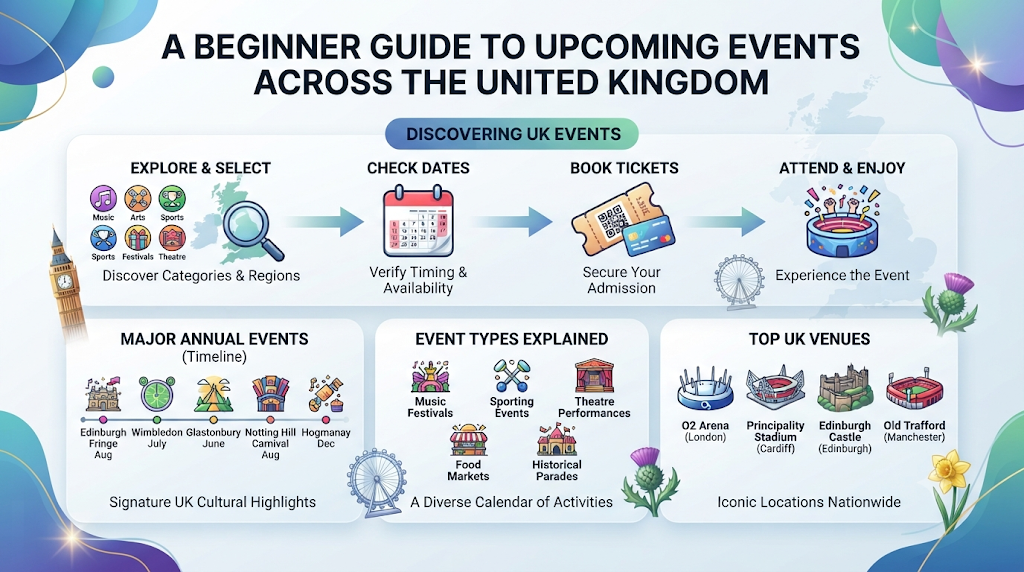
Sana runs a small bakery in Birmingham. Last month, she wanted to host a tasting workshop but had no idea where to promote it. A friend suggested listing it online. Within days, people who had never heard of her bakery started asking about it. That’s the kind of connection MyEventsNow UK aims to build. It’s an online event discovery, ticket booking, and event management platform. It brings organisers, businesses, venues, service providers, and attendees together across the United Kingdom. This article looks at the platform from two angles. First, from the side of someone searching for something to do. Second, from the side of someone trying to fill a room. Both journeys matter, and both start with a simple search.
What MyEventsNow UK Actually Is
Picture a busy marketplace, but online. One side has people looking for plans. The other side has people offering them. MyEventsNow UK sits in the middle and connects both. The platform links event organisers, businesses, venues, service providers, and attendees. It covers the whole United Kingdom. Visitors can discover local experiences and read event information. They can also access available ticket booking and registration options. But tickets are only one part. The marketplace also includes venue discovery, business promotion, and community engagement. It creates openings for event-related service providers too. So a venue gets noticed, a charity gets seen, and a fan finds a night out. Everything sits in one place.
Attendees and Organisers: How Their Needs Differ
Two groups use this platform, and they want different things. The table below breaks down the split. Treat it as a quick map before you read further.
| Area | For Attendees | For Organisers |
|---|---|---|
| Main purpose | Find events and book | Share events and reach people |
| Discovery or publishing | Explore experiences and event info | Build listings and post schedules |
| Tickets and booking | Use available booking options | Work through publishing and ticketing flows |
| Registration and communication | Sign up where offered | Simplify sign-up and messages |
| Event information | Read dates, venues, and details | Share venue details and schedules |
| Marketplace extras | Venue discovery and community links | Business promotion and provider links |
Use the left column if you’re planning a day out. Use the right column if you’re planning an event. Some readers will need both, and that’s perfectly fine.
Part One: For Anyone Looking for Something to Do
This part follows a simple path. You browse first. Then you narrow things down. You check the details. Finally, you book. Each section ends with one tip you can use straight away.
Starting with a broad look at what’s on
Begin with the bigger picture. The platform lists upcoming events in the UK across many types. You’ll find concerts, festivals, comedy shows, workshops, exhibitions, business conferences, networking meetups, and community gatherings. That’s a wide spread, so most people spot something that fits. A student might want a cheap night out. A family might want a weekend plan. A professional might want a meetup after work. The goal is to help users discover events across the country without jumping between many sites. Tip: give yourself ten minutes and scroll a few categories. You’ll notice patterns quickly.
Cutting the list down to your area
Long travel isn’t always practical. That’s where the events near me feature helps. You can find activities based on location, event category, dates, personal interests, and available experiences. This keeps your list short and useful. If you’re free only on Sunday, start with the date. If live music is your thing, start with the category. The platform won’t detect your location on its own. So type your area yourself and explore from there. Tip: use two filters, not five. Two filters keep results tight but still varied.
Checking London and other major cities
Some people want a big city night. Others want something closer to home. The platform aims to help users discover events in London and other major UK cities. Those cities include Manchester, Birmingham, Glasgow, Edinburgh, Bristol, and Belfast. Notice the word “aims”. It describes a goal, not a promise. Not every event type will appear in every city. So check what’s actually listed for your chosen place. If you split your time between two cities, search both. Tip: check your own city first, then a city you plan to visit.
For music fans: gigs, festivals, and nights out
Music takes up a large share of the platform. You can explore live performances, music festivals, independent artist events, entertainment shows, and nightlife experiences. That covers small gigs and bigger festival days. If you follow an independent artist, this is worth a look. If you want a full night out, nightlife experiences are listed too. When you search for concert tickets UK options, read the event details first. Check the date, the venue, and what the ticket covers. Tip: read the whole description before you book, not after.
Comedy, workshops, exhibitions, and business meetups
Not every outing involves music. The platform also lists comedy shows, workshops, exhibitions, business conferences, and networking meetups. These suit different moods and plans. A comedy night works well for a group of friends. A workshop suits someone learning a skill. An exhibition fits a quiet afternoon. A conference or networking meetup helps professionals meet new people. Each listing should explain what to expect. If something looks missing, ask before you book. Tip: shortlist two or three events, then compare them together.
Reading the details and making a booking
Before you commit, pause for a moment. Read the event information properly. Check the date, the time, and the venue. Look at the available ticket booking and registration options. Then decide if it fits your plan. This step saves headaches later. Many people book in a rush and check details afterwards. That often clashes with work or travel. A short check now avoids a wasted trip. Tip: confirm the venue and date twice before you complete any online event ticket booking UK step.
What Kinds of Events Are Listed? A Short Guide
The platform covers a range of event types. The table below shows what each side can do. Some cells say “Not specified” because the facts don’t list a detail. That’s honest, not a gap.
| Event Category | What Attendees Can Explore | What Organisers Can Do |
|---|---|---|
| Concerts and music | Live performances, festivals, independent artists, nightlife | Create listings and share schedules |
| Comedy and entertainment | Comedy shows and entertainment shows | Post venue details and reach attendees |
| Workshops and exhibitions | Workshops and exhibitions | List events online for more visibility |
| Business conferences and networking | Conferences and networking meetups | Publish events and connect with customers |
| Community gatherings and festivals | Community gatherings and festivals | Use sign-up and communication tools |
Always check each event’s date, venue, and ticket details before booking. A table gives a quick view, but the listing holds the full facts.
Part Two: For Anyone Running an Event
This part is for organisers. It moves from listing to publishing to registration to management. Each section ends with one useful tip.
Creating a listing with schedule and venue details
A strong listing starts with clear facts. Organisers can create event listings on the platform. They can publish schedules and share venue information. This helps attendees understand the event before they commit. A clear schedule answers common questions. When does it start? How long does it last? Clear venue details help people plan travel. The platform is built to help organisers reach potential attendees. So your listing is your first handshake. Tip: draft the schedule first, then write the description around it.
Who can publish: businesses, agencies, schools, charities, groups, and promoters
Many groups can list events online. These include businesses, event agencies, educational institutions, charities, community organisations, and independent promoters. Event-related service providers can join too. This wide group means the platform suits small and large events. A school can share a workshop. A charity can promote a community gathering. A business can list a conference. An independent promoter can publish a music night. Each group can increase visibility and attract interested audiences. Tip: add one line about your group. It helps attendees trust the listing.
Sign-up and staying in touch with participants
Registration matters for many events. The platform’s registration capabilities are designed to simplify attendee registration. They also help with booking information management. And they support communication between organisers and participants. Clear messages cut down on confusion. People know where to go and what to expect. Organisers can keep track of who signed up. This matters for workshops, conferences, and community events. Tip: send one short message with the date, time, and venue.
Publishing and ticketing flows for online ticket sales
Some events need ticket sales. Organisers can use event publishing and ticketing workflows. These tools help promote events and connect with prospective customers. They also support the goal of selling event tickets online UK organisers need. The flow keeps publishing and ticketing together. That reduces back-and-forth. It also helps organisers reach people who are ready to book. Before you publish, check every detail once more. A small error in a date or venue can confuse attendees. Tip: review your listing on a phone as well as a laptop.
Managing everything in one place
Event management covers many tasks. The platform brings together event information, registration workflows, event promotion, venue discovery, and chances for service providers. This event management software UK organisers use is designed to keep tasks together. That saves time switching between tools. It also keeps your event details consistent. Promotion, registration, and venue details all sit side by side. So changes in one area are easier to track. Tip: update your listing the moment a detail changes, not on the event day.
Venues, Providers, and Community: The Bigger Picture
The platform is more than a booking page. It also supports venue discovery. Organisers can share venue information, and attendees can explore it. This helps people plan travel and pick events that suit them. The marketplace also includes chances for event-related service providers. These providers can connect with organisers and businesses. Business promotion is part of the mix too. A business can list events to reach new audiences. Community engagement is another key part. Charities and community organisations can share gatherings and reach local people. Together, these parts make a wider marketplace. It links venues, providers, businesses, and communities. Each group gains visibility in its own way. The platform’s event management experience brings these parts together. So a single listing can support promotion, venue discovery, and community reach. That wider view helps both attendees and organisers.
Small Tips That Make a Real Difference
These tips are short and practical. Pick the ones that fit your role.
If you go to events:
- Check the date and venue twice before booking. A second look avoids clashes.
- Compare two or three ticket options first. The first one isn’t always the best fit.
- Read the whole description, not just the title. Details often change your plan.
- Save events you like and revisit them later. Plans shift during the week.
If you run events:
- Write a complete description with schedule and venue details. Clear listings attract the right people.
- Keep sign-up records tidy and current. It helps on the event day.
- Send one clear message to participants before the event. Short notes work best.
- Update your listing as soon as something changes. Old details cause confusion.
A Made-Up Example
This example is hypothetical. It shows how both sides might use the platform.
Picture a small charity in Belfast. They want to host a community gathering. First, they create an event listing. They write a clear description and add the venue details. Next, they publish the schedule with start and end times. Then they publish the listing and set up registration. They use the registration tools to collect attendee details. They also plan one message to send before the event.
Now picture an attendee. A local student hears about the gathering. They open the platform and search events near me by location and date. The gathering shows up in the list. The student reviews the event details and checks the venue and schedule. Then they use the available registration option to sign up. The organiser sees the sign-up and sends the pre-event message. Both sides are ready. No results are promised here. The example only shows how the steps fit together.
Common Questions About MyEventsNow UK
What’s the main job of MyEventsNow UK?
It’s an online platform for event discovery, ticket booking, and event management. It links organisers, venues, service providers, and attendees across the UK.
Is browsing possible without booking?
Yes. Visitors can explore event information and local experiences. Booking depends on each listing.
How do I find things happening close by?
Use the events near me feature. You can filter by location, category, date, and interest.
Does the platform cover cities beyond London?
It aims to help users explore London and other major UK cities. Those include Manchester, Birmingham, Glasgow, Edinburgh, Bristol, and Belfast.
What kind of music events are listed?
You can explore live performances, festivals, independent artist events, entertainment shows, and nightlife. Check each listing for details.
Are business events included?
Yes. Business conferences and networking meetups are listed. Workshops and exhibitions appear too.
How does an organiser begin a listing?
Organisers create a listing, add a schedule and venue details, then publish it. They can also set up registration.
Which groups can list events?
Businesses, event agencies, educational institutions, charities, community organisations, and independent promoters can list events.
What happens after someone registers?
Registration tools are designed to simplify sign-up and booking information. They also support communication between organisers and participants.
Can organisers sell tickets through the platform?
Yes. Publishing and ticketing workflows help organisers promote events and connect with customers. They support selling tickets online.
Wrapping Up
MyEventsNow UK works for two very different groups. People who go out can browse, compare, and book with less effort. People who run events can list, publish, register, and manage in one place. The wider marketplace adds venues, service providers, businesses, and community groups. That mix makes the platform useful for many people. If you’re planning a night out, start with a simple search. If you’re running an event, start with a clear listing. Small, careful steps help both sides. Take your time, check the details, and use the tools that fit your needs.