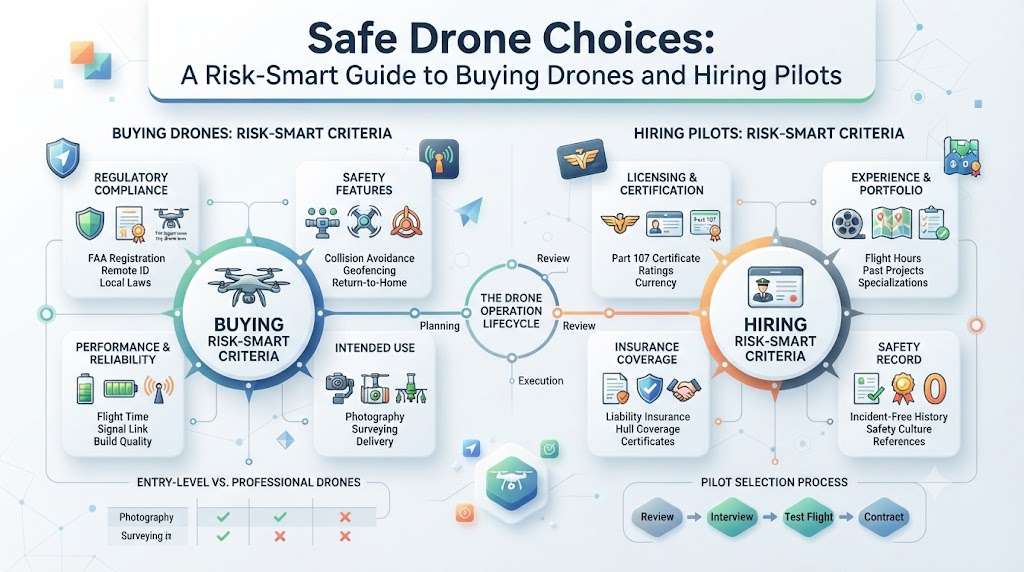
Every drone project carries some risk. A crash can hurt people. A missing permit can bring a big fine. A weak pilot can ruin your photos or your data. Yet many buyers think only about price and looks. That is why so many projects go wrong. Business owners also feel stuck. They want a licensed operator, but they cannot tell who is safe. So finding reliable gear and trusted pilots can feel overwhelming. This guide looks at drones through a safety lens. You will learn how to cut risk before you spend a single coin. You will also meet DronesBee.com, an open drone research and service platform. It helps you learn the facts first. Then you can choose with a calm mind. Let us start with the basics.
What Is DronesBee.com?
DronesBee.com works like a safety-first research desk for the drone world. It is an open discovery hub and drone directory. It never pushes a sale. Here is what you will find:
- A drone database with clear, simple facts
- A verified directory of pilots and service teams
- Easy guides on gear, rules, and common jobs
- Honest tips to help you plan before you spend
Picking the Right Flying Machine
A safe drone starts with the right match. Check flight time first. A drone that runs out of power mid-flight is a danger. Next, look at the camera sensor. Clear images mean fewer reshoots and fewer extra flights. Then study battery limits. Cold air cuts power, so leave a safe reserve. Read drone reviews to learn how a model acts in wind and heat. Look for notes on crashes and signal loss. People often search for the best drones. Yet the best drones for you are the ones you can control well.
Evaluating Hardware Side by Side
Next, line up your top models. A simple drone comparison shows which one gives you the most safety margin. Check payload capacity first. An overloaded drone drops fast. Then check range. Know how far the signal reaches before you fly. After that, check obstacle sensing. Sensors act like a second pair of eyes. Read the drone specifications for wind ratings and return-home features too. These facts matter more than a long list of fancy modes.
Table 1: Drone Selection and Buying Factors
| Key Factor | What to Look For | Common Buying Trap | Why It Matters |
|---|---|---|---|
| Wind Rating | A clear wind limit in the spec sheet | Flying in wind the drone cannot handle | Strong gusts cause most crashes |
| Return-Home Feature | Auto return with a set safe height | Never testing the feature | It brings the drone back if the signal drops |
| Battery Reserve | Spare batteries and low-power alerts | Flying until the battery is nearly empty | A drained battery makes a drone fall |
| Obstacle Sensors | Sensors on front, back, and sides | Buying a model with few sensors | Sensors prevent hits and repair bills |
| Weight Limit | Room for your camera and tools | Adding gear beyond the limit | Extra weight hurts control |
| Software Updates | Regular fixes from the maker | Skipping updates | Updates fix bugs and add safety tools |
Hiring Professional Help for High-Stakes Jobs
Some jobs carry too much risk for a solo flyer. Roofs, power lines, and busy sites are good examples. Laws may also ask for a license. In these cases, hire a pro. Reliable drone services bring trained pilots, insurance, and backup gear. They also keep logs and safety plans. Now you must find the right one. Many people search for drone pilots near me and see endless lists. So set a filter. Ask for a license, a policy paper, and sample work first.
Capturing Stunning Media from Above
Aerial photography services add safety rules to the creative work. A good team scouts the site and plans the shots. It keeps drones away from crowds. For real estate showcases, weddings, and brand videos, this care matters. Ask how the team handles guests, wind, and no-fly zones. Then watch a sample reel. Look for smooth motion, true color, and calm framing.
Mapping Land and Job Sites Accurately
Safe sites need clear facts. Drone surveying services give builders and land developers fresh data. A drone flies a planned path and takes many photos. Software turns them into a 3D map. GPS sensors tag every point. Crews then measure slopes and piles from a desk. Fewer people walk on rough ground, so fewer accidents happen. Drone surveying services also cut delays.
Checking Hard-to-Reach Infrastructure Safely
High places hurt people. Falls rank among the top work dangers. Drone inspection services lower that danger. A pilot flies close to power lines, wind turbines, bridges, and building roofs. The camera zooms in on cracks, rust, and heat spots. Engineers review the images from the ground. Workers stay safe. Repairs also begin sooner.
Modern Farming from the Air
Farm work has its own risks, such as heat, chemicals, and long hours. Agricultural drone services cut some of that load. A drone scouts crop health in minutes. Moisture maps show dry zones. Some drones spray only the weak spots. Farmers handle fewer chemicals by hand. They also waste less water and product.
Table 2: Commercial Drone Services Comparison
| Service Type | Typical Equipment | Main Business Benefit | Safety Check Needed |
|---|---|---|---|
| Aerial Photography | Camera drone with a steady gimbal | Strong visuals for sales and ads | Safe distance from crowds |
| Surveying | GPS drone and mapping software | Exact data with fewer site walks | Ground markers and data review |
| Inspection | Zoom or heat camera drone | Fewer climbs and lower labor cost | Safe gap from live wires |
| Agricultural | Crop camera or spray drone | Early problem checks with less waste | Wind check and spray rules |
Real-Life Scenarios
- A roofing contractor must check a steep tile roof. He sends a drone first. The photos show the weak spots, so his crew climbs only where needed.
- A school principal wants a campus video for new families. She hires a licensed pilot who plans flights around class hours. The film looks great, and no student gets near the drone.
- A sugarcane farmer worries about dry patches in a large field. He books a crop scouting flight. The moisture map shows the trouble, and he fixes it early.
8 Common Mistakes to Avoid
- Skipping the pre-flight check. Run a short checklist every time. Check batteries, propellers, and weather first.
- Flying near crowds. Keep the drone far from people. Pick an open launch spot.
- Hiring on a handshake. Sign a written agreement. List the job, date, price, and insurance.
- Ignoring no-fly zones. Check a local map before each job. Stay away from airports and restricted sites.
- Using old batteries. Retire any puffy or weak battery. Replace it before the next flight.
- Buying on hype. Read drone reviews from real owners. Match each claim to the spec sheet.
- Forgetting flight logs. Save the data from every flight. Logs help you fix problems and prove safe work.
- Skipping pilot training checks. Ask for proof of training and license. Choose pilots who show it with pride.
The 7-Step Drone Planning Process
Use this path to keep every project safe: Goal → Search → Shortlist → Compare → Ask → Verify → Decide.
First, set your goal and safety needs. Next, search for drones and pilots that fit. Then shortlist your best three. Compare them on gear, skill, and price. Ask each one the same clear questions. Verify licenses, insurance, and past work. Finally, decide and sign a written plan.
Frequently Asked Questions
Question 1: What is DronesBee.com and how does it support safe choices?
DronesBee.com is an open platform for drone research and services. It offers a drone database, easy guides, and a directory of verified pilots. These tools help you check facts before you spend. You can learn about gear, compare options, and find trusted help. The platform does not push sales. It simply gives you clear information so you can plan a safe project.
Question 2: What should I check before every flight?
Run a short checklist each time. Charge the batteries and check the propellers. Update the software and set the home point. Look at the weather and the flight rules for your area. Scan the space for people, wires, and trees. Keep the drone in sight. This routine takes five minutes, yet it prevents most crashes.
Question 3: Is drone insurance worth the cost?
Yes, in most cases. A crash can injure a person or damage property. Repair or legal bills can climb fast. Insurance covers many of those costs. Some places also require coverage for paid work. Ask an insurance agent which plan fits you. When you hire a pilot, ask for proof of coverage. That keeps you safe from their mistakes.
Question 4: Which rules should I know before flying?
Rules change by country and city. Most places limit flight height and ban flights near airports. Many also protect crowds, schools, and public buildings. Some need drone registration and a license for paid work. Visit your local aviation office website before your first flight. Then recheck before each new job, because rules change often and fines can be high.
Question 5: How do I choose between a cheap drone and a costly one?
Start with your task. A simple hobby needs less than a mapping job. Cheap drones often lack sensors, strong batteries, and good support. Costly drones add those safety tools. Still, a pricey drone is a waste if you cannot fly it well. Pick the model that fits your skill and your plan, then add spare batteries.
Question 6: How do I find drone pilots near me that follow safety rules?
Use a verified directory and filter by city. Open each profile. Look for a license, insurance, and a safety plan. Then ask each pilot how they handle weather, crowds, and no-fly zones. A careful pilot answers in clear words and shares past work. If a pilot dodges your questions, move on to the next name.
Question 7: How do pilots keep people safe at events?
They plan first. A pilot visits the venue, marks no-fly zones, and sets a safe launch spot. The drone stays away from crowds and flies at a safe height. A second person often watches the sky. The pilot also checks wind and battery levels before each flight. This careful plan keeps guests safe and the footage smooth.
Question 8: How do drone maps lower job site risk?
Drone maps give crews a full view of the site without long walks. People avoid steep slopes, loose soil, and heavy machines. Managers spot problems on a screen and fix them early. Early fixes prevent big delays. Maps also create a clear record of progress. This record helps teams talk, plan, and solve disputes with facts.
Question 9: What risks do drone inspections remove?
They remove falls, electric shocks, and hard climbs. A drone flies where people should not go. It checks roofs, towers, bridges, and blades from a safe spot. Pilots still follow safety rules, such as safe distance from live wires. The result is a faster check with fewer injuries. Engineers also get clear photos for planning repairs.
Question 10: Are spray drones safe for crops and people?
They can be, with the right plan. Pilots must follow spray rules, wind limits, and product labels. They keep a safe gap from homes, roads, and water. Trained crews also wear safety gear. Ask any provider to show proof of training and permits. A good team explains each step in simple words before the first spray.
Question 11: What should a written agreement include?
A good agreement names the job, date, place, and price. It lists what you will receive, such as photos, maps, or reports. It also covers weather delays, cancel rules, and file rights. Add a line about insurance. Read every part before you sign. If a line feels unclear, ask the pilot to explain it in plain words.
Question 12: When should I refuse to fly?
Refuse when the weather turns bad or the battery runs low. Also stop when you see people too close or the signal drops. Skip any flight where you lack a permit. Never fly when you feel tired or rushed. Calm pilots make better choices. A delayed flight costs little, while a crash costs much more.
Conclusion
Safe drone work starts with smart choices. Set a clear goal. Pick gear that fits your skill. Read honest reviews and study each spec. Ask every pilot for a license and proof of insurance. Follow local rules on every flight. Check the weather and the battery first. Remember, a short delay costs little, but an accident costs a lot. Good research protects people, property, and your budget. Take your time, and ask questions until you feel sure. When you want a calm place to start, visit DronesBee.com for guides, drone facts, and verified pilots. You do not need to know everything today. You only need a plan, a checklist, and the courage to say no to risky shortcuts.