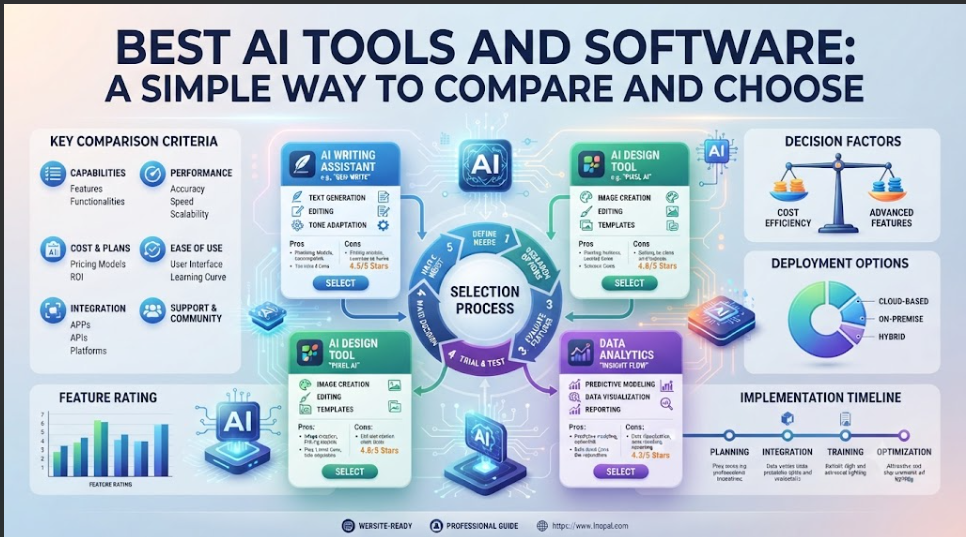
Have you ever bought a tool, used it twice, then let it sit forgotten? You are not alone. Most teams do this at least once. The software market is loud. Every app claims to be a game-changer. But claims are cheap, and your budget is not. So how do smart teams avoid this trap? They rely on facts, not hype. That is exactly what BestAIToolix.com offers. It works as an honest research space where you can check real details before spending a rupee or a dollar. This guide breaks down a calm, step-by-step way to pick software that actually fits your work. No jargon. No pressure. Just a clear path forward.
Meet BestAIToolix.com
Think of BestAIToolix.com as a map, not a store. It does not push you toward any single app. Instead, it lays out a wide catalog of tools. Each one sits under a clear category. You can filter results by price, purpose, or company size. Every listing follows the same fair review process. This means no brand jumps ahead just because it paid for a spot. The result is a space built on facts, not favors.
Why a Sorted Catalog Saves Your Sanity
Picture spending your Saturday scrolling through blog after blog, trying to find one decent app. Exhausting, right? This is why a software directory matters so much. It organizes hundreds of tools into neat, simple groups. You do not scroll blindly anymore. You click a category, apply a filter, and see only what fits. A good directory turns a frustrating hunt into a five-minute task.
Matching Tools to Your Actual Workflow
Every business runs differently. A two-person design studio does not need what a 200-person firm needs. So begin by listing your daily tasks. What slows your team down the most? Next, think about devices. Will staff use this on laptops, phones, or both? Then check pricing tiers as your headcount grows. When you filter this way, you land on the best software tools for your exact situation, not someone else’s.
The Trouble With Paid Praise
Some reviews are bought, not earned. A company pays a blogger, and suddenly a mediocre tool gets glowing software reviews. This kind of praise misleads buyers every day. That is why independent software reviews carry so much weight. These come from real people who tested the product with their own money and time. They mention the good, the bad, and the annoying bugs. Reading unbiased feedback protects you from an expensive regret.
Table 1: What to Check Before You Commit
| Evaluation Factor | What to Look For | Why It Matters for Teams |
|---|---|---|
| User Experience | Clean layout, short setup time | Reduces staff frustration and training hours |
| Cost Transparency | Clear pricing with no vague terms | Prevents shocking bills later |
| Support Quality | Fast replies, multiple contact options | Keeps small problems from becoming big ones |
| Privacy Standards | Clear data policy, encryption | Keeps company and client data safe |
| Compatibility | Connects with tools you already use | Avoids messy manual work |
| Growth Readiness | Handles more users without breaking | Saves you from switching tools too soon |
The Quiet Rise of Smart, Learning Apps
Software today does more than store data. Many apps now learn from patterns and act almost like an assistant. These are often called AI tools, and they write, design, and code faster than any human alone. But so many new ones launch each month that picking one feels dizzying. This is where an AI tools directory becomes handy. It sorts these smart apps by what they actually do, so you find the best AI tools without wasting a whole afternoon testing random links.
Testing AI Apps the Smart Way
When you compare AI tools, do not trust the demo video alone. Try the free version yourself. Time how fast it replies. Ask where your data goes once you upload it. Then judge the actual output, not the sales pitch. Run the same request through two tools and see which one gives a cleaner result. This quick method tells you more than any glossy landing page ever could.
Buying Software as a Whole Company
Buying for yourself is simple. Buying for a whole company is not. You must think about security policies across every department. You must count exact user seats, since paying for empty ones drains your budget fast. A clear business software comparison lays every option side by side, so decision-makers see costs and risks at a glance. This kind of software comparison stops rushed, costly purchases before they happen.
Table 2: Matching Software to Your Business Stage
| Business Stage | Main Software Need | Critical Feature | Risk to Avoid |
|---|---|---|---|
| Just Starting Out | Simple task and billing tools | Low monthly cost | Locking into a long contract too early |
| Scaling Up | Team communication and workflow apps | Easy integration with existing tools | Tools that slow down as staff grows |
| Well-Established | Detailed analytics and reporting | Strong data protection | Ignoring staff who resist new systems |
| Large Organization | Custom automation across departments | Reliable, dedicated support | Signing rigid deals with no exit option |
A Calm Roadmap to Your Next Purchase
Set your budget first, before you even open a search tab. Know your ceiling and stick to it. Next, run a real trial, not just a five-minute click-through. Let your actual team use it on real work for at least a week. Then, test the support line directly. Send a question and time their reply. Finally, read every line of the contract, especially the exit terms. This full software buying guide keeps your money safe and your choice smart.
What Buying Dilemmas Look Like in Real Life
- A freelance designer almost pays for a yearly plan before realizing a free tool does the same job.
- A sales manager tests two chat apps for a week and picks the one clients respond to faster.
- An HR team finds they are paying for three overlapping scheduling tools at once.
- A nonprofit skips a security check and later regrets the exposed donor data.
Eight Mistakes That Cost Teams Real Money
- Skipping the trial period entirely.
- Ignoring the total cost after year one.
- Buying based on a flashy demo, not real testing.
- Forgetting to check server uptime and reliability.
- Underestimating how long staff training will take.
- Not confirming support hours match your time zone.
- Locking into annual billing before the team even likes the tool.
- Choosing a complex system when a simple one would work fine.
How BestAIToolix.com Fits Into This Process
BestAIToolix.com keeps its scoring open and clear. You see exact ratings, not vague stars with no explanation. Side-by-side charts let you stack tools against each other in seconds. The listings refresh often too, so you are not reading stale data from two years ago. It feels less like an ad and more like advice from someone who already did the homework for you.
A Simple Seven-Step Path to Your Decision
- Goal: Write your exact problem in one sentence.
- Search: Browse categories that match that problem.
- Shortlist: Narrow your list to three or four strong options.
- Compare: Set features and prices side by side.
- Ask: Send real questions to each support team.
- Verify: Double-check security, pricing, and contract terms.
- Decide: Pick the tool that solves your actual problem.
Frequently Asked Questions
Question 1: Why do so many teams regret their software purchase?
Most regret comes from rushing the decision. Teams see a flashy ad and buy without testing it first. They skip trial periods or ignore staff feedback. Later, they discover the tool does not fit their daily work. Slowing down, even by a few days, gives you time to test properly. That small pause often prevents a costly, frustrating mistake down the road.
Question 2: How do I know if free software is actually safe?
Check the privacy policy first, even for free tools. Free does not always mean safe. Some free apps sell user data to cover costs. Look for clear terms about what happens to your information. Read a few independent software reviews to see what real users say about data handling. If details feel hidden or unclear, treat that as a warning sign.
Question 3: What exactly is a software directory, and why use one?
A software directory is a sorted list of tools, grouped by task or industry. Instead of searching randomly online, you browse organized categories. You can filter by price, features, or company size. This saves hours of guesswork. A good directory turns a stressful, scattered search into a short, focused task that fits into your lunch break.
Question 4: How much should I trust online software reviews?
Trust reviews that explain both strengths and weaknesses. A review with zero complaints often feels staged. Look for detailed, honest software reviews that mention real problems, like slow support or confusing setup. Genuine reviewers usually share specific examples, not vague praise. This balance is a strong sign that the feedback comes from an actual user, not a paid script.
Question 5: What makes AI-powered tools different from regular software?
Regular software follows fixed steps you set up once. AI-powered tools learn from data and adjust their responses over time. For example, a writing assistant improves suggestions the more you use it. This can save serious time on repeated tasks. Still, always check data privacy rules, since these tools often process a lot of personal information in the background.
Question 6: What is the fastest way to compare AI tools?
Run the exact same task through two or three tools. Compare speed, accuracy, and how natural the output feels. Check pricing per seat, since AI tools often charge more as usage grows. Also test their customer support once, before you buy. This hands-on approach beats reading ten marketing pages, since you see real performance instead of promised performance.
Question 7: What should larger companies check before signing a contract?
Larger companies should confirm security certifications first, since more staff means more risk exposure. Count exact user seats to avoid overpaying for unused accounts. Review contract length and cancellation terms closely. Ask about dedicated account support, since generic email tickets can slow down urgent issues. A short pilot run with real employees often reveals problems no sales call will mention.
Question 8: How many people should test a tool before we commit?
Involve at least three or four people from different roles. One person alone might miss issues that others notice quickly. Include someone from daily operations, one manager, and one technical staff member if possible. Their combined feedback shows whether the tool truly fits your workflow, not just whether it looks good during a quick five-minute demo session.
Question 9: What hidden costs should I watch for in software plans?
Watch for setup fees, training costs, and storage limits that trigger extra charges. Some vendors also charge more once you cross a certain number of users. Data export fees can appear if you ever decide to leave. Always request a full cost breakdown in writing before signing anything. This simple step prevents unpleasant billing surprises three or four months later.
Question 10: How often should a business re-check its current software stack?
Aim for a review at least once a year. This catches subscriptions your team quietly stopped using months ago. It also reveals overlapping tools doing the exact same job. Set a recurring calendar reminder for this task. During the check, ask each department if every tool still earns its monthly cost, or if it is just sitting there unused.
Question 11: What should a good software buying guide actually cover?
A solid software buying guide should walk through budgeting, testing, and red flags to avoid. It should use plain language, not confusing technical terms. It should also warn against common traps, like skipping trials or ignoring contracts. The best guides work for both a small two-person shop and a large company, without assuming the reader already knows the technical details.
Question 12: How does BestAIToolix.com keep its listings fair and unbiased?
BestAIToolix.com applies the same review checklist to every listed tool. No company can pay for a higher ranking or a better score. Each entry is judged on the same factors, like pricing clarity, support quality, and user feedback. This structure keeps the platform neutral, so buyers see honest comparisons instead of content shaped by advertising budgets or sponsorship deals.
Final Thoughts
Picking the right software comes down to patience, not luck. Define your real problem before you start browsing. Test everything with a genuine trial, not a rushed demo. Read the full contract, especially the exit clause. Trust honest feedback over shiny marketing claims. Above all, choose tools that solve a real problem for your team, not ones that simply look impressive on a sales page. Platforms like BestAIToolix.com make this process calmer by keeping the research clear, current, and free from bias. With a steady approach, your next software decision can be your best one yet.