Introduction
Experiencing changes in urinary habits, persistent pelvic discomfort, or unexpected pain in the lower back can be unsettling. Because the urinary tract and reproductive system manage essential daily bodily functions, symptoms affecting these areas demand prompt, accurate attention. Whether you are dealing with a sudden, painful infection, navigating an ongoing prostate concern, or facing a new diagnosis, understanding what lies ahead helps you take control of your health decisions. Resources like UrologyHospitals.com help bridge the gap between initial concerns and coordinated medical care. This guide walks you through common conditions, standard diagnostic pathways, available urology treatment approaches, and the practical steps needed to evaluate care options with confidence.
Understanding the Urological System and When Care Is Needed
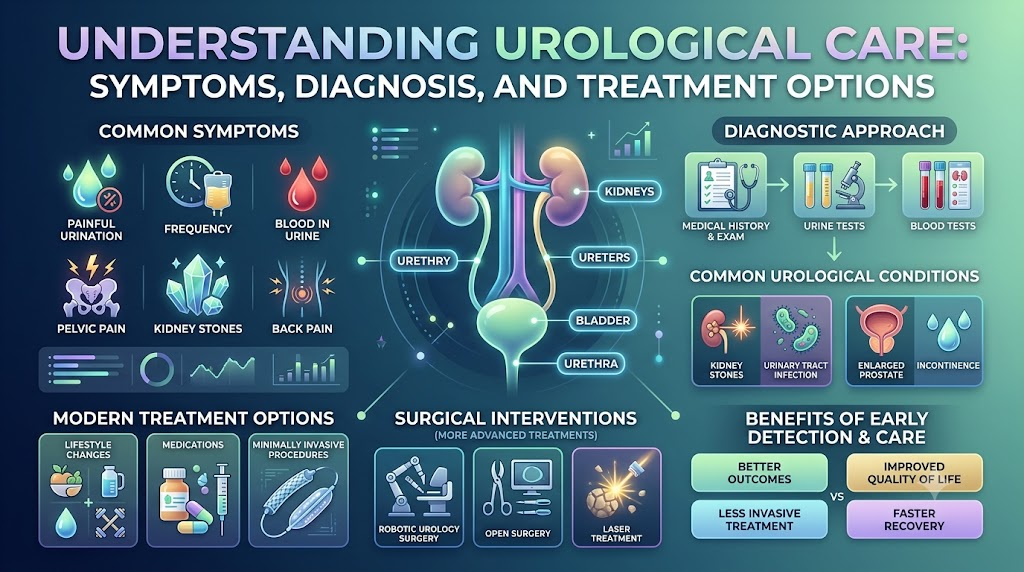
Urology is the branch of medicine focused on the urinary system in both men and women, as well as the male reproductive system. The urinary tract includes four primary components:
- Kidneys: Bean-shaped organs that filter waste and excess fluid from blood to produce urine.
- Ureters: Thin, muscular tubes that transport urine from kidneys to the bladder.
- Bladder: A flexible muscular reservoir that holds urine until it is released.
- Urethra: The tube carrying urine from the bladder out of the body.
In men, urology also encompasses the prostate gland, testes, scrotum, and penis. Because these structures sit in close proximity and work together, an issue in one organ can cause noticeable symptoms across the entire pelvic region.
Patients seek urological evaluation for diverse reasons. Some experience acute discomfort, such as sudden back pain or burning during urination. Others need guidance for long-term conditions that develop gradually over years, such as urinary incontinence or progressive urinary hesitancy. Regardless of how mild or severe a symptom may appear, timely medical evaluation prevents minor issues from developing into complex health challenges.
Common Symptoms and Warning Signs
Urological conditions present through a variety of signs. Because distinct conditions can produce overlapping symptoms, careful diagnostic work is essential rather than guessing the cause.
- Changes in Urination Frequency or Urgency: Needing to urinate far more often than usual, especially multiple times during the night, or experiencing an overwhelming urge to urinate that is difficult to delay.
- Pain or Burning Sensations: Discomfort during urination (dysuria), sharp or aching pain in the lower back or flank, or persistent aching in the lower pelvis or groin.
- Urine Flow Abnormalities: A weak stream, trouble starting the stream, hesitation, straining, or a feeling that the bladder never empties completely.
- Blood in the Urine (Hematuria): Urine appearing pink, red, or tea-colored. Visible blood in the urine should always prompt a professional evaluation, even if it happens once and resolves on its own.
- Incontinence: Involuntary leakage of urine during physical activity, coughing, laughing, or following a sudden urge.
- Systemic Warning Signs: Chills, high fever, nausea, and vomiting paired with urinary pain or back discomfort, which may indicate an infection requiring immediate medical attention.
Causes and Risk Factors
Urological issues develop from an interplay of anatomical, biological, and lifestyle elements. Identifying personal risk factors allows individuals to work proactively with their healthcare providers.
Age and Biological Factors
The risk of developing certain conditions increases as the body ages. Benign enlargement of the prostate, for example, is common in men over 50. Changes in pelvic floor muscle tone over time can also alter bladder control in both men and women.
Family History and Genetics
Genetics influence several urological conditions. A family history of kidney stones increases personal susceptibility. Similarly, having a first-degree relative diagnosed with prostate or bladder cancer warrants earlier and more attentive clinical discussions.
Hydration and Dietary Habits
Fluid intake directly affects the concentration of minerals processed by the kidneys. Inadequate daily hydration is a leading contributor to kidney stone formation. High-sodium diets and excessive animal protein intake can also alter urine chemistry in ways that encourage crystallization.
Prior Infections and Structural Variations
Recurrent urinary infections can cause inflammation, narrowing, or scarring within the urethra or ureters. Congenital structural variations, past abdominal surgeries, or catheter use can also introduce bacteria or impede smooth urinary flow.
Diagnosis and Medical Tests
A proper diagnosis is the foundation of any treatment plan. Specialists use targeted diagnostic tools depending on your medical background and physical exam results.
Diagnostic Pathway:
Symptom Review & Physical Exam → Urine & Blood Tests → Non-Invasive Imaging → Advanced Visualization (Cystoscopy/Urodynamics if needed)
- Medical History and Physical Examination: A review of daily symptoms, fluid intake, medication use, family medical patterns, and a physical assessment of the abdomen, pelvis, or prostate.
- Urinalysis and Urine Culture: Laboratory analysis of a urine sample to detect red blood cells, white blood cells, protein levels, mineral crystals, or bacterial strains.
- Blood Tests: Evaluating kidney function markers such as serum creatinine and blood urea nitrogen (BUN). For men, testing prostate-specific antigen (PSA) levels provides baseline information regarding prostate health.
- Imaging Studies: Ultrasound offers a non-invasive look at the kidneys and bladder without radiation. Computed tomography (CT) scans or magnetic resonance imaging (MRI) provide detailed structural cross-sections to pinpoint stones, cysts, or masses.
- Cystoscopy: A visual examination using a thin, flexible instrument with a camera (cystoscope) inserted through the urethra to inspect the bladder lining and urethral channel directly.
- Urodynamic Testing: Specialized measurements that assess how well the bladder holds and releases urine, particularly helpful for complex incontinence issues.
Overview of Urology Treatment Approaches
Modern urology treatment encompasses a wide spectrum of care, moving from conservative observation to advanced surgical interventions. Specialists tailor these choices according to disease severity, overall patient wellness, and personal lifestyle preferences.
Conservative Observation and Lifestyle Adjustments
Mild or early-stage issues do not always require invasive procedures. Active monitoring, combined with dietary modifications, structured fluid intake, bladder retraining, or pelvic floor physical therapy, can effectively stabilize or improve symptoms.
Targeted Medications
Pharmacological options can relax smooth muscle tissue around the bladder neck and prostate, reduce hormonal drivers of prostate growth, eradicate bacterial infections, or dissolve certain metabolic stone types.
Minimally Invasive Procedures
Many urological concerns can be addressed using small instruments inserted through natural urinary pathways, eliminating the need for external incisions. These techniques reduce tissue trauma and speed recovery.
Surgical Intervention
When medications or minimally invasive methods are unsuitable, reconstructive or extirpative surgery may be necessary. Modern surgical methods prioritize tissue preservation and patient comfort.
Kidney Stone Treatment
Kidney stones are hard mineral deposits that form inside the kidneys and cause intense pain when moving into the ureter. Treatment depends entirely on the stone’s size, composition, location, and whether it causes an obstruction or infection.
- Hydration and Medical Expulsive Therapy: Small stones (often under 5 millimeters) can pass spontaneously. Doctors frequently prescribe medications, such as alpha-blockers, to relax ureteral muscles and facilitate passage, supported by hydration and pain control.
- Extracorporeal Shock Wave Lithotripsy (ESWL): High-energy sound waves delivered from outside the body break the stone into tiny sand-like fragments that pass naturally in urine.
- Ureteroscopy (URS): A thin endoscope is passed through the bladder into the ureter. A tiny laser fiber fragments the stone directly, and small pieces are extracted using a miniature basket.
- Percutaneous Nephrolithotomy (PCNL): For large, complex, or irregularly shaped stones, a small incision in the back allows direct entry into the kidney to break up and remove the deposits.
Enlarged Prostate Treatment (BPH)
Benign Prostatic Hyperplasia (BPH) involves non-cancerous enlargement of the prostate gland. As the gland enlarges, it compresses the urethra and disrupts urine flow.
- Lifestyle Adaptations: Moderating evening fluid intake, limiting caffeine and alcohol, and avoiding medications that tighten the urinary sphincter (such as certain decongestants) can relieve mild symptoms.
- Medications: Alpha-blockers relax the prostate and bladder neck muscles to improve flow quickly. 5-alpha-reductase inhibitors gradually shrink the prostate gland over several months.
- Minimally Invasive Interventions: Techniques like water vapor therapy, prostatic urethral lift implants, or laser vaporization relieve obstruction while minimizing recovery time and potential impacts on sexual function.
- Surgical Options: Transurethral resection of the prostate (TURP) or laser enucleation procedures remove obstructing internal tissue to restore an open urinary channel.
Understanding Prostate Cancer Treatment
Prostate cancer requires a measured, personalized strategy. Because many prostate tumors grow slowly, treatment is guided by the tumor’s stage, grade (Gleason score), PSA velocity, patient age, and general health.
- Active Surveillance: For low-risk, localized tumors, careful monitoring with routine PSA tests, periodic MRI scans, and follow-up biopsies avoids immediate intervention and preserves quality of life.
- Surgical Removal (Prostatectomy): Complete surgical removal of the prostate gland and nearby lymph nodes, often performed using minimally invasive or robotic techniques.
- Radiation Therapy: External beam radiation or brachytherapy (placing tiny radioactive seeds inside the prostate) targets and destroys cancer cells.
- Systemic Therapies: Hormone therapy (androgen deprivation therapy) reduces testosterone levels that drive cancer growth. Advanced cases may use targeted medications, immunotherapies, or chemotherapy.
Urinary Tract Infection Treatment and Recurrence
Urinary tract infections (UTIs) occur when bacteria enter the urinary system via the urethra and multiply in the bladder. While straightforward infections respond well to prompt care, persistent or recurring infections require diagnostic evaluation to identify anatomical or functional causes.
- Antibiotic Therapy: Prescription antibiotics targeted to the specific bacterial strain identified in a urine culture. Completing the entire course is critical to eliminate the infection and prevent antibiotic resistance.
- Preventive Strategies: Maintaining adequate hydration, urinating promptly after sexual activity, and avoiding irritating hygiene products help reduce recurrence risk.
- Investigating Recurrence: Patients with frequent UTIs may undergo ultrasound imaging or cystoscopy to check for underlying factors, such as incomplete bladder emptying, stones, or anatomical narrowing.
Bladder Cancer Treatment Overview
Bladder cancer most frequently begins in the urothelial cells lining the interior of the bladder. The most common early warning sign is painless visible blood in the urine.
- Transurethral Resection of Bladder Tumor (TURBT): An operative procedure used for diagnosis, staging, and initial treatment. The specialist removes visible lesions through a cystoscope and sends tissue for pathology.
- Intravesical Therapy: For non-muscle-invasive bladder cancer, liquid medications (such as BCG immunotherapy or chemotherapy agents) are placed directly into the bladder through a catheter to reduce recurrence.
- Radical Cystectomy: For tumors invading the deeper muscular wall of the bladder, complete surgical removal of the bladder with reconstructive urinary diversion is standard care.
- Multimodal Therapy: Advanced or metastatic disease often requires coordinated chemotherapy, immunotherapy, or targeted radiation protocols.
Robotic Urology Surgery
Robotic-assisted surgery uses computer-controlled robotic arms guided directly by a surgeon sitting at a nearby console. The system translates the surgeon’s hand movements into micro-movements inside the surgical site.
- Precision and Visualization: High-definition 3D visualization combined with wristed instruments provides greater dexterity and precision in tight pelvic spaces than traditional open incisions.
- Common Applications: Used for radical prostatectomy, partial or radical nephrectomy (kidney removal), bladder cancer resections, and complex reconstructive procedures.
- Patient Considerations: Benefits often include smaller incisions, reduced blood loss, shorter hospital stays, and less postoperative pain. However, robotic surgery is a technique, not a cure-all; surgeon experience and proper patient selection remain the most decisive factors in surgical success.
Evaluating Urology Hospitals and Urology Specialists
Choosing the right facility and clinician is an important step in receiving safe, effective care. Patients should review provider capabilities methodically:
Provider Evaluation Checklist:
1. Specialization & Case Volume  →  Has the team treated your specific condition routinely?
2. Diagnostic Facilities         →  Does the hospital have advanced imaging and on-site labs?
3. Multidisciplinary Support     →  Are oncology, pathology, and nephrology teams coordinated?
4. Emergency & Follow-up Access   →  Are there clear post-treatment and emergency protocols?
- Board Certification and Subspecialty Focus: Confirm that the clinician is a board-certified urologist with experience in your specific condition, whether that involves reconstructive urology, oncology, or endourology.
- Facility Technology and Accreditation: Look for Urology Hospitals equipped with modern imaging suites, dedicated urological operating theaters, and appropriate intensive care support.
- Multidisciplinary Coordination: For conditions like bladder or prostate cancer, choose facilities where urologists work alongside medical oncologists, radiation oncologists, and pathologists.
- Transparent Communication: A reliable specialist clearly discusses the trade-offs of each option, explains procedural risks, and answers questions without rushing.
Finding a Urologist Near Me: Search Intent and Practical Steps
When searching for local care, keep these practical points in mind:
- Distinguish General from Subspecialized Needs: A local general urologist can handle issues like uncomplicated kidney stones, routine UTIs, or initial BPH management. Complex reconstructive surgeries or rare urological cancers may warrant traveling to a regional specialized hospital.
- Verify Hospital Affiliations: Ensure the physician operates at an accredited hospital with modern diagnostic and surgical services.
- Logistics and Accessibility: Consider travel times for follow-up appointments, on-site imaging, and ease of scheduling urgent evaluations.
- Insurance and Referral Guidelines: Check whether your insurance network requires a primary care physician referral before scheduling an appointment with a specialist.
Urology Treatment Options Comparison
| Treatment Category | Common Clinical Applications | Potential Advantages | Important Considerations |
| Observation & Monitoring | Small, non-obstructing stones; early-stage low-risk prostate cancer | Avoids procedure-related risks and side effects | Requires consistent follow-up tests and patient compliance |
| Medication Therapy | Mild-to-moderate BPH, acute UTIs, overactive bladder | Non-invasive; easily adjusted or discontinued | Potential side effects; ongoing adherence needed |
| Minimally Invasive Procedures | Ureteroscopy for stones, water vapor therapy for BPH | Shorter recovery times, minimal blood loss, outpatient settings | May not be appropriate for larger or complex structural issues |
| Robotic-Assisted Surgery | Prostatectomy, partial nephrectomy, bladder reconstruction | High precision, smaller incisions, less postoperative pain | Availability depends on facility; requires specialized surgeon training |
| Open Surgery | Highly complex, extensive, or anatomically challenging cases | Provides direct access for complex resections or repairs | Longer recovery, larger incisions, higher initial pain management needs |
Practical Patient Scenarios
Scenario A: Managing Acute Flank Pain
A 42-year-old individual experiences sharp, sudden right-flank pain radiating toward the groin. Suspecting kidney stones, the patient goes to an emergency clinic. A low-dose CT scan reveals a 4-millimeter stone in the lower ureter without signs of kidney infection or severe obstruction.
The medical team provides oral pain medication and an alpha-blocker to relax the ureteral tissue, instructing the patient to hydrate and collect urine using a filter. Within four days, the stone passes naturally, avoiding the need for surgery.
Scenario B: Evaluating Progressive Urinary Changes
A 63-year-old man notices his urine stream has weakened significantly over two years, requiring him to wake three times every night to use the bathroom. Rather than dismissing these signs as unavoidable aging, he schedules an appointment with a local specialist.
A physical examination, urinalysis, post-void residual ultrasound, and PSA test confirm moderate BPH without malignancy. After discussing lifestyle adjustments and medication side effects, the patient and doctor choose an initial trial of a once-daily alpha-blocker, significantly reducing nighttime awakenings within several weeks.
Scenario C: Navigating an Oncology Diagnosis
A 68-year-old woman notices painless, intermittent blood in her urine. Her primary care doctor refers her to a urologist, who performs a cystoscopy and identifies a small, localized tumor on the bladder wall.
A transurethral resection (TURBT) safely removes the lesion. Pathology results confirm non-muscle-invasive bladder cancer. The care team creates a clear follow-up schedule involving periodic surveillance cystoscopies and a single post-operative intravesical chemotherapy wash, significantly reducing the likelihood of recurrence.
A Step-by-Step Decision-Making Framework
Navigating urological care is easiest when broken down into clear stages:
- Document Your Symptoms: Keep a short diary recording what you feel, when symptoms occur, daily fluid intake, and any changes in urination.
- Seek Professional Evaluation: Avoid self-diagnosing using internet symptom checkers. Schedule an appointment with a qualified clinician.
- Complete Prescribed Diagnostics: Complete recommended lab tests and imaging to give your doctor an accurate view of your health.
- Evaluate All Viable Options: Ask your doctor to outline watchful waiting, medication, and surgical avenues for your condition.
- Assess Facilities and Providers: Review the surgical track record, subspecialty training, and facility resources of your shortlisted clinicians.
- Consider Life Impact: Weigh expected recovery times, temporary activity limitations, and potential side effects against your everyday responsibilities.
- Proceed with Ongoing Follow-up: Keep scheduled follow-up visits and imaging appointments even after your symptoms resolve to ensure long-term wellness.
Common Mistakes to Avoid
- Ignoring Visible Blood in the Urine: Assuming blood in the urine is just a minor infection and delaying care can allow underlying conditions to advance.
- Stopping Antibiotics Early: Halting an antibiotic regimen as soon as burning stops encourages residual bacteria to multiply and develop resistance.
- Assuming BPH Automatically Leads to Cancer: Believing an enlarged prostate turns into prostate cancer causes unnecessary anxiety; they are separate conditions that require distinct medical evaluations.
- Selecting Care Based on Advertisements Alone: Choosing a surgeon or facility based solely on marketing claims rather than verified clinical experience and hospital capabilities.
- Delaying Care for Intermittent Symptoms: Waiting to seek help because symptoms temporarily subside often leads to acute emergencies, such as sudden urinary retention or severe stone obstruction.
- Relying Solely on Online Guidance: Using digital articles as an educational resource is helpful, but web searches cannot replace a clinical examination and personalized testing.
Questions to Ask Your Urology Specialist
Preparing questions helps you have a focused, productive conversation during your consultation:
- What specific condition is causing my current symptoms?
- Which diagnostic tests are necessary right now, and what will they tell us?
- Are there non-surgical treatments or lifestyle changes we should try first?
- What are the primary risks and expected benefits of the proposed procedure?
- How many times have you performed this specific procedure?
- What does the typical recovery timeline look like for someone in my condition?
- What warning signs or complications should prompt me to call your office or go to the emergency room?
- Will I need long-term follow-up care or routine imaging once treatment ends?
- How will this treatment approach affect my daily urinary or sexual function?
- Would it be beneficial to obtain a second opinion before making a final choice?
Practical Tips and Key Takeaways
- Act on Persistent Symptoms: Do not dismiss chronic pelvic aching, frequency changes, or visible blood in the urine. Early medical evaluation prevents complications.
- Personalized Care Matters: There is no universal “best” treatment; the right approach depends on your anatomy, medical history, and specific diagnostic findings.
- Prioritize Thorough Diagnostics: Accurate treatment depends on accurate diagnostics. Complete all recommended urine cultures, imaging, and scope exams.
- Evaluate Experience Over Hype: When considering surgical or robotic procedures, focus on the surgeon’s direct experience and the hospital’s support infrastructure rather than marketing claims.
- Stay Proactive with Follow-ups: Complete every follow-up appointment, imaging scan, and post-treatment checkup, even if you feel completely back to normal.
Frequently Asked Questions
What conditions does a urologist treat?
A urologist evaluates and treats problems involving the kidneys, ureters, bladder, and urethra in both men and women. They also diagnose and manage conditions affecting the male reproductive organs, including the prostate, testes, and penis, treating everything from simple infections to complex cancers.
When should I schedule an appointment with a urology specialist?
You should see a specialist if you notice persistent pain during urination, unusual frequency or urgency, visible blood in your urine, ongoing pelvic or lower back discomfort, difficulty emptying your bladder, or if you receive abnormal lab results regarding your kidney or prostate function.
How are kidney stones diagnosed and treated?
Kidney stones are typically diagnosed using urinalysis, blood tests, and non-contrast CT scans or ultrasound imaging. Treatment ranges from hydration and pain medications for small stones to shock wave lithotripsy, ureteroscopy, or percutaneous surgery for larger, obstructing stones.
Is an enlarged prostate a sign of prostate cancer?
No. Benign Prostatic Hyperplasia (BPH) is a non-cancerous enlargement of the prostate gland common as men age. While BPH and prostate cancer can cause similar urinary symptoms, having an enlarged prostate does not cause cancer. A urologist can perform tests to distinguish between the two.
What happens during a cystoscopy?
During a cystoscopy, a urologist gently inserts a thin, flexible tube with a lighted camera through the urethra into the bladder. The procedure allows the specialist to inspect the lining of your urinary tract in real time to locate stones, inflammation, strictures, or abnormal tissue growth.
How do doctors decide between medications and surgery for BPH?
The decision depends on symptom severity, prostate size, urinary retention risk, and patient preferences. Mild-to-moderate symptoms often respond well to daily oral medications, whereas severe obstruction, recurrent infections, or medication side effects often make minimally invasive procedures or surgery the preferred choice.
What are the primary advantages of robotic urology surgery?
Robotic surgery provides high-magnification 3D visualization and wristed instruments that move with greater precision in narrow pelvic spaces. For qualified patients, this can lead to smaller surgical scars, reduced blood loss, shorter hospital stays, and a quicker return to everyday physical activities.
Can urinary tract infections go away without prescription treatment?
While minor bladder irritation can occasionally improve with heavy hydration, true bacterial infections generally require targeted antibiotic therapy. Leaving a bacterial UTI untreated risks allowing the infection to travel upward into the ureters and kidneys, which can cause severe health complications.
How can I find a reliable urologist near me?
Start by checking provider directories through your insurance network, obtaining a referral from your primary care doctor, and reviewing hospital affiliations. Look for board-certified specialists who routinely manage your specific symptoms or condition, and confirm that their clinical facility offers modern diagnostic equipment.
What diagnostic tests are standard for evaluating blood in the urine?
Investigating visible or microscopic blood in the urine usually involves a detailed urinalysis, blood tests evaluating kidney function, an imaging scan (such as a CT urography or renal ultrasound), and a cystoscopy to visually examine the bladder wall.
Conclusion
Navigating urological symptoms can feel challenging, but understanding your diagnostic path and treatment choices makes the process manageable. Whether you are dealing with a painful kidney stone, managing changes from an enlarged prostate, or evaluating care for a more complex urological condition, timely and methodical medical evaluation remains your best asset. Today’s urological care offers versatile options, ranging from conservative lifestyle monitoring to minimally invasive procedures and precision robotic surgery. Take the time to discuss your symptoms, risks, and personal goals openly with a qualified clinician. Platforms like UrologyHospitals.com make it easier to research conditions, understand modern procedures, and identify experienced specialists and hospital facilities suited to your specific healthcare needs. Working proactively with an experienced care team helps you protect your long-term health and make informed decisions with confidence.