Introduction
Stepping into the world of digital assets often brings a wave of complex terminology. Many newcomers feel overwhelmed by technical jargon, confusing charts, and unfamiliar concepts. This confusion matters because understanding the underlying infrastructure is essential before exploring tools like CryptoBlockCoins. Without a solid foundation, navigating digital platforms safely becomes difficult. At the heart of the digital asset ecosystem lies blockchain technology, a revolutionary system that enables secure, transparent record-keeping without relying on a central authority. This article explores what blockchain technology is, how it functions behind the scenes, its key components, and essential security practices. By the end, readers will have a clear, beginner-friendly understanding of how these decentralized networks operate.
2. What Is Blockchain Technology?
At its core, blockchain technology is a decentralized, digital ledger that securely records transactions across a network of computers.
Unlike traditional databases managed by a single organization or bank, a blockchain distributes identical copies of its ledger across numerous participants, known as nodes.
The main purpose of this architecture is to eliminate the need for trusted intermediaries. Instead of trusting a central institution to verify records, participants rely on cryptographic rules and consensus mechanisms.
This transparency and immutability make tampering with historical records virtually impossible.
Beginners exploring cryptocurrency for beginners, Bitcoin for beginners, or the Ethereum blockchain frequently encounter this concept because every digital coin relies on a distributed ledger to track ownership.
Understanding this foundational layer helps clarify how transactions move securely across the internet.
3. How Blockchain Technology Works?
To understand how blockchain technology operates, it helps to break the process down into sequential steps. Each transaction undergoes verification, grouping, and permanent addition to the network ledger.
- Transaction Initiation: A user requests a transaction, such as transferring digital data or value across the network.
- Broadcasting: The request transmits across the peer-to-peer network to all participating nodes.
- Verification: Network nodes validate the transaction using established rules, confirming the sender’s authorization.
- Block Formation: Verified transactions group together into a data structure known as a block.
- Consensus: Nodes reach an agreement regarding the validity of the new block using a specific consensus algorithm.
- Chain Addition: The new block securely links to the previous block using cryptographic hashes, creating an unchangeable chain of data.
This step-by-step process ensures that every participant maintains an accurate, synchronized history without requiring a central administrator.
4. Key Components of Blockchain Technology
Distributed Network
The network relies on thousands of independent computers, or nodes. Each node maintains a complete copy of the ledger, ensuring high availability and eliminating single points of failure.
Cryptographic Hashing
Data within each block converts into a unique string of characters via mathematical algorithms. Any minor alteration to the block alters the hash, immediately alerting the network to tampering.
Consensus Mechanisms
Protocols such as Proof of Work or Proof of Stake allow distributed nodes to agree on the validity of new transactions securely and autonomously.
5. Real-World Examples
To visualize how blockchain technology functions in practice, consider everyday digital interactions.
When a user transfers information across a decentralized network, the system does not route the request through a traditional bank server. Instead, the network validates the sender’s credentials via public and private keys, ensuring authorized access.
Another practical example involves smart contracts on the Ethereum blockchain. These self-executing programs run automatically when predefined conditions are met, removing the need for manual oversight or third-party escrow services.
6. Benefits and Limitations
Benefits
- Transparency: All participants view the same verified ledger history.
- Security: Cryptographic protection makes historical records immutable.
- Efficiency: Peer-to-peer validation reduces intermediary delays.
Limitations and Risks
- Scalability: Processing high volumes of transactions simultaneously can strain network capacity.
- Complexity: Navigating decentralized interfaces requires technical awareness.
- Irreversibility: Confirmed transactions cannot be undone, meaning user errors are permanent.
Disclaimer: CryptoBlockCoins provides educational information only and does not provide financial or investment advice. Digital asset networks involve technical risks, so readers should conduct independent research before engaging with new technologies.
7. Security and Safety Considerations
Protecting digital assets requires strict adherence to security best practices. Because decentralized networks lack password-recovery desks, personal responsibility is paramount.
- Private Key Protection: Never share private keys or seed phrases with anyone under any circumstances.
- Wallet Custody: Understand the difference between custodial platforms and self-custody wallets.
- Phishing Awareness: Verify website URLs carefully to avoid fraudulent replica sites.
- Two-Factor Authentication: Enable robust security layers on all related accounts.
8. Common Mistakes Beginners Make
- Ignoring Wallet Security: Failing to back up recovery phrases securely.
- Falling for Scams: Trusting unverified platforms promising unrealistic outcomes.
- Rushing Transactions: Overlooking network fees and destination address accuracy.
- Neglecting Research: Using complex tools without understanding the underlying mechanics.
- Overlooking Updates: Neglecting software updates for wallets and security applications.
9. Blockchain vs Traditional Databases
| Feature | Traditional Database | Blockchain Network |
| Control | Centralized authority | Decentralized nodes |
| Transparency | Restricted access | Public or permissioned shared ledger |
| Data Modification | Editable by administrators | Immutable once confirmed |
| Trust Model | Trust in institution | Trust in cryptography and code |
10. Step-by-Step Beginner Guide
- Learn the Basics: Read introductory guides on blockchain technology and digital security.
- Understand Cryptography: Familiarize yourself with public and private key pairs.
- Explore Wallets: Research how self-custody crypto wallets protect digital information.
- Practice Caution: Prioritize security hygiene before interacting with decentralized applications.
- Continue Learning: Follow reliable educational resources to expand your knowledge base.
11. Future Considerations
As development continues, blockchain technology is expanding beyond basic financial records into supply chain tracking, digital identity verification, and decentralized finance. Innovations focused on scalability and energy efficiency aim to address current network limitations, paving the way for broader integration across global industries.
Frequently Asked Questions
- What is blockchain technology in simple terms?
It is a shared, digital ledger that securely records transactions across a network of computers without needing a central authority.
- How does blockchain technology maintain security?
It uses advanced cryptography and distributed consensus to ensure that once data is recorded, it cannot be altered without network agreement.
- Do I need to buy cryptocurrency to understand blockchain?
No, the underlying technology functions independently of digital currency, focusing primarily on secure data management and verification.
- What is the difference between a public and private blockchain?
Public blockchains are open for anyone to join and verify data, while private blockchains restrict participation to invited users.
- Can blockchain records be deleted or edited?
Once data is validated and added to a block, it becomes immutable, meaning it cannot be changed or deleted.
- What is a consensus mechanism?
It is a protocol used by network nodes to agree on the validity of transactions before adding them to the ledger.
- How do smart contracts relate to blockchain technology?
Smart contracts are automated programs stored on a blockchain that execute code automatically when predetermined conditions are met.
- Is blockchain technology completely anonymous?
Most public blockchains are pseudonymous, meaning transactions link to cryptographic wallet addresses rather than real-world identities.
- What role do nodes play in a blockchain network?
Nodes are individual computers that store copies of the ledger, validate transactions, and help maintain network security.
- Where can beginners learn more about digital assets safely?
Beginners can explore trusted educational platforms, official documentation, and beginner-focused guides to build their knowledge securely.
Conclusion
Understanding blockchain technology provides a solid foundation for exploring the wider digital asset ecosystem. By grasping concepts like distributed ledgers, cryptographic security, and consensus mechanisms, beginners can navigate modern technology with confidence. Continued education remains the best tool for safe and informed exploration.
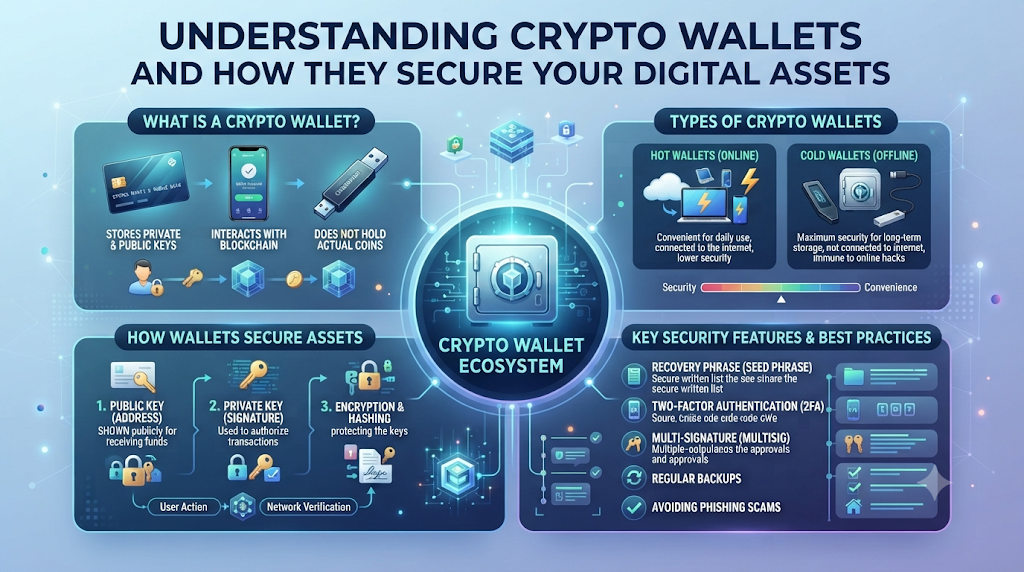
One part of wallet security that often gets overlooked is recovery planning. Strong encryption cannot help if the owner loses access to the recovery method or stores it carelessly. Understanding both daily wallet security and what happens during device loss or account recovery is an important part of managing digital assets.