Introduction
AI Workforce Planning Platforms help organizations forecast workforce requirements, analyze talent capacity, identify skills gaps, and align hiring and workforce strategies with business objectives. Instead of relying only on spreadsheets and historical headcount data, these platforms can use AI, predictive analytics, scenario modeling, and workforce intelligence to support planning decisions.
Organizations can use AI workforce planning platforms to:
- Forecast future workforce demand
- Identify talent and skills gaps
- Model hiring requirements
- Analyze workforce costs
- Plan organizational capacity
- Evaluate workforce scenarios
- Support succession planning
- Improve resource allocation
- Identify emerging skills requirements
- Align workforce strategy with business growth
What Are AI Workforce Planning Platforms?
AI Workforce Planning Platforms combine workforce data, business information, predictive analytics, and AI-driven modeling to help organizations understand how their workforce may need to change over time.
These platforms can analyze factors such as:
- Headcount
- Employee skills
- Attrition
- Compensation
- Hiring plans
- Business growth
- Productivity
- Location
- Organizational structure
- Future skills requirements
Organizations can then create different workforce scenarios and evaluate their potential impact.
For example, a company planning significant expansion can model how many employees it may need, which skills will be required, where those employees should be located, and how workforce costs could change.
Why AI Workforce Planning Matters
Traditional workforce planning can become difficult when organizations operate across multiple departments, locations, business units, and skill categories.
AI-powered planning can help organizations move from static workforce reports toward more dynamic planning.
Key benefits include:
- Better workforce visibility
- Faster scenario analysis
- More informed hiring decisions
- Improved skills planning
- Better cost forecasting
- Stronger resource allocation
- Improved workforce agility
Key Features
Headcount Forecasting
Platforms can estimate future workforce requirements based on historical and planned business conditions.
Workforce Demand Planning
Organizations can model how changes in business activity may affect workforce requirements.
Skills Gap Analysis
AI can compare existing workforce capabilities with future skill requirements.
Scenario Modeling
Organizations can test different hiring, attrition, restructuring, and growth scenarios.
Workforce Cost Forecasting
Platforms can help estimate salary, hiring, and workforce-related expenses.
Attrition Modeling
Predictive models can help organizations understand potential workforce losses and replacement requirements.
Capacity Planning
Teams can compare workforce capacity against expected business demand.
Talent Supply Analysis
Organizations can evaluate available internal and external talent pools.
Organizational Modeling
Workforce structures can be modeled across teams, departments, regions, and business units.
Strategic Workforce Planning
AI can connect workforce requirements with longer-term business objectives.
Reporting and Dashboards
HR and business leaders can monitor workforce metrics and planning assumptions.
HR System Integration
Platforms can connect workforce planning with HR, financial, recruiting, and talent systems.
Common Use Cases
Workforce Demand Forecasting
Organizations can estimate how many employees they will need as business requirements change.
Strategic Hiring
Recruiting teams can use workforce forecasts to prioritize hiring plans.
Skills Planning
Companies can determine which skills they need to acquire, develop, or outsource.
Reskilling and Upskilling
Organizations can identify workforce capabilities that should be developed internally.
Organizational Restructuring
Leaders can model workforce changes before implementing organizational changes.
Global Workforce Planning
Large organizations can plan workforce requirements across regions and countries.
Workforce Cost Management
Finance and HR teams can evaluate the cost implications of different workforce scenarios.
Capacity Planning
Organizations can compare employee capacity with expected workloads.
Benefits
Better Forecasting
AI can analyze larger datasets and identify patterns that may be difficult to detect manually.
Faster Scenario Planning
Leaders can evaluate multiple workforce scenarios without rebuilding complex spreadsheets.
Improved Workforce Alignment
Workforce requirements can be connected more closely with business objectives.
Better Hiring Decisions
Recruitment plans can be based on forecasted workforce demand rather than isolated hiring requests.
Skills Visibility
Organizations can gain a clearer understanding of current and future workforce capabilities.
Cost Control
Workforce models can help organizations understand the financial impact of hiring and organizational changes.
Improved Agility
AI-powered planning can help organizations respond more quickly to changing market conditions.
Challenges
Data Quality
Poor HR and workforce data can produce unreliable forecasts.
Forecast Uncertainty
AI predictions are based on assumptions and historical patterns that may not hold during unexpected market changes.
Integration Complexity
Workforce planning often requires information from HR, finance, recruiting, and operational systems.
Model Explainability
Leaders need to understand the assumptions behind AI-generated forecasts.
Organizational Adoption
Workforce planning tools are only effective when HR, finance, and business leaders use consistent assumptions.
Privacy
Employee information used for workforce analysis requires appropriate security and access controls.
Scenario Complexity
Highly detailed workforce models can become difficult to maintain.
Evaluation Criteria
AI Workforce Planning Platforms can be evaluated using:
- Workforce forecasting
- Headcount planning
- Skills analysis
- Scenario modeling
- Attrition forecasting
- Cost planning
- Capacity planning
- Workforce analytics
- AI capabilities
- Integrations
- Reporting
- Ease of use
- Scalability
- Security
Key Trends
Skills-Based Workforce Planning
Organizations are increasingly planning around skills rather than simply headcount.
Predictive Workforce Analytics
AI is increasingly being used to forecast workforce demand, attrition, and talent requirements.
Scenario-Based Planning
Organizations are modeling multiple possible business conditions rather than relying on a single workforce forecast.
AI-Powered Skills Gap Analysis
AI can connect current workforce capabilities with future job and skill requirements.
Workforce Cost Optimization
Organizations are increasingly combining workforce planning with financial planning.
Internal Talent Mobility
Workforce planning is becoming more closely connected with internal hiring, career development, and reskilling.
Continuous Workforce Planning
Instead of conducting workforce planning only once a year, organizations are increasingly updating forecasts as business conditions change.
HR and Finance Collaboration
Modern platforms increasingly connect workforce plans with financial and operational planning.
Methodology
The platforms below were selected based on their relevance to AI-powered workforce planning, headcount forecasting, scenario modeling, skills analysis, workforce analytics, financial planning, and strategic talent management.
The comparison considers:
- Workforce forecasting
- Scenario planning
- Skills intelligence
- Headcount management
- Cost planning
- Analytics
- Integrations
- Ease of use
- Scalability
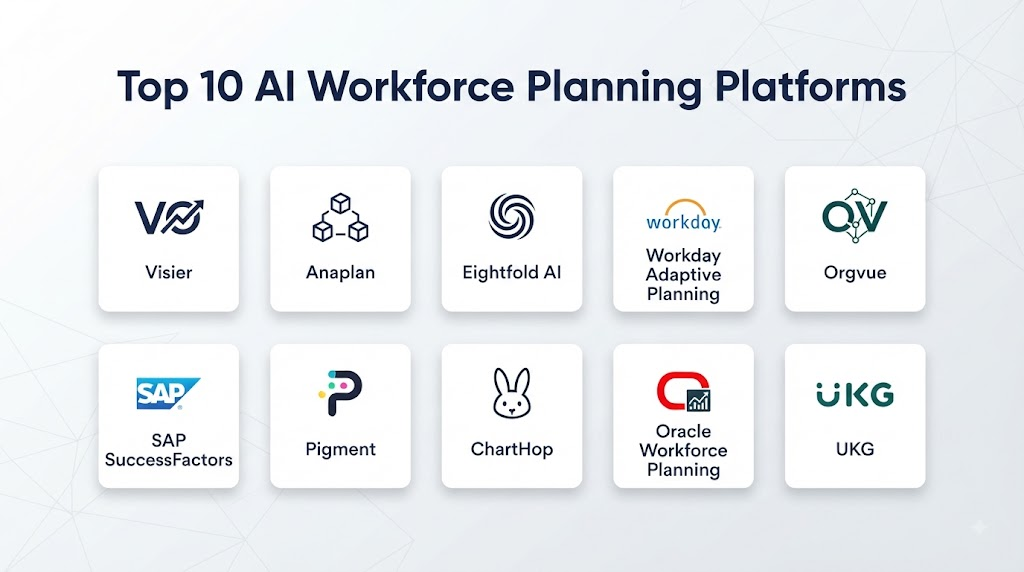
Top 10 AI Workforce Planning Platforms
1. Anaplan
Anaplan provides connected planning capabilities that can support workforce, financial, operational, and strategic planning.
Key Features
- Workforce planning
- Headcount planning
- Scenario modeling
- Workforce cost planning
- Financial planning
- Forecasting
- Analytics
Pros
- Strong enterprise planning capabilities
- Powerful scenario modeling
- Connects workforce and financial planning
- Suitable for complex organizations
Cons
- Enterprise implementation can be complex
- Requires planning expertise for advanced models
2. Workday Adaptive Planning
Workday Adaptive Planning provides planning, budgeting, forecasting, and workforce planning capabilities that can connect workforce and financial information.
Key Features
- Workforce planning
- Headcount forecasting
- Compensation planning
- Scenario modeling
- Financial planning
- Workforce reporting
Pros
- Strong workforce and financial planning connection
- Useful enterprise capabilities
- Good scenario modeling
- Strong reporting
Cons
- Best suited to organizations with broader planning requirements
- Advanced implementation may require specialist support
3. Oracle Workforce Planning
Oracle provides workforce planning capabilities through its broader enterprise performance management and human capital management ecosystem.
Key Features
- Workforce planning
- Headcount planning
- Compensation planning
- Scenario analysis
- Workforce forecasting
- Financial integration
Pros
- Strong enterprise ecosystem
- Good HR and financial connectivity
- Supports complex planning requirements
- Broad analytics capabilities
Cons
- Can require significant implementation
- May be more extensive than smaller organizations need
4. SAP SuccessFactors Workforce Planning
SAP SuccessFactors provides workforce planning capabilities within its broader human capital management ecosystem.
Key Features
- Workforce planning
- Headcount planning
- Talent analytics
- Skills management
- Workforce forecasting
- HR integration
Pros
- Strong HCM integration
- Suitable for large organizations
- Broad workforce management capabilities
- Useful skills planning
Cons
- Enterprise configuration can be complex
- Advanced capabilities may require implementation expertise
5. Visier
Visier provides people analytics and workforce intelligence designed to help organizations understand workforce trends and make data-driven talent decisions.
Key Features
- Workforce analytics
- Workforce planning
- Headcount analysis
- Attrition analytics
- Skills intelligence
- Predictive insights
Pros
- Strong people analytics
- Useful workforce intelligence
- Good predictive capabilities
- Strong visualization
Cons
- Primarily analytics-oriented
- Advanced workforce planning may require integration with other systems
6. Pigment
Pigment provides business planning capabilities covering financial, workforce, operational, and strategic planning.
Key Features
- Workforce planning
- Headcount planning
- Scenario modeling
- Budgeting
- Forecasting
- Workforce cost analysis
Pros
- Modern planning interface
- Strong scenario modeling
- Flexible planning
- Useful collaboration capabilities
Cons
- Advanced enterprise planning can require configuration
- Organizations should evaluate integration requirements
7. One Model
One Model provides workforce planning and people analytics capabilities designed to connect HR data with workforce decision-making.
Key Features
- Workforce analytics
- Workforce planning
- Headcount forecasting
- Workforce modeling
- People analytics
- Scenario analysis
Pros
- Strong HR-focused analytics
- Useful workforce planning
- Good data modeling
- Supports complex workforce analysis
Cons
- Implementation can require technical expertise
- Data integration is important for accurate analysis
8. Planful
Planful provides financial planning and analysis capabilities that can support workforce and headcount planning.
Key Features
- Workforce planning
- Headcount planning
- Budgeting
- Forecasting
- Scenario analysis
- Financial analytics
Pros
- Strong financial planning
- Useful workforce budgeting
- Good forecasting
- Supports finance-HR collaboration
Cons
- Workforce functionality is part of a broader planning platform
- May require configuration for specialized HR use cases
9. ChartHop
ChartHop provides organizational planning, people analytics, organizational design, and workforce visualization capabilities.
Key Features
- Organizational planning
- Headcount planning
- Org charts
- People analytics
- Compensation planning
- Workforce visualization
Pros
- Strong organizational visualization
- Useful headcount management
- Good people analytics
- Accessible user experience
Cons
- More focused on organizational planning than advanced enterprise forecasting
- Complex financial modeling may require complementary tools
10. Eightfold AI
Eightfold AI provides talent intelligence capabilities that can support workforce planning through skills intelligence, talent matching, internal mobility, and workforce insights.
Key Features
- Workforce intelligence
- Skills analysis
- Talent matching
- Workforce planning
- Internal mobility
- Career pathing
Pros
- Strong AI-driven talent intelligence
- Useful skills-based workforce planning
- Supports internal mobility
- Connects talent supply with workforce requirements
Cons
- Enterprise implementation can be complex
- Best suited to organizations with mature talent strategies
Comparison Table: AI Workforce Planning Platforms
| No. | Platform | Best For | Workforce Forecasting | Scenario Planning | Skills Analysis | Headcount Planning | Workforce Analytics |
|---|---|---|---|---|---|---|---|
| 1 | Anaplan | Enterprise planning | Strong | Strong | Strong | Strong | Strong |
| 2 | Workday Adaptive Planning | HR + financial planning | Strong | Strong | Strong | Strong | Strong |
| 3 | Oracle Workforce Planning | Enterprise HCM | Strong | Strong | Strong | Strong | Strong |
| 4 | SAP SuccessFactors | Enterprise workforce management | Strong | Strong | Strong | Strong | Strong |
| 5 | Visier | People analytics | Strong | Strong | Strong | Strong | Strong |
| 6 | Pigment | Modern business planning | Strong | Strong | Moderate | Strong | Strong |
| 7 | One Model | Workforce analytics | Strong | Strong | Strong | Strong | Strong |
| 8 | Planful | Financial workforce planning | Strong | Strong | Moderate | Strong | Strong |
| 9 | ChartHop | Organizational planning | Moderate | Strong | Moderate | Strong | Strong |
| 10 | Eightfold AI | Skills-based workforce planning | Strong | Strong | Strong | Strong | Strong |
Weighted Evaluation Table
| No. | Platform | Forecasting 20% | Scenario Planning 20% | Skills Intelligence 15% | Headcount Planning 15% | Integrations 10% | Ease of Use 10% | Scalability 10% | Total Score |
|---|---|---|---|---|---|---|---|---|---|
| 1 | Anaplan | 20 | 20 | 14 | 15 | 10 | 8 | 10 | 97 |
| 2 | Workday Adaptive Planning | 20 | 20 | 15 | 15 | 10 | 9 | 10 | 99 |
| 3 | Oracle Workforce Planning | 20 | 20 | 15 | 15 | 10 | 8 | 10 | 98 |
| 4 | SAP SuccessFactors | 20 | 19 | 15 | 15 | 10 | 8 | 10 | 97 |
| 5 | Visier | 19 | 18 | 15 | 14 | 10 | 9 | 10 | 95 |
| 6 | Pigment | 19 | 20 | 13 | 15 | 9 | 10 | 9 | 95 |
| 7 | One Model | 19 | 19 | 15 | 15 | 10 | 8 | 10 | 96 |
| 8 | Planful | 19 | 19 | 13 | 15 | 10 | 9 | 9 | 94 |
| 9 | ChartHop | 17 | 18 | 12 | 15 | 9 | 10 | 9 | 90 |
| 10 | Eightfold AI | 19 | 18 | 15 | 14 | 10 | 9 | 10 | 95 |
Which AI Workforce Planning Platform Is Right for You?
Choose Anaplan if enterprise-wide connected planning and advanced workforce scenario modeling are your primary requirements.
Choose Workday Adaptive Planning if you want workforce planning closely connected with financial planning and broader enterprise processes.
Choose Oracle Workforce Planning if your organization needs workforce planning within a comprehensive enterprise HCM and performance-management ecosystem.
Choose SAP SuccessFactors if workforce planning needs to integrate closely with a large-scale HCM environment.
Choose Visier if workforce analytics, people intelligence, and predictive workforce insights are major priorities.
Choose Pigment if you want a modern planning platform with flexible workforce and business scenario modeling.
Choose One Model if detailed workforce analytics and HR-focused data modeling are important.
Choose Planful if workforce planning needs to work closely with budgeting, forecasting, and financial planning.
Choose ChartHop if organizational structure, headcount visibility, and workforce visualization are the main priorities.
Choose Eightfold AI if skills intelligence, talent supply, internal mobility, and AI-driven workforce planning are central requirements.
Common Mistakes
- Planning workforce requirements only from historical headcount
- Ignoring business growth assumptions
- Failing to account for attrition
- Treating skills and headcount as the same planning metric
- Using outdated workforce data
- Building scenarios without financial assumptions
- Ignoring internal talent mobility
- Failing to connect HR and finance planning
- Relying blindly on AI forecasts
- Not documenting planning assumptions
- Ignoring regional workforce differences
- Failing to review forecasts regularly
FAQs
1. What are AI Workforce Planning Platforms?
AI Workforce Planning Platforms use workforce data, predictive analytics, scenario modeling, and AI to help organizations forecast workforce requirements and align talent strategies with business goals.
2. How does AI improve workforce planning?
AI can analyze large amounts of workforce and business data to identify patterns, forecast potential requirements, model scenarios, and highlight workforce gaps.
3. Can AI predict future headcount requirements?
AI-powered workforce planning systems can forecast potential headcount requirements based on historical data, business assumptions, growth plans, attrition, and other factors.
4. Can workforce planning tools identify skills gaps?
Yes. Many modern platforms can compare current workforce capabilities with future job and skill requirements.
5. Can AI workforce planning help control costs?
Yes. Workforce models can estimate the financial impact of hiring, compensation, attrition, restructuring, and different workforce scenarios.
6. What is scenario planning in workforce management?
Scenario planning allows organizations to model different possible situations, such as rapid growth, hiring restrictions, increased attrition, restructuring, or changing business demand.
7. Can AI workforce planning support internal mobility?
Yes. When workforce planning is connected with skills intelligence, organizations can identify existing employees who may be able to fill future roles through development or reskilling.
8. What data is required for AI workforce planning?
Common inputs include employee information, headcount, skills, compensation, attrition, job roles, organizational structure, business forecasts, hiring plans, and workforce costs.
9. What are the risks of AI workforce planning?
Risks include inaccurate data, unreliable assumptions, forecast uncertainty, privacy concerns, model bias, poor explainability, and over-reliance on automated predictions.
10. What is the future of AI workforce planning?
The market is moving toward continuous workforce forecasting, skills-based planning, predictive talent analytics, automated scenario modeling, workforce cost optimization, internal mobility intelligence, and closer integration between HR, finance, and business planning.
Conclusion
AI Workforce Planning Platforms are becoming increasingly important as organizations manage changing business conditions, evolving skills requirements, workforce costs, and talent shortages. These systems can help leaders move beyond static headcount reports toward more dynamic workforce planning.Anaplan, Workday Adaptive Planning, Oracle Workforce Planning, SAP SuccessFactors, Visier, Pigment, One Model, Planful, ChartHop, and Eightfold AI provide different approaches to workforce forecasting, scenario planning, skills intelligence, and organizational analysis.The best platform depends on organizational size, planning complexity, HR infrastructure, financial planning requirements, workforce data maturity, and the importance of skills-based planning.