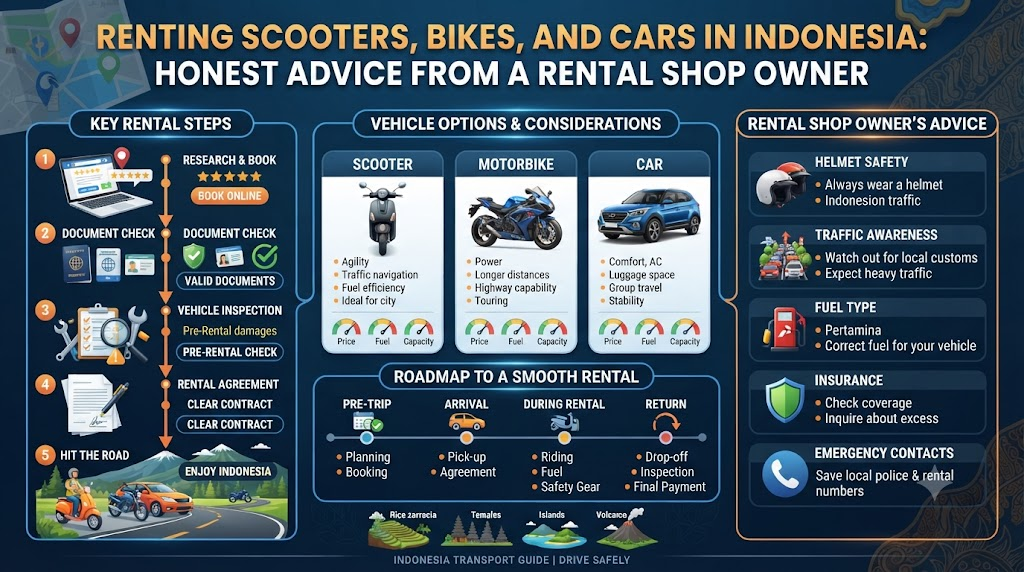
Introduction
Welcome to my counter. I have rented two-wheelers to travelers for over a decade. In that time I have heard every question, calm and every panic.
People arrive dreaming of warm coastal air and green volcanic slopes. They want to chase quiet beaches and stop wherever the light turns golden. My job is to hand them the right keys.
Indonesia opens up only with your own vehicle. Buses run fixed lines. Tour vans repeat the same crowded stops. A rented scooter, bike, or car makes every road your own.
These days many guests find my shop through MotoShare.id, an online vehicle-rental marketplace in Indonesia. It lists verified local partners like me. Everything below is what I tell guests face to face.
Why Rent a Motorcycle or Scooter in Indonesia?
Let me be honest about my business. Two wheels outperform everything else on these islands. Beach town traffic piles up during busy hours, and cars sit trapped inside it.
My scooters slip between the lanes and keep rolling. Guests who switch from taxis save a full hour every day. They come back the next morning smiling.
The treasures sit away from the main streets. Some quiet beaches hide at the end of narrow lanes. A motorbike reaches them without parking struggles. Tiny village cafes appear too, the kind guidebooks never print.
Now hear my strongest advice before you pay. Match the engine to your real ability. Engine power is measured in cc, and larger numbers pull harder.
A 110cc or 125cc automatic scooter fits nearly every guest. It feels light, steady, and calm at low speeds. A 155cc engine climbs hills with ease. Anything near 250cc belongs to experienced riders only. Honest renters will say the same.
Choosing Your Ride: Scooters, Bikes, and Cars
Every guest asks me the same thing at the counter. Which vehicle should I take? My answer begins with your plan, not my price list.
Crowded city streets demand something light and quick to steer. Open island highways welcome bigger, softer machines. Families need shade, room, and seatbelts above all.
Here is the same talk I give at my counter:
| Vehicle Type | Best Use | Rider Skill Needed | Luggage Space | Road Comfort |
|---|---|---|---|---|
| Automatic Scooter (110cc–155cc) | Daily beach trips and town errands | Low, beginner friendly | Under-seat storage plus a rack | Good on paved roads |
| Commuter Motorcycle (110cc–150cc) | City travel and work trips | Medium, manual gears needed | Small bag on a rear rack | Firm but steady |
| Dual-Sport Adventure Bike (250cc and up) | Volcano trails and rural dirt routes | High, off-road experience needed | Racks for panniers and bags | Excellent on rough tracks |
| Rental Car / MPV | Family travel and rainy season trips | Full driving license required | Large boot and cabin space | Smooth and air-conditioned |
Pack light, I always tell guests. A scooter swallows one small bag under its seat. A car fits four suitcases without complaint.
Rain arrives fast in the tropics, so plan for it. And if you bring a passenger, listen closely. Two riders add weight and slow every lean. Drop your speed and brake much earlier.
Scooter Rental Bali and Sewa Motor Bali
Bali is my home island and my busiest counter. Scooter rental Bali shops stand on nearly every corner from Canggu to Seminyak. Fair daily rates land between IDR 50,000 and IDR 100,000. IDR is our money, the Indonesian Rupiah.
I always send new guests on the coastal run first. Morning waves in Canggu, then an easy cruise into Seminyak for lunch and shopping. That flat strip treats nervous riders kindly.
Ubud belongs to your second or third day. The road bends past green rice fields and small temples. Treat every curve gently, because they arrive one after another. Uluwatu climbs onto tall southern cliffs and pays back with famous surf views.
Now the rule I repeat at every handover. Indonesia drives on the left side of the road. Glance right first at each junction, then left, then right again.
Police checkpoints operate near the busy tourist zones. Officers look for helmets and licenses. Buckle your helmet for every ride, because the law demands it. Keep your IDP and home license on you always.
One fuel note before you ride off. My scooters take Pertamax, the cleaner high-grade petrol from Pertamina. Ask any owner which fuel their machine needs. Sewa motor Bali shops, mine included, offer monthly rates for longer stays.
Bike Rental Jakarta and Sewa Motor Jakarta
My cousin runs a counter in Jakarta, so I know that city well. Island roads here in Bali feel calm and forgiving. The capital moves fast, tight, and loud. Bike rental Jakarta services keep both commuters and visiting workers moving.
Traffic jams rule that city. The metropolitan region spreads across giant ring roads. Cars crawl during rush hours while motorcycles thread between the lanes. Locals trust two wheels for work trips for exactly this reason.
A light commuter bike earns its cost back between meetings. Sewa motor Jakarta listings cover daily, weekly, and monthly plans. Weekly deals suit guests staying a while.
Here is the warning my cousin repeats all day. Motorcycles are banned on toll highways. Those expressways belong to cars only. Two-wheelers must stick to the free regular roads. Set your route before you leave.
Jakarta rain also deserves respect. Afternoon downpours flood the low streets fast. Keep a light rain poncho under your seat always.
Wet asphalt turns slick within minutes. Slow down and brake early. Painted road markings turn very slippery when wet. Patience keeps the paint off your skin.
Scooter Rental Lombok and Island Hopping
I send many guests across the water to Lombok. That island moves slower than Bali, and its roads stay peaceful. Scooter rental Lombok shops gather around Kuta Lombok and Senggigi. Rates often undercut Bali’s.
The coastal loop around Kuta Lombok earns my highest praise. Wide, smooth roads connect one empty white-sand bay to the next. Bike rental Indonesia coverage also stretches across Lombok’s north and its Gili ferry harbors.
Surfers hear one firm rule at my counter. Never balance a board under your arm while riding. Ask the shop to bolt on a proper surf rack instead. Good shops attach them on request.
Be careful renting near coastal ferry harbors. Some machines there sit idle for long stretches. Run this quick check before any deposit leaves your pocket.
Squeeze both brake levers and push the bike forward. Press each tire hard with your thumb to test pressure. Look under the engine for fresh oil stains.
Turn the key and confirm every light works. Coastal roads go pitch dark after sunset, so headlights and turn signals matter. Two minutes of checking saves hours stranded in a remote village.
Adventure Motorcycle Rental Indonesia
The big machines occupy the back row of my shop. Let me explain what an adventure bike is in plain words. A dual-sport bike is built for both tarmac and dirt.
These machines carry long-travel suspension. The fork and shock swallow big hits instead of shaking your bones. They ride on knobby tires with deep grooves. Those grooves bite into loose gravel and mud.
They also stand high above the ground. High ground clearance lifts the engine clear of rocks and ruts. So the bike crawls over rough terrain without snagging.
Adventure motorcycle rental Indonesia demand keeps rising every year. Bali works as the easiest base. Confident riders head north to Mount Batur and try volcanic black sand trails. That loose ash surface rewards a steady, gentle throttle hand.
East Java serves the finest touring passes around Mount Bromo. Cool mountain air and sunrise viewpoints repay every climb. But mountain weather flips without warning. Pack warm layers even in the tropics.
Flores and Sumatra hide rural dirt routes beyond any tourist map. Remote villages, jungle tracks, and river crossings wait out there. For those journeys, motorcycle rental Indonesia shops supply 250cc machines with racks and luggage.
My counter rule stays firm. Off-road riding is a true craft. Book a guided tour first and learn properly. Then come back for the big keys.
Pre-Ride Vehicle Inspection Checklist
Guests sometimes laugh when I hand them a checklist. A week later, the same guests thank me. Rental fleets work hard every day, so small faults appear often. Check every point below before money changes hands.
| Check Point | What to Look For | Why It Matters |
|---|---|---|
| Tires & Tread Grooves | Deep grooves, no cracks, correct pressure | Worn tires slip on wet roads |
| Hand & Foot Brakes | Firm levers, instant stopping power | Brakes save your life in traffic |
| Headlights & Turn Signals | Every bulb works, front and back | Dark island roads need full lighting |
| STNK Registration Card | Valid date, matches the plate number | Police checks demand valid papers |
| Mirrors & Horn | Both mirrors tight, horn sounds loud | You need to see and warn others |
| Helmet Buckle & Strap | Clicks firmly, no loose stitching | A loose helmet flies off in a crash |
Always ask to see the physical STNK paper. The STNK is Indonesia’s official vehicle registration document. It must travel with the vehicle at all times. Confirm the expiry date stays valid.
Then take walk-around photos before leaving my lot. Capture every side of the bike or car. Zoom in on old scratches and dents. Those photos protect your deposit when you bring the vehicle home.
Planning a Safe Motorcycle Road Trip in Indonesia
Guests often ask me to plan their big island ride. A motorcycle road trip Indonesia style is a wonderful thing, but only with careful planning. Here is my method.
Set a daily distance limit first. I cap rides at 150 km per day on curvy island roads. That sounds low, but island roads crawl. Traffic, potholes, and photo stops swallow your hours.
Ride in daylight only. Tropical darkness drops fast around six in the evening. Rural roads often have no streetlights at all. Reach your guesthouse before sunset.
Pack rain gear every single day. A cheap tropical rain poncho fits under any seat. Afternoon downpours arrive with almost no warning in the wet season.
Watch for loose sand on coastal corners. Sea winds blow sand across bends near the shore. Sand behaves like ice under two wheels. Slow right down before every coastal curve.
Follow the locals and match their speed, never exceed it. They know every pothole and blind spot. Carry a power bank for your phone maps too. And tell someone your route before leaving.
Self Drive Car Rental Indonesia and Family Travel
Some guests need four wheels, and I say so plainly. Self drive car rental Indonesia options shine for family travel. Self drive means you drive the car yourself, with no hired driver.
Families top the list. A child needs a proper seat, shade, and air-conditioning. No scooter in my shop offers that protection.
Rainy season travel comes second. Heavy daily rain makes riding risky and miserable. A car keeps the whole family dry and relaxed.
Big luggage comes third. Surfboards, diving bags, and large suitcases demand real space. A car boot holds them all without complaint.
Remember that Indonesia drives on the left side of the road. We match Japan, Thailand, and Australia here. Take your first hour slowly while you adjust.
Toll roads in Java use electronic toll cards. These e-money cards tap at the gate. Buy one at any convenience store beforehand. Car rental Indonesia firms often include one with the car.
International visitors need proper papers for self-drive. Bring your home driving license plus an IDP. The IDP is an official translation of your license, issued in your home country. Police may ask for both papers at any checkpoint.
Finding Verified Rides Through MotoShare
I will tell you a shop owner’s secret. The honest shops struggle to compete with the careless ones on the street. MotoShare.id changed that for good.
MotoShare is a specialized online vehicle marketplace. It connects travelers with verified local rental partners across Bali, Jakarta, Lombok, and beyond. Every partner clears a verification step before listing.
Searching takes seconds. Enter your location and travel dates. Filter by vehicle type, engine size, or price range. Results appear right away.
Prices display clearly in IDR. You see the daily rate before committing. No hidden costs surprise you at the counter.
Host ratings come from real past renters. Read the reviews and choose partners with strong scores. The photos show the actual vehicle you will receive.
Best of all, booking carries zero added platform fees. The price you see is the price you pay. You deal with trusted local businesses like mine, where the machines get real maintenance.
Real-Life Travel Scenarios
- The digital nomad in Canggu. Maria rents an automatic 155cc scooter for a month. Each morning she rides ten minutes to her coworking space. By late afternoon she parks at Echo Beach for sunset. The monthly rate saves money, and the bigger engine handles Canggu’s hill roads easily.
- The adventure rider around Mount Batur. Tom books a 250cc dual-sport bike in Bali. He rides north past Kintamani onto volcanic black sand trails. His knobby tires grip the loose ash. Long-travel suspension soaks up every rock on the crater rim track.
- The business traveler in Jakarta. Priya lands with back-to-back meetings across the city. She books a light commuter bike through sewa motor Jakarta. While cars freeze in rush hour, she reaches every meeting on time. The weekly plan costs less than three taxi trips per day.
- The family exploring central Bali. The Wijaya family books a self-drive seven-seater car. They visit Tegenungan waterfall and Tirta Empul temple in air-conditioned comfort. Rain hits at noon, but the kids stay dry. The huge boot swallows strollers, snacks, and swimming gear.
Common Mistakes to Avoid When Renting Vehicles in Indonesia
- Riding without an IDP. Many visitors assume their home license suffices. Indonesian police require an IDP plus your home motorcycle license for two-wheelers. Get your IDP issued in your home country before you fly out.
- Leaving helmet straps unbuckled. An unbuckled helmet counts legally as no helmet. The strap keeps the helmet on your head during a fall. Click it firmly under your chin before every ride, even short village lanes.
- Riding in shorts and flip-flops. Bare skin gives zero protection in a slide. Asphalt scrapes cause deep, slow-healing wounds. Wear covered shoes, long pants, and at least a light jacket whenever you ride.
- Leaving your original passport as collateral. Never hand your actual passport to a rental counter. A passport is your most vital travel document. Offer a refundable cash deposit in IDR instead, and keep your passport with you.
- Ignoring the STNK tax document. Every legal vehicle carries an STNK registration paper. It proves the road tax is paid and current. Ask for it, check the expiry date, and keep it in the seat or glove box.
- Turning onto toll expressways. Two-wheelers are legally banned from Indonesian toll roads. Motorcycles entering tolls face fines and real danger at speed. Check your map route in advance and steer clear of all toll gates.
- Underestimating wet tropical roads. A sudden downpour turns dry asphalt slick within seconds. Mud and oil rise to the surface. Slow down, double your braking distance, and wait ten minutes for the heaviest rain to pass.
- Skipping pre-rental photos. Old scratches get blamed on new renters. Unfair damage charges eat your deposit fast. Photograph and video every side of the vehicle before you pay anything.
Simple Rental Booking Checklist
- Valid home driver’s license plus an IDP. Your license class must match the vehicle type. Add an International Driving Permit for any ride or drive in Indonesia.
- Original passport with entry visa stamp. Rental partners verify your identity with it. Keep the passport in your own hands at all times.
- Cash in IDR for the refundable deposit. Most local partners take a cash security deposit. Confirm the exact amount and refund terms in writing first.
- Sanitized, snug-fitting SNI helmets. SNI is Indonesia’s official safety standard mark. Check the buckle works and the shell has no cracks.
- Fuel check and vehicle photo verification. Confirm whether fuel is full-to-full or matched at the needle. Photograph the fuel gauge and all body panels before leaving.
Frequently Asked Questions
1. Can international tourists legally rent and ride a scooter in Bali with a foreign license?
Yes, but only with the right papers. Your home country license alone is not enough for a scooter. You need an IDP endorsed for motorcycles, plus your original home license.
Police checkpoints in Kuta and Canggu check these documents often. Riding without them can bring a fine. So sort your IDP before you arrive, not after.
2. What is an International Driving Permit (IDP), and why is it needed in Indonesia?
An IDP is an official translation of your home driving license. It is issued in your home country before you travel. Indonesia requires it for all foreign drivers and riders.
The IDP shows local police which vehicle classes you may operate. It must list the motorcycle class for two-wheelers. Always carry it together with your original license.
3. Which side of the road do motorists drive on in Indonesia?
Indonesia drives on the left side of the road. This rule applies on every island, in every city. Riders keep to the left lane and overtake on the right.
Visitors from right-side countries need extra focus at first. Spend your first hour practicing on quiet streets. Roundabouts and turns deserve your full attention early on.
4. What is the STNK document, and must it always stay with the rental vehicle?
The STNK is the official vehicle registration paper in Indonesia. It proves the road tax is paid and the vehicle is legal. Police can demand it at any checkpoint.
Yes, it must stay with the vehicle at all times. Check the expiry date before you ride away. An expired STNK can bring fines to the rider.
5. Are helmets mandatory for both riders and passengers across Indonesian roads?
Yes, Indonesian law requires helmets for riders and passengers. The helmet must meet the SNI safety standard. Buckling the chin strap is part of the law too.
Children especially need proper, well-fitted helmets. Cheap street helmets crack easily in a fall. Ask your rental partner for certified, undamaged helmets for everyone aboard.
6. What type of fuel should I put into a rental scooter in Indonesia?
Most rental scooters run on Pertamax, a clean high-octane petrol. Pertalite is a lower-grade option for some older bikes. Always ask the owner which fuel the engine needs.
Fill up at official Pertamina stations when possible. Roadside bottled fuel works in emergencies only. Using the wrong grade can damage small engines over time.
7. Can beginners learn to ride a scooter safely in Bali or Lombok?
Yes, but choose your practice ground with care. Start on quiet backstreets away from busy main roads. A 110cc or 125cc automatic scooter is the easiest place to begin.
Many shops in Bali offer beginner lessons with instructors. Take one before renting on your own. Never attempt your first ride in heavy Canggu traffic or on coastal cliff roads.
8. Are motorcycles allowed to ride on highway toll roads in Indonesia?
No, motorcycles are legally banned from Indonesian toll expressways. Toll roads are built for high-speed cars and trucks only. Two-wheelers caught entering face on-the-spot fines.
Plan your routes on the free regular roads instead. Map apps let you avoid tolls in settings. The non-toll routes through Java often pass prettier villages anyway.
9. When should a traveler choose a rental car instead of a scooter in Indonesia?
Choose a car when comfort and safety matter most. Traveling with small children almost always means four wheels. Heavy rain, long distances, and big luggage also favor a car.
Cars protect you from tropical downpours and hot midday sun. Families visiting several temples per day enjoy the easier pace. A self-drive car keeps everyone fresh between stops.
10. Should tourists leave their original passport book as a rental deposit?
Never leave your original passport with any rental counter. Your passport is your identity abroad. Losing it can end your whole trip.
Offer a refundable cash deposit in IDR instead. Some shops accept a photographed passport copy. Reputable partners accept these options without argument, so walk away if they refuse.
11. What happens if a rental scooter gets a flat tire in a rural village?
Flat tires are common on rural Indonesian roads. Small village tire workshops exist almost everywhere. Locals call them bengkel, and they patch a tube for a few thousand rupiah.
Call your rental partner first and tell them where you are. Many owners cover repairs or send help. Carry some cash in IDR, because village workshops rarely take cards.
12. Why should travelers use a verified platform like MotoShare to find rental vehicles?
MotoShare lists only verified local rental partners. Every host is checked before vehicles appear on the platform. That removes the guesswork from street-side renting.
You see clear IDR prices, real photos, and honest host ratings. Booking adds zero platform fees to the price shown. Support is easier to reach if anything goes wrong on your trip.
Conclusion
After a decade at the counter, my advice stays simple. Match the vehicle to your route, your true skill, your luggage, and the season. A light scooter covers a solo beach holiday perfectly. A dual-sport bike unlocks volcano trails and remote Flores dirt roads. A self-drive car keeps a family safe, dry, and happy through rainy season temple runs. Check your papers, respect the STNK rules, and inspect every machine before riding. Strap your helmet on, greet the villagers warmly, honor every local custom, and explore this beautiful archipelago the safe way. Indonesia’s roads are waiting for you.